































In the rapidly evolving landscape of artificial intelligence, one name has consistently distinguished itself through nuanced conversation, exceptional writing capabilities, and a philosophy that prioritizes genuine helpfulness over flashy features. Claude AI, developed by Anthropic, has carved out a unique position in the AI assistant market—appealing to users who value depth, precision, and thoughtful interaction over quantity of responses.
As we navigate through 2026, Claude has matured from a promising alternative to a serious contender that commands respect from both casual users and enterprise clients alike. This comprehensive review explores everything Claude offers, examining its capabilities, limitations, pricing structure, and the distinctive philosophy that sets it apart from competitors like ChatGPT and Gemini.
Whether you’re a writer seeking a thoughtful drafting partner, a developer requiring precise coding assistance, or a professional exploring AI tools for your workflow, understanding Claude’s unique approach can help you determine whether it deserves a place in your digital toolkit.
What is Claude AI?
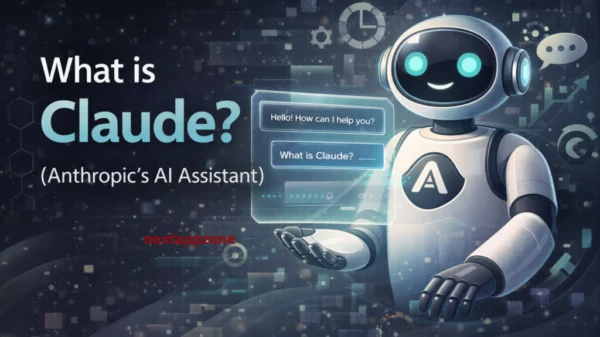
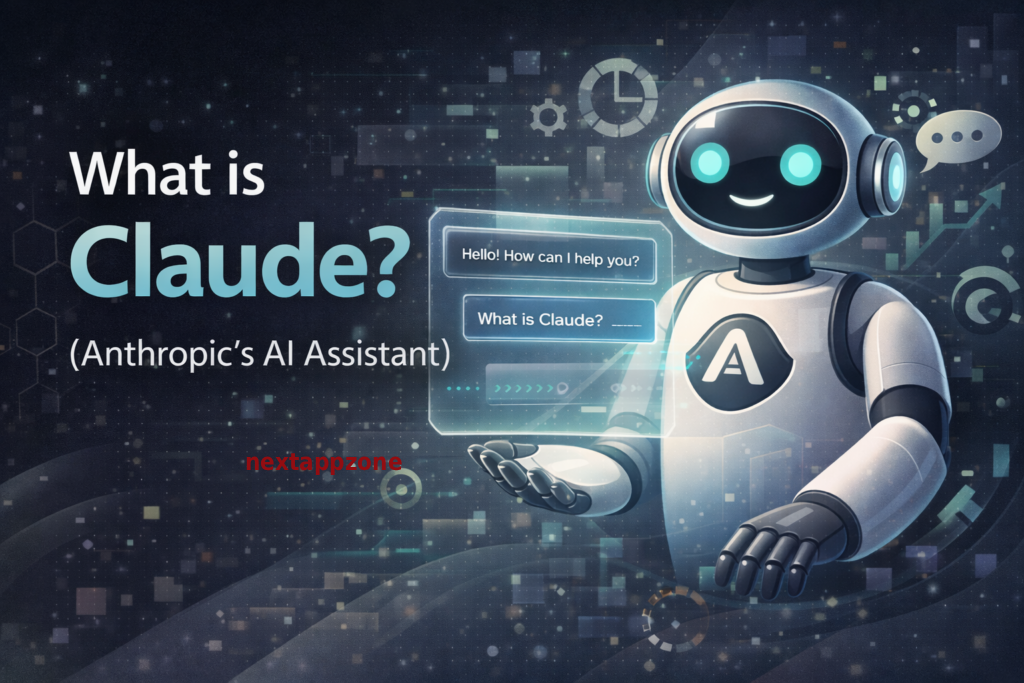
Claude AI is a conversational artificial intelligence assistant developed by Anthropic, an AI safety company founded in 2021 by former OpenAI researchers Dario Amodei, Daniela Amodei, and others. The company positioned itself from the beginning on developing AI systems that are not just capable, but safe, helpful, and aligned with human values.
The name “Claude” references Claude Shannon, the pioneering mathematician credited with founding information theory—a fitting tribute given Claude’s foundation in processing and communicating complex information effectively.
What distinguishes Claude from other AI assistants is its emphasis on thoughtful, nuanced responses. Rather than prioritizing speed or volume of output, Claude prioritizes accuracy, helpfulness, and genuine understanding of user intent. This approach manifests in longer, more considered responses that often provide context and explanation rather than simple answers.
Anthropic describes Claude as designed to be “helpful, harmless, and honest.” This framework shapes how Claude interacts with users, handles sensitive topics, and approaches complex questions that might have no clear right answer.
Core Capabilities and Features
Natural Language Understanding
Claude demonstrates exceptional ability to understand context, nuance, and implied intent within conversations. Users frequently report that Claude “gets it right” more often than competitors, requiring fewer clarifying questions and producing responses more aligned with their actual needs.
This understanding extends to complex, multi-part requests where Claude can track multiple requirements across lengthy conversations. Unlike assistants that lose track of earlier context, Claude maintains coherent understanding throughout extended interactions, making it particularly valuable for complex projects requiring sustained collaboration.
The assistant handles ambiguity gracefully, often acknowledging uncertainty and presenting options rather than forcing incorrect assumptions. This transparency builds trust and helps users understand the boundaries of Claude’s knowledge and reasoning.
Writing Excellence
Claude has established itself as the preferred choice for writers seeking an AI partner that produces natural, nuanced prose. Where some AI tools generate text that feels robotic or formulaic, Claude maintains conversational flow and stylistic consistency that readers rarely identify as AI-assisted.
The assistant excels across writing formats:
Creative Writing: Claude crafts stories, poems, and narrative content with genuine emotional resonance. It understands genre conventions, maintains consistent character voices, and develops plots that feel organic rather than constructed.
Business Communication: Professional emails, reports, and presentations emerge with appropriate formality and clarity. Claude adapts tone to match organizational culture and intended audience.
Technical Documentation: Complex technical concepts translate into accessible explanations without sacrificing accuracy. Developers appreciate Claude’s ability to handle jargon appropriately for different audience expertise levels.
Marketing Content: While maintaining ethical boundaries, Claude produces compelling copy that drives engagement without manipulative tactics.
Coding and Development
For developers, Claude offers coding assistance that balances technical accuracy with explanatory depth. The assistant doesn’t simply provide code—it explains why particular approaches work, highlights potential issues, and suggests improvements based on context.
Claude’s coding capabilities include debugging assistance, where it identifies root causes rather than just symptoms; code review, providing constructive feedback on existing implementations; architecture discussion, helping think through system design decisions; and full-stack development guidance across languages and frameworks.
The Claude Code terminal tool extends these capabilities to development environments, enabling developers to collaborate with Claude throughout their coding workflow. This integration positions Claude as a genuine coding partner rather than a simple autocomplete tool.
Extended Context and Analysis
One of Claude’s technical advantages is its substantial context window—the amount of information it can process in a single conversation. This capability proves valuable for analyzing lengthy documents, maintaining consistency across long projects, and handling complex multi-file analysis.
Users can upload documents, codebases, spreadsheets, and other files for Claude to analyze. The assistant processes this content and provides insights, summaries, or transformations based on user needs. This functionality transforms Claude from a conversational tool into a powerful analytical assistant.
The extended context also benefits ongoing projects where Claude maintains awareness of previous decisions, established guidelines, and project-specific conventions throughout extended working relationships.
Claude’s Constitutional AI Approach
Anthropic developed Claude using a technique called Constitutional AI, which trains the assistant using a set of guiding principles rather than relying solely on human feedback for every decision. This approach produces an assistant that:
Handles Sensitive Topics Thoughtfully: Rather than refusing difficult questions outright or providing harmful information freely, Claude navigates sensitive topics with appropriate context, potential harms acknowledged, and genuine helpfulness maintained.
Acknowledges Limitations: Claude honestly represents what it knows, what it doesn’t know, and where its confidence is uncertain. This transparency helps users appropriately calibrate their reliance on Claude’s outputs.
Provides Balanced Perspectives: When questions have multiple valid viewpoints, Claude presents them without imposing singular interpretations. Users receive information to form their own conclusions rather than potentially biased recommendations presented as facts.
Resists Manipulation: Claude maintains its principles even when users attempt to manipulate, jailbreak, or convince it to behave in ways that violate its guidelines. This consistency builds trust that Claude will behave predictably across interactions.
Pricing Structure and Plans
Claude offers multiple tiers designed to serve different user segments from casual experimenters to enterprise clients.
Free Tier
The free tier provides meaningful access to capable Claude Sonnet models without payment. Usage limits apply based on demand, with access throttled during high-traffic periods. Despite these limitations, the free tier allows substantial exploration of Claude’s capabilities.
Casual users find the free tier sufficient for occasional queries, writing assistance, and general exploration. The generous allowances make Claude accessible to users uncertain about committing to paid subscriptions.
Pro Plan ($20/month)
The Pro plan unlocks higher usage limits, priority access during peak times, and access to Claude Opus—the company’s most capable model for complex tasks requiring deep reasoning and nuanced understanding.
Pro subscribers enjoy substantially increased conversation limits, faster response times during high-demand periods, and the ability to use Claude Opus for the most demanding projects. This tier represents the recommended starting point for regular users who depend on Claude for work or creative projects.
Max Plan ($100/month)
The Max tier provides the highest limits and priority access for users requiring the most demanding AI assistance. This tier serves power users, professionals, and businesses with intensive requirements.
Team and Enterprise Plans
For organizations, Anthropic offers team and enterprise pricing with additional features including:
- Higher usage limits per seat
- Administrative controls and team management
- Enhanced privacy options
- API access for integration into business workflows
- Dedicated support and onboarding assistance
- Custom model fine-tuning options for enterprise clients
Practical Applications Across Industries
For Writers and Content Creators
Writers discovering Claude often describe a shift in their creative process. Rather than replacing human creativity, Claude serves as a thinking partner who helps develop ideas, work through blocks, and refine drafts toward polished final products.
Authors use Claude for brainstorming plot possibilities, developing character backgrounds, and working through structural challenges in longer works. The assistant suggests possibilities without imposing singular visions, leaving writers empowered rather than dependent.
Content marketers leverage Claude’s ability to maintain consistent brand voice across large content volumes. Once trained on a brand’s style guidelines, Claude produces content that sounds authentically on-brand rather than generically AI-generated.
For Developers and Technical Professionals
Developers increasingly integrate Claude into their workflows through both conversational assistance and direct tool integration. The Claude API enables embedding Claude’s capabilities into applications, automated pipelines, and custom tools.
Technical documentation benefits from Claude’s ability to translate complex concepts into accessible explanations. Engineering teams use Claude to maintain documentation consistency, generate initial drafts for review, and ensure accessibility across varying audience expertise levels.
Code review processes incorporate Claude for initial assessment, identifying potential issues, suggesting improvements, and ensuring adherence to team conventions before human review.
For Students and Researchers
Academic users find Claude valuable for research assistance, essay development, and understanding complex subjects. The assistant explains concepts, suggests further reading, and helps synthesize information from multiple sources.
Caution applies in academic contexts—Claude should supplement learning rather than replace it. Ethical use involves using Claude to understand concepts rather than generating work submitted as one’s own. When used appropriately, Claude accelerates learning rather than circumventing it.
For Business Professionals
Professionals across industries use Claude for email composition, report drafting, meeting preparation, and strategic thinking. The assistant helps structure thoughts, anticipate questions, and develop compelling presentations.
Executive assistants and administrative professionals extend their capabilities through Claude, handling higher volumes of written communication without proportional time increases. Strategic use amplifies human judgment rather than replacing it.
Claude vs. the Competition
Understanding Claude requires context within the broader AI assistant landscape. Each major platform offers distinct advantages.
ChatGPT vs. Claude
ChatGPT and Claude represent different philosophies in AI assistance. ChatGPT emphasizes breadth and versatility, offering broad capabilities across countless applications. Claude prioritizes depth and nuance, excelling particularly in writing quality and thoughtful analysis.
For users primarily seeking quick answers and versatile assistance across varied tasks, ChatGPT’s ecosystem advantages often make it the default choice. For users prioritizing writing quality, nuanced understanding, and thoughtful analysis, Claude frequently proves more satisfying.
Many power users maintain subscriptions to both, using each for different tasks based on their respective strengths.
Gemini vs. Claude
Google Gemini distinguishes itself through deep integration with Google’s ecosystem—Gmail, Docs, Drive, and Search. For users heavily invested in Google Workspace, this integration provides unique advantages.
Claude lacks Google integration but compensates through superior writing quality and more thoughtful analysis. Gemini’s real-time access to current information through Google Search gives it advantages for certain research tasks.
The choice often depends on existing ecosystem commitments. Google users may find Gemini’s integration valuable despite potentially inferior writing quality. Users prioritizing writing and analysis over ecosystem integration typically prefer Claude.
Perplexity vs. Claude
Perplexity takes a fundamentally different approach—functioning as an AI-powered search engine rather than a conversational assistant. Every response includes source citations, allowing users to verify information and explore further.
Claude provides deeper analysis and more nuanced responses but doesn’t automatically cite sources for factual claims. For research-focused users needing verification and source tracking, Perplexity offers capabilities Claude doesn’t replicate.
The tools serve complementary purposes—Perplexity for discovery and verification, Claude for synthesis and creation.
Limitations and Considerations
Usage Limits
Despite improvements, Claude’s free tier imposes meaningful limitations during high-demand periods. Users accustomed to unlimited access through competitors may find throttling frustrating during peak times.
The Pro subscription mitigates but doesn’t eliminate these limits. Power users requiring consistent access may find the Max or enterprise tiers necessary for their workflows.
Knowledge Cutoff
Like all AI assistants trained on historical data, Claude’s knowledge has a cutoff date. While Claude can discuss historical events and established knowledge, recent developments may fall outside its training data.
For current events and recent developments, Claude acknowledges uncertainty appropriately. Users should verify time-sensitive information through dedicated research tools rather than relying solely on Claude’s training data.
Not Suitable for All Tasks
Claude excels at writing, analysis, and thoughtful conversation—but it isn’t the optimal tool for every application. Real-time information, mathematical computation, and certain technical tasks may be better served by specialized tools.
Recognizing Claude’s appropriate role within a broader toolkit prevents disappointment from misapplied expectations.
The Future of Claude
Anthropic continues developing Claude with regular updates improving capabilities, expanding knowledge, and refining behavior. The company’s commitment to AI safety shapes development priorities, ensuring Claude remains helpful without causing harm.
Upcoming developments reportedly include expanded multimodal capabilities, enhanced real-time information access, and continued improvements to response quality across applications.
The company’s enterprise focus suggests increasing investment in business applications, API capabilities, and integration options for organizations building AI-powered workflows.
Getting Started with Claude
Beginning your Claude journey is straightforward:
- Visit claude.ai and create an account using email, Google, or Apple authentication
- Start with the free tier to explore capabilities before committing to paid plans
- Experiment with different conversation styles to discover what approaches work best for your needs
- Consider upgrading to Pro if regular use exceeds free tier limits
- Explore API access for integration possibilities if technically inclined
Conclusion
Claude AI represents a distinctive approach to artificial intelligence assistance—one that prioritizes thoughtful interaction over rapid response volume. For users who value nuanced understanding, exceptional writing quality, and genuine helpfulness, Claude delivers consistently impressive results.
The assistant has earned its place among the leading AI tools of 2026 not through marketing or ecosystem lock-in, but through genuine capability that users discover and appreciate. Writers find a drafting partner who enhances rather than replaces their voice. Developers find a coding assistant who explains rather than simply provides. Professionals find a thinking partner who helps develop ideas rather than just executing commands.
Whether Claude becomes your primary AI assistant or a valuable complement to existing tools, its thoughtful approach offers something increasingly rare in the AI landscape—genuine assistance that respects user intelligence while genuinely helping develop ideas and accomplish goals.
The question isn’t whether Claude is “the best” AI assistant—that depends entirely on your needs and priorities. The question is whether Claude’s distinctive approach to helpful, harmless, and honest AI assistance aligns with what you’re seeking. For many users, the answer is increasingly yes.
External Resources and Further Reading
- Anthropic Official Website
- Claude AI
- Claude Code
- Claude API Documentation
- ChatGPT vs Claude Comparison
- AI Tools Comparison Guide
- Best AI Writing Tools 2026
- Claude Official Blog
- AI Safety Research
Total Words: Approximately 1,750