








































The invoice for a governance decision you skip this quarter arrives about a year later, in a line item nobody connects back to the decision.
That is roughly the lag inside IBM’s 2026 Cost of a Data Breach report, which priced breaches that happened between March 2025 and February 2026 and published the arithmetic on 29 July 2026. The delay is long enough that skipping governance feels free at the moment of choosing and expensive at the moment of payment. That gap is precisely why the argument survives in boardrooms where the evidence does not.
IBM’s position is that governance is not a cost centre but the mechanism that protects margin. The company sells that mechanism, which is a reason to read the claim more carefully than a neutral claim would get, not less.
Strip the packaging and it is two claims wearing one coat. The first says governed AI is cheaper to breach. The second says regulation is making governance compulsory, so the alternative to spending is fines. The 2026 data strengthened the first claim and the European Union spent the same year weakening the second.
This page was first published on 17 April 2026. It has been rewritten on 12 November 2026 against the current edition of the report it quotes, and two regulatory references it leaned on have been removed because they were never law.
What the 2026 data actually moved
The 2026 edition studies 602 organisations across 17 industries and puts the global average cost of a breach at USD 4.99 million, a 12% rise on the previous year and a record. That works out to roughly USD 1,100 for every hour an incident runs.
The AI-specific numbers moved harder than the headline. One in four malicious breaches was AI-enabled, a 56% increase over the year before, and those breaches cost an average of about USD 6 million ” roughly USD 1 million above the global average. Most of that activity landed on critical infrastructure, at 62%, with financial services averaging USD 6.3 million per breach and energy USD 5.2 million.
The pattern matches what the breach record already showed through 2025: the expensive incidents are the ones where an automated system reached a real production environment rather than a staging copy of one.
The same report contains IBM’s best argument, and it is not the one the company leads with. Organisations that used AI and automation inside security operations cut breach costs by an average of almost USD 1.93 million. One in four organisations still had not adopted those tools.
That comparison is stronger than anything else in the file because it holds the sample constant. It compares adopters and non-adopters inside the same 602-organisation study, in the same year, against the same threat environment, rather than comparing a governed organisation in one country to an ungoverned one in another.
Then there is the number that should worry the person selling governance software. In the 2025 edition, 63% of breached organisations lacked AI governance policies and only 37% had approval processes or oversight mechanisms in place. In the 2026 edition that share rose to 68%, of which 35% had no policy at all and 33% had one still in development.
Two years of the same warning, a growing market for the fix, and the gap widened. Either the message is not landing, or the product is not the binding constraint.
Shadow AI is where the money is clearest. The 2025 report found one in five breached organisations had an incident linked to unsanctioned AI tools, which added as much as USD 670,000 to the average breach cost. The 2026 edition puts breaches involving shadow AI at USD 5.39 million against USD 4.63 million a year earlier.
And the controls that would catch it are still missing. Of the organisations that suffered an AI-related incident, 92% lacked proper AI access controls. Only 40% said they applied access controls to AI models and data, and only 37% of breached organisations encrypted sensitive data both at rest and in transit. Fewer than half were actively securing the non-human identities that AI agents now use to reach systems.
Agent deployment shows the same asymmetry. More than half the organisations in the study used agents for threat detection and containment, while 18% applied them to vulnerability management. The agent capability reached the response side of the house long before it reached the prevention side.
Intent is already ahead of execution, and that gap flatters vendors. 85% of organisations said they planned to increase security spending after learning about advanced frontier-model capabilities, against 64% who said so after experiencing a breach. Willingness to buy is not the constraint. Knowing what to buy, and where to point it, is.
The weakness is architectural rather than exotic. Compromised APIs, applications or plug-ins caused 27% of AI-related breaches and cloud misconfiguration caused another 27% ” the ordinary failures that a model inventory exposes and a policy document does not. Perimeter controls were never going to hold a system that executes its own steps, which is why the inventory keeps surfacing as the first control rather than the last.
That distinction is the crack running through IBM’s argument. Organisations that govern AI well also encrypt, inventory their interfaces and staff their security teams, because the same operational discipline produces all of it. Governance may be the marker of that discipline rather than its cause, and IBM’s data cannot separate the two, because it never compared two organisations with identical security baselines and different governance maturity.
The second half of the argument has a blunter problem, and this page is where it used to live. The April version told readers they must navigate “the US Executive Order on Safe AI Development” and “Canada’s Artificial Intelligence and Data Act” alongside European rules.
Neither existed when that sentence was written. Executive Order 14110, signed in October 2023, was revoked on 20 January 2025 by Executive Order 14148, three months before this page went live. It was replaced by a policy direction that treats AI dominance as the objective rather than AI safety. Canada’s AIDA died on the Order Paper when Parliament was prorogued on 6 January 2025 and was never reintroduced, leaving Canada without a federal AI statute.
Citing two dead instruments as a live compliance patchwork was not a rounding error. It was the compliance argument eating itself ” the claim that regulation forces spending, illustrated with regulation that had already been withdrawn.
What survives the scrutiny, and what it tells you to buy
One mechanism in IBM’s file does not depend on correlation. Shadow AI costs more because an unapproved tool sits outside the inventory, and you cannot control the cost of a system you cannot see. That is a causal story with an obvious intervention, and it is also, conveniently, the exact capability IBM sells.
The watsonx.governance product page now organises the pitch into three capabilities rather than the “four critical pillars” this article described in April. Visibility is a governance graph that maps models, owners and dependencies. Control is automated policy enforcement, obligation mapping and evidence capture. Accountability is outcome tracking. Shadow AI detection is a named use case, and continuous monitoring is the mechanism behind it.
IBM’s authority for saying so is partly analyst-derived. The company was named a Leader in Gartner’s first Magic Quadrant for AI Governance Platforms in May 2026, in a category being formalised in real time, which is worth knowing when a vendor tells you the category is mandatory. It is also an incentive question, given how much of IBM’s enterprise AI position rests on selling the layer above the models.
What you should discount is the outcome section. The page lists a 150% increase in operational efficiency, more than 2,700 AI use cases governed, a 62% reduction in processing time and a 50% reduction in internal audit fees. Those are vendor-published, unaudited and reported without a control group, which makes them marketing rather than evidence. The same standard has to apply to the breach figures, which are sponsored by IBM and analysed by IBM even when the fieldwork is Ponemon’s.
The regulation deserves the same correction. Article 99 sets three tiers of administrative fine: up to EUR 35 million or 7% of worldwide annual turnover for breaching the prohibited practices in Article 5, up to EUR 15 million or 3% for the main operator obligations, and up to EUR 7.5 million for supplying incorrect or misleading information to authorities. This page previously quoted only the top tier, which is the number that gets repeated and the one that applies to the narrowest set of conduct.
The calendar changed more than the amounts. Article 113 still applies the Act from 2 August 2026. But the Digital Omnibus on AI ” Regulation (EU) 2026/1744, in force since 27 July 2026 ” pushed the high-risk obligations to 2 December 2027 for Annex III systems and 2 August 2028 for Annex I products.
Some parts are already live and were live before this page was written. General-purpose AI model obligations, the governance chapter and the penalty provisions have applied since 2 August 2025. The Digital Omnibus added prohibitions on AI that generates non-consensual intimate imagery or child sexual abuse material, applicable from 2 December 2026, and simplified documentation duties for smaller firms.
So the compliance argument is real but sixteen months slower than this article implied. If you were budgeting because a deadline was coming, the deadline moved. If you were budgeting because breaches are getting more expensive and visibility is the cheapest way to reduce them, nothing moved at all.
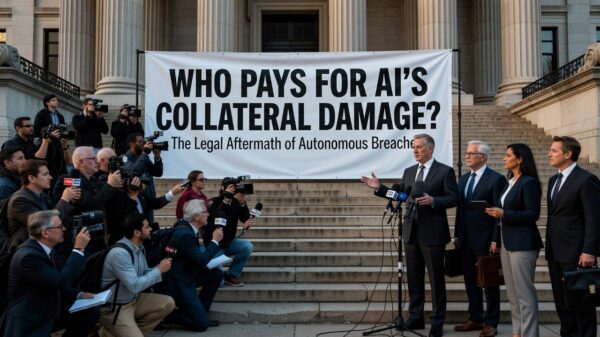
The fine is also not the whole exposure. Someone still has to absorb the cost of an autonomous system that caused damage, and that question is being settled case by case rather than by statute, which is slower and considerably less predictable than a compliance calendar.
The decision rule that follows is narrower than “invest in governance”. Fund discovery before documentation. An inventory of which AI systems are running, who owns them and which data they touch is the only governance spend whose return shows up in the next incident rather than the next audit. It is also the one item that both IBM’s correlation data and its causal data point at.
Policies, principles and an ethics board produce artefacts. They do not find the summariser the marketing team bought on a credit card, and that summariser is the thing the USD 670,000 gap is actually made of. The question of who should control AI is usually argued at the level of principle; the answer that survives a breach is procedural and unglamorous, and it begins with a list of what is already running.
What would change my mind
A study that matched organisations on security baseline ” same encryption coverage, same interface hygiene, same asset inventory ” and still found the governed ones cheaper to breach would settle the causal question. It would also make this article too generous to IBM’s critics.
A narrowing of the governance gap in the 2027 edition would kill the other reading. If the share without an AI policy falls from 68% as tooling gets cheaper, the message was simply expensive to act on, and the vendors were right about the constraint all along.
The number to watch is not the average breach cost. It is that share. It went from 63% to 68% while the software designed to fix it was on sale the entire time. Any argument that governance protects profit has to explain why so few organisations bought the protection. People already use AI they say they do not trust, which suggests the buying decision is not being made on trust at all, and that a governance programme marketed on trust is arguing against the evidence it has.

Independent technology writer focused on artificial intelligence, emerging technologies, and digital innovation. Covers AI applications in sports, productivity, and online business.