






























The Mercedes-Benz GLB250 isn’t the kind of car that stops people in their tracks. It doesn’t have the imposing presence of a G-Wagen or the sleek curves of a CLS. But spend some time with it, and you start to understand why this small SUV has quietly become one of the most sensible choices in Mercedes’ lineup.
Here’s the thing about the GLB250: it does exactly what it’s supposed to do. It offers Mercedes-Benz prestige in a practical, reasonably sized package. It seats five people comfortably — and optionally, seven if you really need to squeeze in a third row. It sips fuel rather than gulping it. And it wraps all of that in an interior that feels genuinely premium without requiring a second mortgage.
For buyers who want a luxury badge without the dimensions of a full-size SUV, the GLB250 has always been an underrated option. The 2025 and 2026 models refine the formula further, adding a mild hybrid system that improves both performance and efficiency.
What Exactly Is the GLB250?
The Mercedes-Benz GLB-Class sits in the compact SUV segment, positioned between the smaller GLA and the larger GLC. Think of it as the practical sibling in Mercedes’ lineup — boxier than the GLC, more upright than the GLA, and surprisingly spacious inside.
The GLB250 is the standard powertrain model. Under the hood, you’ll find a 2.0-litre turbocharged four-cylinder engine producing 221 horsepower and 258 lb-ft of torque. That’s paired with an 8-speed dual-clutch automatic transmission and available in either front-wheel drive or all-wheel drive (4MATIC) configurations.
For 2025 and 2026, Mercedes added a mild hybrid system — essentially a belt-driven starter-generator that provides a small boost of electric assistance during acceleration. This isn’t a plug-in hybrid or anything that lets you drive on electricity alone. It’s more of an intelligent assistant that smooths out the engine’s response and recovers energy during deceleration.
The Numbers That Matter
Here’s the spec sheet breakdown:
| Specification | GLB250 FWD | GLB250 4MATIC |
|---|---|---|
| Engine | 2.0L Turbo I4 + Mild Hybrid | 2.0L Turbo I4 + Mild Hybrid |
| Horsepower | 221 hp | 221 hp |
| Torque | 258 lb-ft | 258 lb-ft |
| 0-60 mph | ~6.9 seconds | ~6.9 seconds |
| City MPG | 25 | 24 |
| Highway MPG | 33 | 32 |
| Combined MPG | 28 | 27 |
| Seating | 5 (7 optional) | 5 (7 optional) |
| Base Price | $45,150 | ~$48,000 |
The fuel economy numbers are genuinely impressive for a vehicle wearing the three-pointed star. The front-wheel-drive GLB250 can travel roughly 525 miles on a full tank of highway driving — that’s territory usually reserved for much smaller, less luxurious vehicles.
The Optional Third Row: A Genuine Conversation Starter
Here’s where the GLB250 stands out from nearly every competitor in its class: it can seat seven people.
The optional third row adds two occasional-use seats in the cargo area. To be absolutely clear: these are not seats designed for adults on long journeys. The legroom is 29.1 inches — barely enough for a child or a very patient adult on a short trip. Headroom in the third row is also limited at 34.8 inches.
But here’s the thing: no other compact luxury SUV offers this flexibility at all. If you’ve ever needed to shuttle an extra passenger or two — maybe kids’ friends, maybe a quick Costco run with more people than expected — the GLB250 can handle it. Most competitors simply can’t.
The third row folds flat when not in use, preserving the 12.4 cubic feet of cargo space behind the second row. With all seats folded, you get a cavernous 62 cubic feet of cargo capacity.
How Does It Drive?
The GLB250 isn’t trying to be a sports car, and that’s perfectly fine.
The turbocharged four-cylinder provides adequate power for everyday driving. 221 horsepower sounds modest, but the torque kicks in early — at just 1,800 rpm — which makes the GLB250 feel more responsive than the numbers suggest. Merging onto highways and passing slower traffic are handled without drama.
The dual-clutch transmission is generally smooth, though it can hesitate slightly at very low speeds — a characteristic shared with most dual-clutch gearboxes. Once you’re moving, gear changes are quick and unobtrusive.
Where the GLB250 genuinely shines is ride quality. The Comfort Ride suspension soaks up bumps and road imperfections with a composure that feels genuinely luxurious. It’s not soft to the point of being wallowy, but it never crashes over potholes or feels brittle over rough surfaces.
The steering is light and easy to manage at low speeds — helpful when threading through parking lots — but it weights up adequately at higher speeds for highway stability. It’s not the most engaging steering in Mercedes’ lineup, but again, this isn’t that kind of car.
The Interior: Where Mercedes Earns Its Badge
Step inside the GLB250, and the Mercedes-Benz heritage becomes immediately apparent.
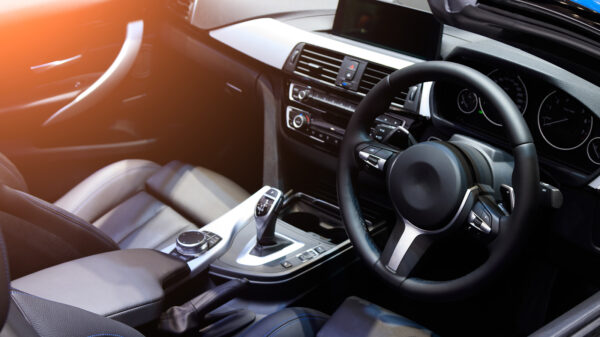
The cabin uses the brand’s current design language: a pair of high-resolution digital displays (one behind the steering wheel, one in the centre stack), the distinctive circular air vents, and a floating centre console design. Materials throughout feel appropriate for the price point — soft-touch surfaces where your hands naturally rest, with harder plastics in less visible areas.
The MBUX infotainment system is standard, offering both touchscreen and voice control. The “Hey Mercedes” voice assistant is genuinely useful for adjusting climate control, changing radio stations, or setting navigation without taking your hands off the wheel. Wireless Apple CarPlay and Android Auto are included, which removes one of the main frustrations from earlier Mercedes infotainment systems.
Front seat comfort is excellent. The seats offer good support for longer drives, and there’s enough adjustment to find an ideal driving position regardless of your height. Rear seat legroom is generous for a compact SUV — adults can sit behind other adults without feeling cramped.
The ambient lighting — a Mercedes signature — transforms the interior at night, with 64 colours to choose from. It’s a small touch, but one that makes the GLB250 feel more special than most competitors.
Who Should Consider the GLB250?
The GLB250 makes the most sense for:
The Brand-Conscious Buyer on a Budget
If you’ve always wanted a Mercedes but couldn’t justify the price of a GLC or E-Class, the GLB250 offers that badge appeal at a more accessible price. It’s not cheap by any means, but it undercuts comparable Mercedes models by several thousand pounds.
The Practical Family
The optional third row is genuinely useful for families with young children. Booster seats fit well in the second row, and the occasional third-row seating handles carpool duty without requiring a minivan.
The Downsizer
If you’ve traded in a larger SUV and miss the luxury but not the size, the GLB250 delivers the Mercedes experience in a footprint that actually fits in city parking spaces.
Pros and Cons
Pros:
- Unmatched third-row flexibility in the compact luxury SUV segment
- Excellent fuel economy for a vehicle of this size and badge
- Genuinely comfortable ride that rivals much more expensive Mercedes models
- Premium interior with the latest MBUX technology
- Reasonable pricing relative to the Mercedes badge it wears
- Impressive cargo capacity with seats folded flat
Cons:
- 221 horsepower feels modest compared to some competitors
- Third-row seating is genuinely only suitable for children or very short trips
- Options add up quickly — the $45,000 base price can swell considerably
- No plug-in hybrid option — unlike some rivals
- Not particularly engaging to drive if you’re after sporty handling
- Dual-clutch hesitation at very low speeds can be noticeable in traffic
Tips for Buying a GLB250
If you’re shopping for a GLB250, here are some things worth considering:
- Decide on 4MATIC early — The all-wheel-drive version costs roughly $2,000-$3,000 more but returns slightly worse fuel economy. If you live somewhere with harsh winters, it’s worth it. If you’re in a mild climate, the front-wheel-drive model is the smarter financial choice.
- The base model is well-equipped — The standard GLB250 includes dual digital displays, LED lighting, the MBUX system, and Apple CarPlay/Android Auto. You don’t need many options to get a genuinely nice car.
- Think carefully about the third row — If you genuinely need seven seats, the $1,500-$2,000 option is worthwhile. If you can’t remember the last time you needed to transport seven people, skip it and enjoy the extra cargo space.
- Consider the AMG Line packages — These add sportier exterior styling and different wheels without significantly changing the driving experience. If you want the GLB250 to look a bit more aggressive, the visual upgrade is reasonably priced.
- Shop used carefully — Mercedes depreciation can be significant in the first few years. A one- or two-year-old GLB250 with low miles could represent excellent value compared to a new model.
- Factor in the options — Mercedes pricing can climb rapidly once you start checking boxes. A fully loaded GLB250 can approach GLC territory in price. Know your budget before you start configuring.
For more automotive news, reviews, and buying guides, visit Cars at Next Apps Zone.
Frequently Asked Questions
What is the Mercedes-Benz GLB250?
The Mercedes-Benz GLB250 is a compact luxury SUV powered by a 2.0-litre turbocharged four-cylinder engine producing 221 horsepower. It offers seating for five people as standard, with an optional third row that increases capacity to seven. The GLB250 uses an 8-speed dual-clutch transmission and is available with front-wheel drive or all-wheel drive (4MATIC).
How fuel-efficient is the GLB250?
The front-wheel-drive GLB250 returns an EPA-estimated 25 mpg city, 33 mpg highway, and 28 mpg combined. The all-wheel-drive 4MATIC model returns 24 mpg city, 32 mpg highway, and 27 mpg combined. Both figures are impressive for a luxury SUV of this size.
Does the GLB250 have a third row?
An optional third-row seat package is available, increasing seating capacity from five to seven. The third row is best suited for children and short trips due to limited legroom and headroom. When the third row isn’t in use, it folds flat to expand cargo space.
What is the difference between the GLB250 and the AMG GLB35?
The AMG GLB35 is the performance-oriented version, powered by a turbocharged 2.0-litre four-cylinder producing 302 horsepower — 81 hp more than the standard GLB250. The AMG model also features sport-tuned suspension, more aggressive styling, and additional performance features. It’s aimed at buyers who want more driving excitement without stepping up to a larger SUV.
How much does a Mercedes-Benz GLB250 cost?
The 2026 Mercedes-Benz GLB250 starts at approximately $45,150 for the front-wheel-drive model. The 4MATIC all-wheel-drive version starts around $48,000. These prices exclude destination charges and options. A fully loaded GLB250 with numerous options can easily exceed $55,000.
The Final Word
The Mercedes-Benz GLB250 won’t set your heart racing when you see one in a showroom. It won’t win magazine comparison tests against more performance-oriented rivals. And it probably won’t be the car that makes your neighbours stop and stare.
But here’s what it will do: it will reliably, comfortably, and stylishly transport you and your family for years to come. It will do so with the three-pointed star on the bonnet, the quality interior, and the brand prestige that Mercedes-Benz has spent over a century building.
For a certain type of buyer — someone who values substance over show, practicality over performance, and long-term satisfaction over initial excitement — the GLB250 is genuinely difficult to beat.
Sometimes the most underrated cars are the ones that don’t try to be anything other than exactly what they are. The GLB250 is one of those cars. And that, more than anything, is its strength.