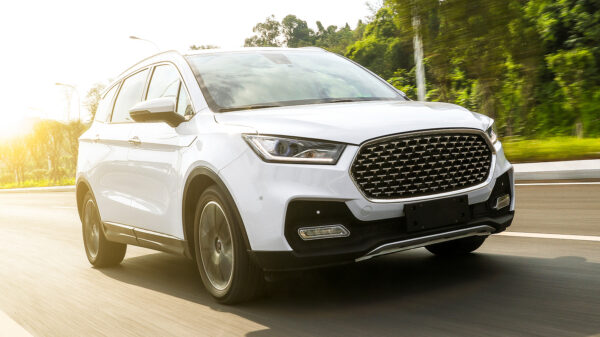

































I’ve reviewed about a dozen three-row SUVs over the past two years — Telluride, Grand Highlander, Pilot, you name it. Most blend together after a while. Big screen, third row, same safety suite, move along. When Volkswagen asked me to spend time with the 2026 Atlas, I expected more of the same. What I didn’t expect was that the thing I’d remember most wouldn’t be the cargo space or the engine — it would be the way the car talked back to me. Gemini AI in a Volkswagen feels like the first time a car’s technology actually understood what I meant, not just what I said.
The 2026 Volkswagen Atlas isn’t trying to reinvent the three-row SUV. It’s competing in the most crowded segment in America, against the Kia Telluride, Honda Pilot, Toyota Grand Highlander, and Hyundai Santa Fe. What it does differently is combine class-leading third-row space with a Google-powered infotainment system that, for once, doesn’t make you miss your phone. This review covers how it fits in, where it stands out, and why the AI inside it might be the most underrated feature in the segment.
Fitting In — Where the Atlas Sits in the Three-Row Segment
The Atlas occupies a specific spot in Volkswagen’s lineup and in the market. It’s built in Chattanooga, Tennessee, designed with American families in mind, and sized between the compact Tiguan and the now-departed Touareg. Pricing starts at 39,310forthebaseSEandrunsupto54,630 for the SEL Premium R-Line.
That puts it right in the middle of the three-row SUV pricing war. The Telluride starts around 37,000andgoespast53,000. The Grand Highlander starts higher and goes higher. The Atlas sits in the same zone but offers something neither of those do: Google Built-In with Gemini AI as standard on most trims.
If you’ve been reading car reviews for a while, you know the Atlas has existed since 2018. It was refreshed in 2024 with sharper styling, the new turbo four-cylinder engine, and this updated tech suite. The 2026 model carries those changes forward with minor tweaks.
VW sells the Atlas and the two-row Atlas Cross Sport. This review covers the three-row version, which is the one families should care about.
Standing Out — What the Atlas Does Better
Space That Actually Works for Adults
The Atlas’s main selling point hasn’t changed since day one: the third row fits actual grown humans. At 6’1″, I sat in the third row behind my own driving position and had knee room to spare. That’s rare. The Grand Highlander and Telluride are close, but the Atlas still edges them in third-row legroom.
Cargo space behind the third row is 20.6 cubic feet — enough for a couple of large suitcases or a week’s worth of groceries. Fold the third row and you get 55.5 cubic feet. Fold everything flat and you’re at 96.6 cubic feet. That’s moving-a-sofa territory.
The Interior You Live With Every Day
The cabin is where the Atlas shows its age in some ways and surprises in others. The materials are good but not luxurious — think soft-touch surfaces on the dash and doors, but hard plastic lower down. The SE trims use leatherette, while the SEL gets real leather.
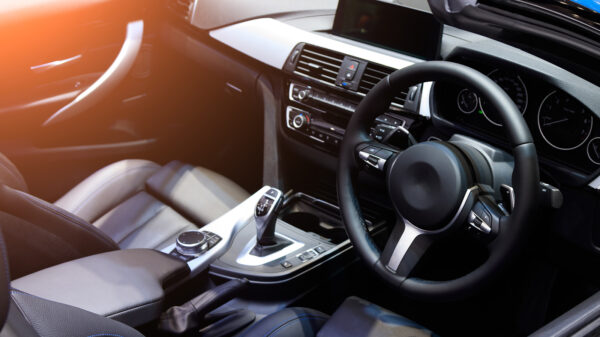
What works well is the layout. The 12-inch touchscreen sits high and close to the driver’s line of sight. Physical knobs for volume and tuning survive, which is more than I can say for some competitors. The gear selector is a stubby little lever that frees up console space.
USB-C ports are scattered across all three rows. The wireless charging pad up front worked reliably with both my iPhone and a Samsung Galaxy.
Driving Feel — Not Sporty, But Confident
The 2.0-liter turbo four produces 269 horsepower and 273 lb-ft of torque. It’s the only engine available. The old V6 is gone, and honestly, I don’t miss it. The turbo four delivers peak torque from 1,600 rpm, so the Atlas feels responsive around town without needing to rev. The 8-speed automatic shifts smoothly.
Fuel economy checks in at 20 city / 27 highway with front-wheel drive, and 19 / 25 with all-wheel drive. I averaged 21.5 in mixed driving, which is acceptable for a 4,600-pound SUV.
The ride is compliant without being floaty. Wind and road noise are well-controlled at highway speeds. The steering is light but accurate — the Atlas is easy to maneuver in parking lots, which matters more than handling feel when you’re carting kids around.
Max towing is 5,000 pounds when properly equipped. That’s enough for a small camper or a dual-jet ski trailer.
The AI Tools That Make It Smarter
This is the part that separates the Atlas from its competition. Volkswagen partnered with Google to integrate their services directly into the car, and the result is the most natural in-car tech experience I’ve used outside of a Tesla.
Google Built-In Changes Everything
Instead of relying solely on Apple CarPlay or Android Auto (both of which still work wirelessly here), the Atlas runs Google services natively. Google Maps lives on the infotainment screen with real-time traffic, live speed cameras, and the ability to send destinations from your phone to the car before you walk out the door.
Google Play lets you download apps directly to the car — Spotify, YouTube Music, Audible, and more. You don’t need your phone connected for any of this. Get in, the car knows your Google account, and your music and navigation are ready.
The difference between this and standard CarPlay is subtle but real. CarPlay mirrors your phone, which means notifications can interrupt, and the interface sometimes lags. Google Built-In feels like the car’s own operating system — because it is.
Gemini AI Voice — Talking to Your Car Like a Person
The Gemini AI voice assistant replaces the old, frustrating Volkswagen voice commands. Instead of memorizing exact phrases like “Navigate to 123 Main Street,” you can say things naturally.
In my testing, I said: “Find a coffee shop that’s open right now and has parking nearby.” Gemini understood, showed me results on the map, and asked if I wanted to navigate to the first one. When I said “Read my last text message,” it pulled it up, offered to reply, and took my dictated response without mangling it.
The assistant can also answer vehicle-specific questions by referencing the digital owner’s manual. I asked “How do I fold the third row?” and it pulled up the relevant instructions on the screen. Small thing, but it saved me from fumbling through the glovebox manual.
IQ.DRIVE — Safety Tech That Stays in the Background
Volkswagen’s IQ.DRIVE suite is standard across the lineup and includes adaptive cruise control with stop-and-go, lane centering, forward collision warning with automatic braking, blind spot monitoring, and rear cross-traffic alert.
The adaptive cruise control handles traffic smoothly. It doesn’t brake aggressively or leave giant gaps. The lane centering keeps the Atlas in the middle of the lane without the ping-pong effect some systems have. It’s Level 2 automation — you can take your hands off briefly, but the car nags you to keep them on the wheel.
Available upgrades include a head-up display, a 360-degree camera, and Park Assist that handles the steering while you control the pedals.
Over-the-Air Updates — The Car That Gets Better
The Atlas supports over-the-air updates for its infotainment system and some vehicle modules. This means the car you buy today can improve over time. Google Maps gets new features. The voice assistant learns new capabilities. Bug fixes arrive without a dealer visit.
It’s not at Tesla’s level of OTA sophistication, but it’s more than most mainstream competitors offer.
If you’re interested in how artificial intelligence is changing the driving experience more broadly, our deep dive on how Tesla uses AI for self-driving covers the technology from a different angle. And for the bigger picture on where car tech is heading, this analysis of AI in modern vehicles explains the systems that power features like Gemini in the Atlas.
What Needs Work
No car is perfect, and the Atlas has its share of annoyances.
The infotainment system, while better with Google Built-In, can still lag when switching between screens. It’s not slow enough to be frustrating, but it’s not Apple-level smooth either.
Some physical controls were sacrificed for the touchscreen. The climate controls are part of the display, which means you can’t adjust temperature without taking your eyes off the road. VW kept the volume knob, but other functions should have physical buttons.
The engine, while adequate, doesn’t feel punchy when you need to merge onto a highway with a full load of passengers and cargo. It’s not underpowered, but it won’t excite anyone.
And the fuel economy, while competitive for the class, still trails the hybrid options from Toyota and Kia. If fuel costs are your primary concern, the Grand Highlander Hybrid will save you money at the pump.
Which Trim to Pick
The sweet spot is the SE w/Technology trim starting at $43,730. It adds 20-inch wheels, a power liftgate, remote start, parking sensors, the illuminated VW logo (which looks great at night), and the full Google Built-In suite with Gemini AI.
If you want AWD, add 1,900.Ifyouwantleatherandahead−updisplay,stepuptotheSELat49,620. The SEL Premium R-Line at $54,630 adds massaging seats, a Harmon Kardon system, and a 360-degree camera — nice but unnecessary unless you want the best.
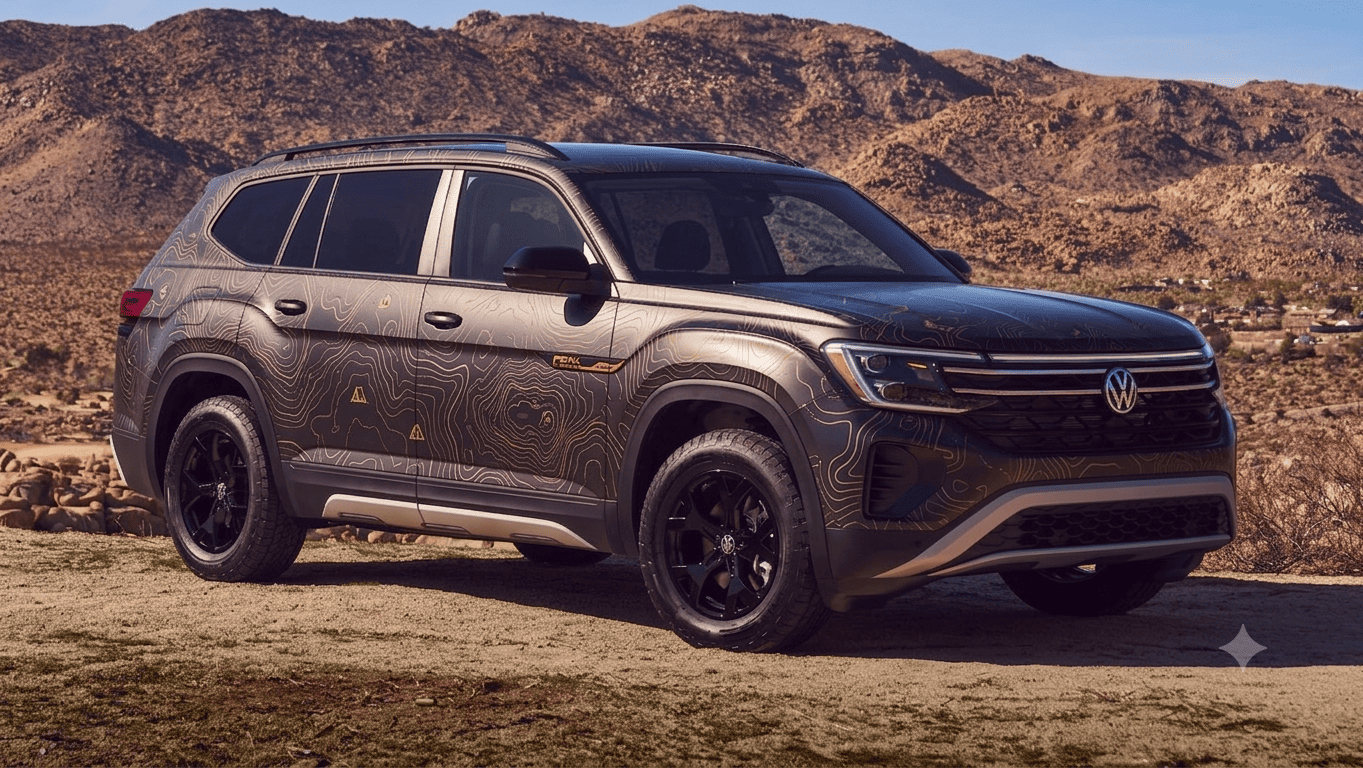
The Peak Edition at $48,060 is worth a look if you want a more rugged appearance with all-terrain tires and unique bumpers. It’s not a real off-roader, but it looks the part.
For a more detailed breakdown of how the Atlas compares to its direct rivals, check out our existing Atlas review which focuses on the ownership experience.
Frequently Asked Questions
Does the 2026 Volkswagen Atlas have Gemini AI? Yes. The Atlas with Google Built-In includes Gemini AI for natural language voice commands. It’s available on SE w/Technology trim and above.
Can you get the Atlas with a V6? No. The V6 was discontinued after 2023. The 2026 Atlas uses a 2.0-liter turbocharged four-cylinder producing 269 horsepower.
How much can the 2026 Atlas tow? Up to 5,000 pounds when properly equipped with the towing package.
Is the Atlas third row big enough for adults? Yes. It’s one of the roomiest third rows in the segment, with genuine legroom for 6-foot passengers.
Does the Atlas have wireless Apple CarPlay and Android Auto? Yes. Wireless CarPlay and Android Auto are standard. You can also use Google Built-In natively without connecting your phone.
What is the fuel economy of the 2026 Atlas? 20 city / 27 highway with FWD, 19 city / 25 highway with AWD. My real-world testing averaged 21.5 MPG combined.
Is the Atlas made in America? Yes. The Atlas is built in Chattanooga, Tennessee.
How does the Atlas compare to the Kia Telluride? The Telluride has a nicer interior and a stronger resale value. The Atlas has more third-row space and better in-car technology with Google Built-In. Drive both before deciding.
Conclusion
The 2026 Volkswagen Atlas does what it has always done — carry seven people in real comfort. What’s new is the technology. Google Built-In with Gemini AI transforms the daily experience in a way that horsepower numbers and torque curves never will. It’s not the most exciting SUV to drive, and it won’t win any interior design awards. But as a family tool that gets smarter over time, it deserves a spot on your test drive list.

Independent technology writer focused on artificial intelligence, emerging technologies, and digital innovation. Covers AI applications in sports, productivity, and online business.