





































I staked my first Ethereum about three years ago. Not because I understood staking — I didn’t. I understood that it paid more than my savings account and less than the vague promise of “passive income” I’d been reading about online.
The platform I used seemed legitimate. Clean interface. Good reviews. A name that sounded trustworthy. What it didn’t have was a clear explanation of what happened to my money if the platform went belly up.
Six months later, that’s exactly what happened. Not with a bang. With a whimper. Withdrawal restrictions appeared. Then delays. Then silence. My $8,000 in ETH was locked for eight months before I got maybe sixty cents on the dollar back.
That’s when I actually started reading about how staking works.
Not the “passive income in 2026!” content. The real mechanics. The actual risks. The boring stuff nobody wants to explain because “here’s how to earn 5% APY on your holdings” gets more clicks than “here’s why your money could disappear.”
This guide is the article I wish I’d read before I staked anything.
What Staking Actually Is (The Simple Version)
When you stake crypto, you’re locking your coins into a proof-of-stake blockchain network to help validate transactions. In return, you earn rewards — a percentage of your holdings, paid out over time.
That’s the concept. The concept is fine.
The problem isn’t the concept. It’s everything around it: the platforms, the lock-up periods, the fine print, and the sheer number of people who’d love to take your staked assets.
Here’s what I tell people now before they stake:
You’re not earning interest. You’re earning a share of network validation rewards. The platform facilitating that is a middleman. Middlemen fail.
Understanding that one sentence would have saved me $8,000.
The Platform Problem Nobody Talks About
Most “how to stake crypto” guides walk you through the process and assume the platform is neutral. It’s not.
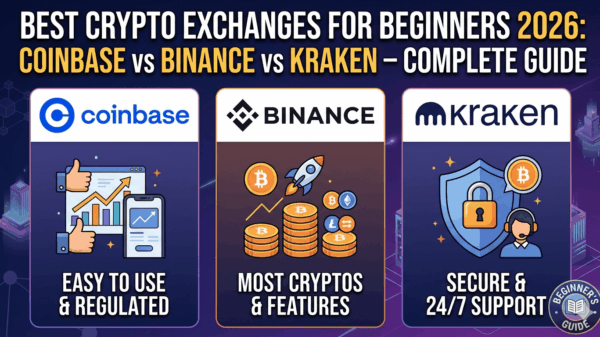
When you stake through a centralized exchange like Coinbase, Kraken, or Binance, you’re staking through their infrastructure. They hold your keys. They manage the validators. They take a cut. And if they get hacked, go insolvent, or get regulated into the ground, your staked assets go with them.
When you stake through a DeFi protocol — liquidity pool, staking pool, validator service — you have more control but more complexity. The smart contract might have bugs. The tokenomics might be unsustainable. The yield might be funded by new deposits rather than actual network rewards.
Both paths have failure modes. Neither path is “safe” in any way resembling a savings account. FDIC insurance doesn’t cover crypto. Ever.
Here’s the framework I developed after that $8,000 loss:
For most people: stake through a regulated, reputable centralized exchange. Coinbase, Kraken, Binance — they’re not perfect. They’re also not the platform that vanished with my money in 2022.
For serious DeFi users: understand the smart contract, understand the tokenomics, and never stake more than you can afford to lose entirely. This isn’t hedging. It’s gambling with extra steps.
Lock-Up Periods: The Trap Everyone Underestimates
Staking comes with lock-up periods. During those periods, you can’t withdraw your staked assets. They just sit there. Earning. Inaccessible.
Most people think “okay, stake for a month, collect rewards, move on.” That’s fine until the market turns.
Here’s what happened to me in 2022: I staked ETH during a bull run. Lock-up was 30 days. When the market crashed in May and I wanted out, I couldn’t. The lock-up expired in June. By then, my ETH had dropped significantly. Staking rewards didn’t offset the losses.
If you’re staking anything meaningful, ask yourself:
- Can I access this money during a market downturn?
- Do I have other liquidity available?
- What if I need this money for six months?
These aren’t hypotheticals. They’re the questions that determine whether staking makes sense for your situation.
Which Coins to Stake (And Which to Avoid)
Not all staking is equal. Staking ETH, Solana, and some random DeFi token are completely different animals.
ETH is the most established proof-of-stake chain. Staking here means you’re helping secure the second-largest blockchain by market cap. The APY is modest — usually around 4-6% through major platforms. That’s fine. Stable is good when your money is involved.
Solana offers higher yields — typically 6-8% — but has a more complex validator ecosystem and some historical uptime issues. Solana went down repeatedly in 2022. When the network goes down, staking rewards can pause. It’s not a dealbreaker but it’s worth knowing.
Cardano moves slowly. Staking is stable, rewards are predictable, network has a strong track record. The downside is lower APY and less integration with popular DeFi tools.
Everything else — I approach with extreme caution. I’ve seen “staking pools” for tokens that inflated their reward rates by printing more tokens. The APY looked incredible. The token crashed within months.
When you see APY above 12%, stop asking “how does this work?” Start asking “who’s funding this yield, and for how long?” Usually the answer is new depositors funding old depositors. That’s a Ponzi. The music stops eventually.
The Security Basics Nobody Follows
This should be obvious. It isn’t, because I still watch people stake without basic protections.
Use a hardware wallet for significant holdings. Ledger, Trezor — whatever fits your budget. This isn’t optional for amounts over a few thousand dollars. If your exchange gets hacked and your assets are on the exchange, you lose them. If they’re on your hardware wallet, the exchange hack is someone else’s problem.
Enable two-factor authentication on every platform. Not SMS-based 2FA — that’s been compromised over and over. Use an authenticator app. Yes, it’s annoying. Yes, it’s necessary.
Keep your seed phrase offline. Written on paper. In a safe. Not photographed. Not saved in notes. Not emailed to yourself. Physical. Offline. Hidden.
Don’t stake through DeFi protocols you found on Twitter. I’ve watched influencer-recommended staking pools rug-pull constantly. If you found it through a viral tweet, be skeptical. If the yield sounds too good, it is.
Crypto security fundamentals are the same as 2020, 2021, 2022, and every year before. People still ignore them because “it won’t happen to me” feels true until it doesn’t. I had that feeling too. My $8,000 disagrees.
Where I Stake Now (And Why)
After the loss, I rebuilt my approach from scratch.
I stake through Coinbase for ETH and SOL. Not because Coinbase is perfect — they’ve had regulatory headaches and outages — but because they’re regulated, publicly traded, and have a financial reason to stay operational. The trade-off is higher fees than DeFi. I view that fee as an insurance premium.
I keep liquid reserves outside staking. My rule: never stake more than half of any crypto holding. The other half stays accessible. I sacrifice some yield to maintain flexibility. That’s a trade-off I’m comfortable with.
I check lock-up periods against my financial calendar. Before staking, I look at my cash flow for the next 90 days. If I couldn’t access this money for 30 days without serious problems, I don’t stake it.
This isn’t an exciting approach. It’s a sustainable one. The goal isn’t to maximize APY. The goal is earning yield on assets I’d hold anyway, without creating new risk in the process.
The Honest Risk Assessment
Let me be direct about what can go wrong:
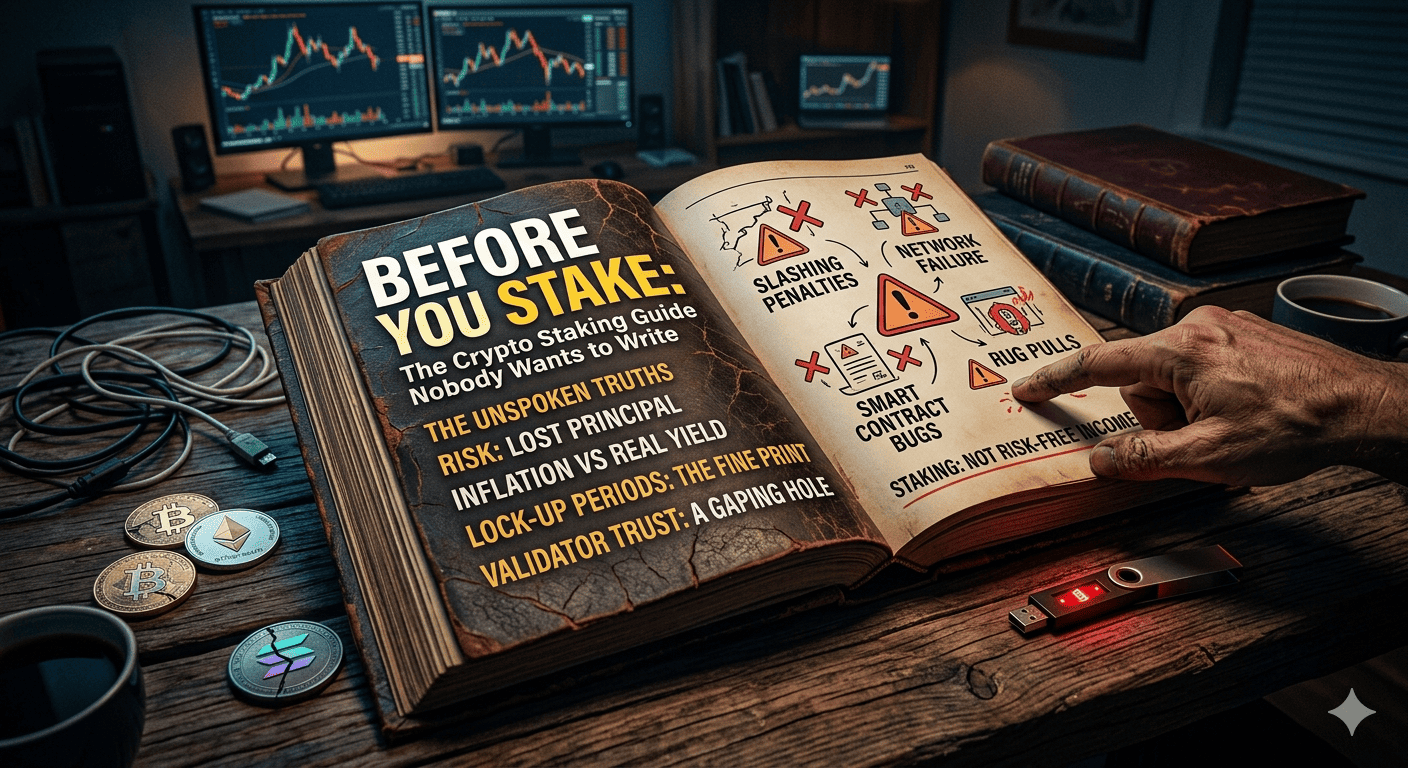
Platform risk — the exchange or protocol could fail, freeze withdrawals, or get hacked. Mitigated by choosing reputable platforms and using hardware wallets.
Smart contract risk — if you’re using DeFi, the contract could be exploited. Mitigated by using audited, established protocols and avoiding unaudited experiments.
Liquidity risk — you can’t access staked assets during lock-up. Mitigated by not staking money you need access to.
Inflation risk — staking rewards are often paid in the same token you’re staking. If the token drops hard, your rewards don’t offset the loss. Mitigated by not staking during overheated market conditions.
Regulatory risk — staking is being scrutinized by regulators in the US and EU. Could affect platform availability and tax treatment. Mitigated by keeping records and using regulated platforms.
None of these risks eliminate staking’s value. They just mean staking requires actual thought, not just “this gives me more crypto.”
What I’d Tell My Past Self
Don’t stake through a platform with no regulatory presence. Don’t stake more than you can lock away for the full period. Don’t skip reading the withdrawal terms. Don’t follow crypto influencers’ staking recommendations.
And if something feels complicated in a way that feels deliberate — if the platform seems designed to make understanding the risks hard — that’s information. Walk away.
Staking is legitimate for earning yield on crypto holdings. It’s also a place where well-intentioned people lose money and bad actors take it from them.
The difference between those outcomes isn’t luck. It’s preparation.
I staked without preparing. I paid for it. Now you don’t have to.

Independent technology writer focused on artificial intelligence, emerging technologies, and digital innovation. Covers AI applications in sports, productivity, and online business.