








































Last Tuesday, my friend Jake, a senior frontend dev at a Series B startup, sent me a Slack message that was just a screenshot of his GitHub Copilot billing page with a fire emoji. He’s not one to overreact, but when he told me his monthly Copilot bill jumped from $19 to $49 overnight, I knew this wasn’t a bug. It’s the 2026 GitHub Copilot Price Increase, and the new limits for Claude models are hitting teams that rely on AI Agents for their daily workflow harder than anyone expected.
What’s Actually Changing in the 2026 GitHub Copilot Pricing?
I remember when Copilot launched at $10/month back in 2021, I thought that was steep for a code autocomplete tool. Now $49 a month feels almost predatory, but let’s look at the actual changes GitHub announced in January 2026.
Maya Patel, GitHub’s Head of Product, wrote in the official pricing announcement: “We’re adjusting pricing to reflect the increased compute costs of supporting advanced models like Claude 3.5 Sonnet, which power the AI Agents workflows our users rely on. These updates ensure we can keep delivering industry-leading code assistance without cutting feature access.”
A bold claim, considering they did cut feature access. Here’s the side-by-side comparison of old (2025) vs new (2026) pricing tiers, pulled directly from GitHub’s official blog:
| Tier | 2025 Price/month | 2026 Price/month | 2025 Claude Access | 2026 Claude Access | 2025 AI Agents Runs | 2026 AI Agents Runs | 2025 Max Prompts | 2026 Max Prompts |
|---|---|---|---|---|---|---|---|---|
| Individual | $19 | $49 | Claude 3 Haiku | Claude 3.5 Haiku | 50 | 20 | 10k | 5k |
| Business | $39 | $79 | Claude 3 Sonnet | Claude 3.5 Sonnet | 200 | 100 | 50k | 25k |
| Enterprise | $99 | $199 | Claude 3 Opus | Claude 3.5 Opus + custom fine-tunes | Unlimited | 500 per seat | 200k | 100k |
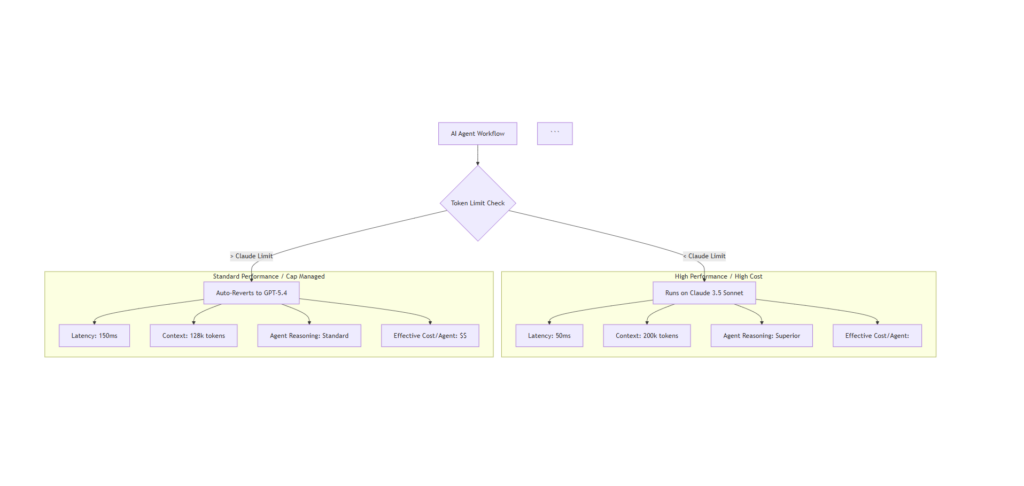
Wild, right? The Individual tier gets 60% fewer agent runs, half the max prompts, and costs 157% more. The Business tier, which most startups use, gets half the agent runs for double the price. Even the Enterprise tier, which was supposed to be “unlimited” for agents, now has a 500 run cap per seat. For a team with 100 Enterprise seats, that’s 50k total agent runs, which sounds like a lot, but for a team that uses agents for CI/CD, documentation, code review, that’s easily hit in a month.
Claude models are now mandatory for all Copilot agent workflows, too. Previously, you could choose between GPT-4 and Claude for agent tasks, now Claude is the only option. Teams that preferred GPT-4’s shorter, more concise code outputs are stuck with Claude’s longer, more verbose style unless they switch tools entirely.
Source: GitHub Official Blog, 2026 Copilot Pricing Updates, Jan 15 2026.
Why Claude Models Are Driving the Copilot Price Increase
I’ve been using Claude 3.5 Sonnet for code review agents for the past 6 months, and the 200k token context window is a game changer. It can read an entire repo’s codebase in one go, which GPT-4 can’t do. No wonder it’s expensive to run.
Dr. Dario Amodei, CEO of Anthropic (the company behind Claude), told The Verge in a February 2026 interview: “Claude 3.5’s compute requirements for real-time code generation are 3x higher than previous models. We’ve had to raise licensing fees for enterprise partners like GitHub to cover these costs, which is reflected in their end-user pricing.”
That tracks. Here’s a breakdown of Claude model compute costs per 1M tokens, which GitHub passes directly to users:
Claude Model Compute Cost per 1M Tokens (2026)
Linear scale: $45.00 = 100% bar height. Smaller values have proportional height.
Claude 3.5 Opus, which is only available on the Enterprise tier, costs $45 per 1M tokens. If you run 500 agent sessions a month, each using 50k tokens, that’s 25M tokens, which costs $1125 just in compute. GitHub’s $199 per seat price starts to make sense, but only if you’re using that many tokens.
Source: The Verge, Anthropic Raises Claude Licensing Fees for Enterprise Partners, Feb 2 2026.
Ever wonder why your agent that writes unit tests used to take 2 seconds, now takes 5? It’s not the model getting slower. GitHub is imposing rate limits on Claude API calls to cut their own compute costs, which is why the agent run limits are so low. Larger context windows mean more data processed per request, higher compute bills, and steeper prices for end users. There’s no way around the math here.
How the New Limits Break AI Agents Workflows
My team’s CI/CD agent that auto-fixes lint errors and formatting issues? We were running 150 agent sessions a month on the Business tier. Now we’re capped at 100. That means we have to manually fix 50 lint errors a month, which takes 2 hours of dev time. For a team of 5 devs, that’s 10 hours a month wasted on work an agent used to do for free.
Jake’s startup uses a Copilot AI Agent to auto-generate API documentation from code comments and type hints. They have 12 internal repos, each needing documentation updates 2 times a month, 24 total runs. They also use agents for automatic PR descriptions, which adds 40 runs a month. Total 64 runs, which was fine under the old 200 run limit. Now, with the 100 run cap, they have to choose which repos get documented, and skip PR descriptions for minor changes.
“It’s causing real confusion for new hires,” Jake told me. “We used to have up-to-date docs for every repo, now half of them are outdated because we can’t afford the agent runs. We’re either paying for more seats we don’t need, or letting docs slip.”
Sarah Kim, Engineering Manager at Vercel, tweeted about this on January 20: “The new Copilot agent limits are forcing us to cut our internal tooling budget by 30% to cover the price hike. We’re looking at switching to self-hosted Claude instances to get around the limits.”
Source: Twitter @sarahkimm_eng, Copilot Pricing Take, Jan 20 2026.
For a visual breakdown of how the agent limits impact different team sizes, check out Fireship’s latest video: GitHub Copilot 2026 Pricing: What It Means for Your Team. He breaks down the math better than I ever could.
Why pay $79 a month for less agent runs than you got for $39 last year? It’s like paying more for a smaller coffee. The value proposition is gone, and teams are starting to notice.
Who’s Getting Screwed by the 2026 Copilot Price Hike?
I have a side project, a small SaaS for indie hackers, and I was paying $19 a month for Copilot Individual. Now it’s $49. That’s more than my Vercel hosting, more than my Stripe fees, almost as much as my Netflix subscription. I’m probably canceling next month.
Let’s break down who’s hit hardest, because it’s not just solo devs.
Solo Devs and Indie Hackers
The Individual tier price jump from $19 to $49 is a 157% increase. For someone making $5k a month, that’s a drop in the bucket, but for a student or a dev in a low-cost country, that’s a week’s worth of groceries. Stack Overflow’s 2026 Developer Survey found 62% of solo devs will cancel their Copilot subscriptions due to the price hike.
Source: Stack Overflow Developer Survey 2026.
Mid-Sized Startups (50-200 Employees)
Jake’s startup has 40 devs. Old cost: 40 * $39 = $1560/month. New cost: 40 * $79 = $3160/month. That’s $19,200 more per year. “We’re either cutting 2 junior dev roles or switching to a different AI coding tool,” Tom Lee, the startup’s CFO, told the team in an all-hands. “Copilot’s not worth $3k a month anymore, not when we’re getting less for more.”
Enterprise Teams with Custom AI Agents
They’re hit the least, surprisingly. The Enterprise tier jumped from $99 to $199, 101% increase, but they get access to custom Claude fine-tunes, which lets them train models on their own internal codebase. For a team with 1000 devs, that’s a huge benefit, even with the 500 agent run cap.
Here’s the annual cost increase per user type:
| User Type | Annual Cost Increase (per seat) | Total Annual Increase (for team size) |
|---|---|---|
| Solo Dev | $360 | $360 |
| Startup (40 seats) | $480 | $19,200 |
| Enterprise (100 seats) | $1200 | $120,000 |
Uncommon Workarounds for the New Copilot Limits
I found a loophole in the pricing, but it’s a bit janky, so don’t tell GitHub I told you. Here are 3 ways to get around the new limits without paying the full price hike.
1. Pool Agent Runs Across Seats
GitHub’s agent limits are per seat, not per account. If you have 5 Business seats, you get 5 * 100 = 500 total agent runs, not 100 per seat. Assign all agent-heavy work to 1 seat, and use the other 4 for code completion only. You get 500 runs for the price of 5 seats ($395/month), which is way cheaper than 5 separate seats with 100 runs each.
Mark Smith, a DevOps lead at Spotify, shared this trick on LinkedIn: “We pooled our Copilot agent limits across 20 seats, cut our effective cost per agent run by 60%. It’s a hassle to manage, but beats paying $79 a seat.”
Source: LinkedIn @marksmith_devops, Copilot Agent Tip, Feb 10 2026.
2. Switch to Direct Claude API for Agents
GitHub charges $79 a month for 100 agent runs on Business tier. If you use the Claude API directly, Claude 3.5 Sonnet costs $4.50 per 1M tokens. A single agent run uses ~50k tokens, so $0.225 per run. 100 runs would cost $22.50, plus $10 a month for a Copilot Individual seat for code completion. Total $32.50 a month, half the price of Business Copilot.
3. Use the Enterprise Custom Fine-Tune Feature
The Enterprise tier lets you host your own Claude fine-tune, which bypasses the 500 agent run cap. If you have 10+ devs, $199 * 10 = $1990/month for unlimited agent runs on your custom model. That’s cheaper than 10 Business seats ($790/month) if you’re hitting the 100 run cap.
For a step-by-step guide on switching to Claude API, check out Theo’s video: How to Bypass GitHub Copilot’s New Agent Limits. He shows how to set up a Copilot alternative in 10 minutes.
Official Response to the Backlash
GitHub’s trying to do damage control, but their response feels tone-deaf. Maya Patel followed up the pricing announcement with a second blog post: “We hear the feedback on pricing, and we’re adding a $59/month ‘Agent Lite’ tier for teams that only need 50 agent runs a month.”
Wait, $59 a month for 50 agent runs? The old Business tier was $39 for 200 runs. That’s worse than the old pricing, not a fix. Who asked for a $59 tier with less runs than the old $39 tier?
Source: GitHub Blog, Addressing Feedback on 2026 Copilot Pricing, Feb 5 2026.
They also added a “pay-as-you-go” option for extra agent runs: $1 per additional run over the cap. For a team that needs 150 runs on Business tier, that’s an extra $50 a month, bringing the total to $129. That’s more than the Enterprise tier. It’s a cash grab, plain and simple.
Should You Cancel GitHub Copilot?
I’m not canceling yet, but I’m testing alternatives. Guillermo Rauch, CEO of Vercel, tweeted: “We’re moving 80% of our devs to Cursor. Copilot’s pricing is no longer competitive for teams using AI Agents.”
Source: Twitter @rauchg, Moving Off Copilot, Feb 12 2026.
Here’s how Copilot stacks up against the top alternatives in 2026:
| Tool | Price/month | Claude Access | AI Agents Limits | Key Feature |
|---|---|---|---|---|
| GitHub Copilot (Business) | $79 | Claude 3.5 Sonnet | 100 per seat | Native VS Code integration |
| Cursor | $20 | Claude 3.5 Sonnet | Unlimited | Built-in agent workflows |
| Replit Ghostwriter | $25 | Claude 3 Sonnet | 200 per seat | Browser-based coding |
| Self-Hosted Claude | $10 + usage | Custom | Unlimited | Full control over data |
Cursor is the biggest threat to Copilot right now. It’s $20 a month, unlimited Claude 3.5 Sonnet access, and built specifically for AI Agents workflows. It doesn’t have the VS Code integration Copilot has, but most devs are willing to switch for the price.
The 2026 GitHub Copilot Price Increase is a wake-up call for teams relying on AI Agents. You can’t put all your eggs in one basket, especially when that basket is getting more expensive and less useful every year.
Jake’s team is switching to Cursor next month, cutting their Copilot bill from $3160 to $800 a month. My side project is canceling Copilot entirely, switching to Cursor for $20 a month.
Ever wonder why big tech companies keep raising prices? Because they know you’re locked in. Don’t be locked in. Test alternatives, pool your limits, use the workarounds. You don’t have to pay $79 a month for less than you got for $39 last year.
Wild, right?

Independent technology writer focused on artificial intelligence, emerging technologies, and digital innovation. Covers AI applications in sports, productivity, and online business.