



































There comes a moment in every long-term test when you stop reviewing the car and simply start living with it.
The notes become fewer. The expectations fade. You’re no longer thinking about which button does what or whether the seat bolsters are aggressive enough.
You’re just driving.
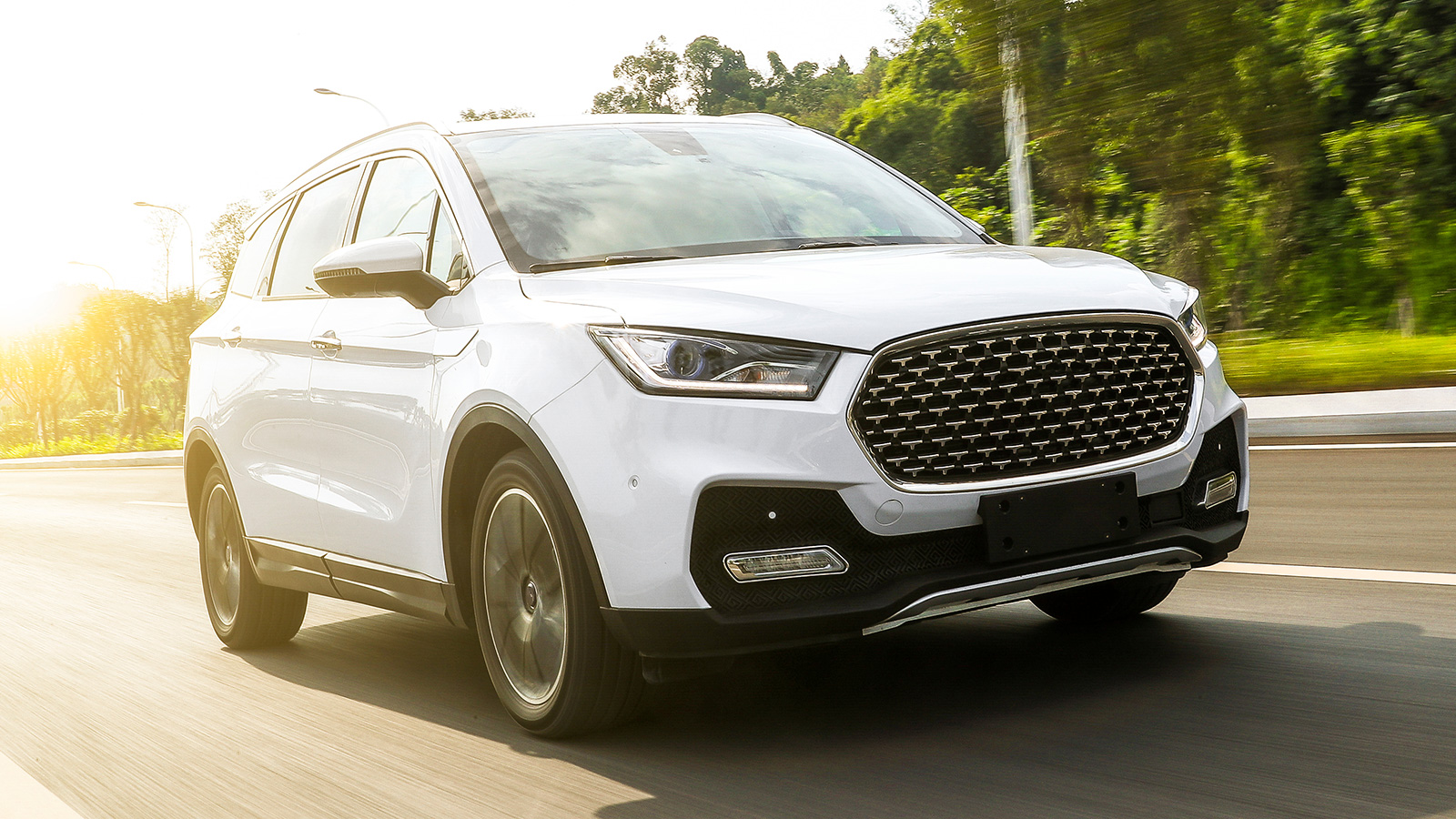
That’s where we found ourselves after putting 40,000 miles on a 2019 Subaru Ascent. Over the course of the test, the Ascent handled road trips, daily commutes, furniture-hauling runs, winter weather, and the ordinary chaos that comes with using a three-row SUV as an actual family vehicle.
After that much time behind the wheel, the first-drive impressions matter a lot less.
What matters is what you remember after the novelty disappears.
And after 40,000 miles, we have a pretty good idea of what the Ascent gets right — and where Subaru still had work to do.
Why We Chose the Ascent
When the Ascent arrived for our long-term test, Subaru was entering one of the most competitive parts of the SUV market.
The Mazda CX-9 was already established as one of the better-driving options. The Toyota Highlander had built a reputation for practicality and reliability. And newer competitors such as the Kia Telluride and Hyundai Palisade would soon raise expectations for interior quality and refinement.
The Ascent took a different approach.
It offered three rows, standard all-wheel drive, a turbocharged four-cylinder engine, and Subaru’s familiar Symmetrical AWD system.
That combination made sense for what we needed.
We wanted a vehicle capable of carrying people and cargo, dealing with winter weather, and towing a small trailer when necessary.
On paper, the Ascent checked almost every box.
The real question was whether it would continue to make sense after 40,000 miles.
The Powertrain: Better Than the Numbers Suggest
The Ascent’s 2.4-liter turbocharged flat-four produces 260 horsepower and 277 lb-ft of torque.
Those numbers don’t sound extraordinary for a three-row SUV, especially one weighing roughly 4,500 pounds depending on configuration.
But the Ascent doesn’t feel painfully slow.
Throttle response is generally strong, and the turbocharged engine gives the SUV enough midrange punch to merge onto highways or pass slower traffic without much drama.
The continuously variable transmission is another story.
The CVT does its job, but it doesn’t always behave like a conventional automatic. Push the accelerator hard and the engine can sit at relatively high revs while the transmission simulates gear changes.
You eventually get used to it.
But you never completely forget that you’re driving a CVT.
The engine note doesn’t help much, either.
The flat-four can sound coarse under heavy acceleration, particularly when the engine is cold. It’s not necessarily unpleasant, but compared with the smoother V6 engines found in some competitors, the Ascent’s powertrain feels more utilitarian.
That is one of the compromises Subaru made.
What 40,000 Miles Taught Us
A long-term test reveals things that a weekend review simply can’t.
The Good
The ride quality became one of our favorite things about the Ascent.
Broken pavement, rough highways, potholes, and winter roads rarely upset the vehicle. The suspension absorbs impacts without making the cabin feel constantly busy.
That matters more than it sounds.
A vehicle can feel impressive during a 20-minute test drive and become exhausting after several hours.
The Ascent generally does the opposite.
The longer we lived with it, the more we appreciated its ability to simply get on with the job.
Cargo Space Is Genuinely Useful
The Ascent offers useful cargo capacity for a three-row SUV.
With the third row in use, there is enough space for everyday shopping and smaller pieces of luggage. Fold the third row and the available space becomes substantially more useful.
During our time with the vehicle, we used it for furniture, luggage, equipment, and all the other things that tend to accumulate when a family SUV becomes the default transportation solution.
The important part wasn’t simply the published cargo figure.
It was how easy the space was to use.
All-Wheel Drive Is One of Its Strongest Arguments
This is where the Subaru formula makes the most sense.
Snow-covered roads, gravel surfaces, muddy areas, and poor-weather highway trips never made us particularly nervous in the Ascent.
The Symmetrical AWD system isn’t marketed as some exotic off-road technology.
It doesn’t need to be.
It simply gives the vehicle predictable traction when conditions get ugly.
For drivers living in areas where winter weather is a regular part of life, that confidence is worth something.
The Third Row Is Still the Weak Point
After 40,000 miles, our opinion of the third row became much clearer.
It’s usable.
But that doesn’t mean it’s comfortable for adults.
The space is much better suited to children or smaller passengers, particularly on longer journeys.
That distinction matters because three-row SUVs are often marketed as if all three rows are equally useful.
They aren’t.
If you regularly need to transport six or seven adults, the Ascent shouldn’t be at the top of your list.
If the third row is occasional seating for children, it makes considerably more sense.
The Driver-Assistance Systems Take Some Getting Used To
Subaru’s EyeSight driver-assistance technology is one of the Ascent’s useful safety features, but not every aspect of it was equally convincing to us.
The lane-centering and lane-keeping assistance could feel overly eager during long highway drives.
There were occasions when the steering intervention became distracting enough that we preferred to reduce or disable the assistance.
This isn’t unique to Subaru.
Many modern vehicles have driver-assistance systems that can feel intrusive depending on the road, lane markings, and driving conditions.
Still, it’s something potential buyers should experience during a test drive rather than simply checking off a feature list.
Real-World Fuel Economy
Fuel economy was one of the areas where expectations and reality met somewhere in the middle.
The Ascent’s EPA rating varies by configuration and model year, so comparing a single long-term result directly with every Ascent on sale isn’t particularly useful.
Over our 40,000-mile test, however, real-world fuel economy landed around the 20-mpg mark overall.
Highway driving could push the number considerably higher under favorable conditions.
Towing was a different story.
When pulling a trailer, fuel consumption dropped sharply, as you would expect from a relatively heavy three-row SUV working against additional aerodynamic and rolling resistance.
The important takeaway isn’t that the Ascent is exceptionally fuel-efficient.
It isn’t.
The takeaway is that its fuel economy is reasonable for its size and capability, particularly considering that every Ascent comes with all-wheel drive.
What We’d Change
If Subaru asked us to make a few changes after living with the Ascent for 40,000 miles, our list would be fairly straightforward.
1. A More Refined Powertrain
The turbocharged flat-four has enough performance.
What we’d really want is refinement.
A quieter engine and a CVT that behaves more naturally would make the Ascent feel significantly more sophisticated.
2. More Third-Row Space
This is probably the biggest practical weakness.
A little more legroom and easier access would make the third row much more useful for older passengers.
3. Better Charging Options
The technology environment has changed quickly since 2019.
USB-C connectivity and faster charging have become expectations rather than luxuries.
A newer Ascent addresses some of this, but the older model feels noticeably dated in this area.
4. More Efficient Powertrain Choices
The biggest opportunity for Subaru is probably electrification.
A hybrid or plug-in-hybrid system could preserve the Ascent’s practicality and AWD capability while improving fuel economy and reducing the workload on the turbocharged engine.
The Competition Has Changed
This is where the Ascent’s story gets interesting.
The vehicle entered the market at a time when the three-row SUV segment was already competitive.
It is even more competitive now.
The Kia Telluride and Hyundai Palisade brought strong interior design and refinement to the segment. The Toyota Highlander Hybrid demonstrated how much fuel economy could improve with electrification. And the Mazda CX-90 pushed harder on driving dynamics and premium-feeling materials.
The Ascent still has a compelling argument.
Standard all-wheel drive.
A practical interior.
A comfortable ride.
Good winter-weather confidence.
But buyers have more choices than ever.
And that means Subaru can’t rely solely on its AWD reputation anymore.
The Verdict After 40,000 Miles
So, would we choose the Ascent again?
Probably — but with a few qualifications.
The Ascent isn’t the most exciting vehicle in its class.
It isn’t the most luxurious.
It doesn’t have the best third row.
And its turbocharged flat-four and CVT aren’t the smoothest combination we’ve experienced.
But after 40,000 miles, those aren’t necessarily the things we remember most.
We remember how comfortable it was on long trips.
We remember loading it with far more cargo than seemed reasonable.
We remember driving through bad weather without constantly worrying about traction.
And we remember that, for most of the test, the Ascent simply did what we asked of it.
That’s a valuable quality.
The Ascent is the automotive equivalent of the friend who shows up when you need help, doesn’t complain, and gets the job done.
You might not dream about it.
But when it’s gone, you notice.
After 40,000 miles, that’s probably the most honest compliment we can give it.
Pros and Cons
Pros
- Comfortable ride quality
- Standard all-wheel drive
- Strong turbocharged midrange torque
- Useful cargo capacity
- Practical first and second rows
- 5,000-pound towing capacity when properly equipped
- Comprehensive safety technology
- Strong winter-weather capability
Cons
- Coarse engine note under hard acceleration
- CVT can feel unnatural
- Tight third row for adults
- Older 2019 models feel dated inside
- Fuel economy is merely average
- Some driver-assistance features can feel intrusive
What We’d Tell a Used Ascent Buyer
If you’re shopping for a used Ascent, don’t judge it from the brochure.
Drive it.
Spend time on a rough road.
Try the third row.
Test the infotainment system.
Check how the CVT behaves during hard acceleration.
And if you live somewhere with serious winters, pay attention to the tires rather than assuming all-wheel drive solves everything.
AWD helps you accelerate and maintain traction.
It doesn’t magically shorten braking distances on snow or ice.
That’s where proper winter tires still matter.
Frequently Asked Questions
Is the Subaru Ascent reliable after 40,000 miles?
A 40,000-mile test can reveal how a particular vehicle behaves over time, but it isn’t enough by itself to establish long-term reliability for every Ascent. Buyers should also check the vehicle’s maintenance history, recalls, service records, and model-year-specific reliability information.
How much can the Subaru Ascent tow?
The Ascent can tow up to 5,000 pounds when properly equipped, making it competitive among three-row midsize SUVs.
Is the Subaru Ascent good in snow?
Its standard all-wheel-drive system gives the Ascent a strong advantage in snow and other low-traction conditions. However, tires remain extremely important, particularly when braking or cornering on snow and ice.
Is the Ascent’s third row comfortable for adults?
For short trips, adults can use it.
For longer journeys, the third row is better suited to children or smaller passengers. Buyers who regularly carry adults should test the rearmost seats before purchasing.
Is the Subaru Ascent fuel-efficient?
It’s reasonably efficient for a three-row AWD SUV, but it isn’t a fuel-economy leader. Real-world results depend heavily on driving conditions, configuration, weather, and towing.
Final Verdict
After 40,000 miles, the Subaru Ascent doesn’t leave us with a story about spectacular performance or groundbreaking technology.
It leaves us with something more useful:
a clear understanding of what it’s like to live with.
It’s comfortable.
It’s capable.
It’s confident in poor weather.
It’s practical enough for family life.
And despite its weaknesses, it rarely makes everyday driving unnecessarily complicated.
That may not make the Ascent the most exciting three-row SUV on the market.
But after nearly two years and 40,000 miles, we learned something that a weekend test drive can’t tell you:
A good family SUV doesn’t have to impress you every morning. It just has to keep doing its job.
And that’s exactly what the Ascent did.

Independent technology writer focused on artificial intelligence, emerging technologies, and digital innovation. Covers AI applications in sports, productivity, and online business.