






























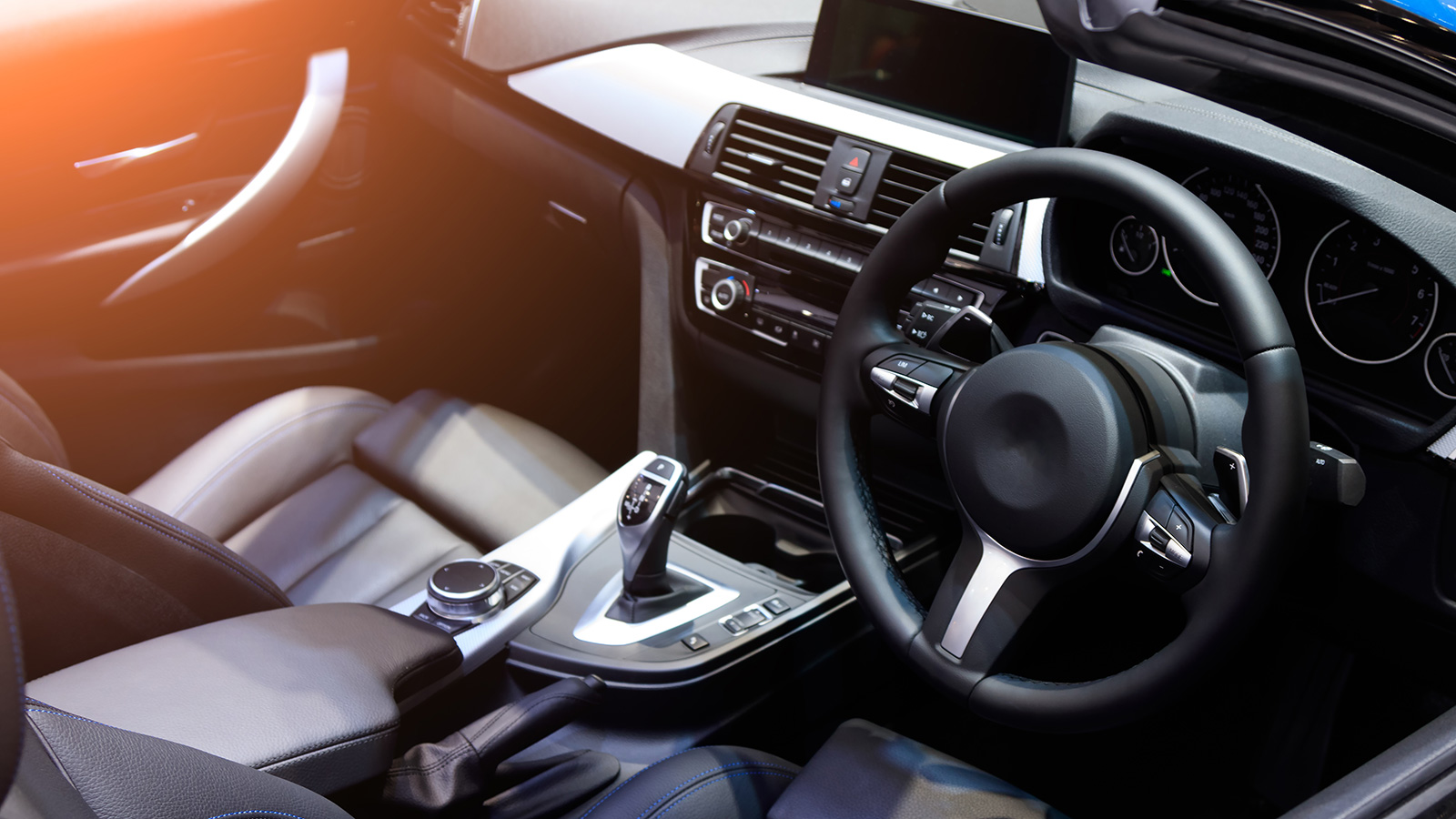
There’s a moment — usually somewhere between the first corner and the second — when you stop thinking of the Porsche 718 Spyder RS as a machine and start thinking of it as something alive.
The way it reads your mind through the steering wheel. The way that flat-six engine screams behind your head, climbing toward 9,000 rpm like it’s chasing something personal. The way it begs you to push harder instead of suggesting you take it easy.
This isn’t a car that asks you to drive it. It demands it.
And honestly? We’re not going to have cars like this for much longer. Before the naturally aspirated engine becomes a museum piece, Porsche built this — a roadster so focused, so raw, and so ridiculously fun that it might be one of the best driver-focused cars Porsche has ever built for the road.
I drove it. I still can’t stop thinking about it.
What Even Is the 718 Spyder RS?
The 718 Spyder RS sits at the very top of Porsche’s 718 lineup. It shares its engine and much of its performance technology with the Cayman GT4 RS, but Porsche turned the formula into an open-top roadster.
That distinction matters.
The GT4 RS is built around outright track performance. The Spyder RS takes much of that hardware and gives you something the Cayman can’t: an open roof, a lower-key personality, and the chance to hear that engine with almost nothing between your ears and the exhaust.
The name “Spyder” goes back to Porsche’s lightweight sports cars of the 1950s, most famously the 550 Spyder. The badge has been associated with stripped-down, driver-focused Porsches for decades.
And here’s the kicker: this generation of the Spyder RS exists only as a convertible. There is no fixed-roof 718 Spyder RS.
If you want the GT4 RS’s naturally aspirated flat-six in a car where you can drop the roof and hear every last revolution, this is the one.
For more on where Porsche has been, check out our piece on Porsche classics at Goodwood — seeing the brand’s early sports cars next to something like the Spyder RS really puts the evolution into perspective.
The Engine: The Thing That Makes You Forget Everything Else
Let’s talk about what matters.
Behind the driver is a 4.0-liter naturally aspirated flat-six — the same basic engine family used in the 911 GT3 and Cayman GT4 RS.
In the Spyder RS, it produces 493 horsepower at 8,400 rpm and 331 lb-ft of torque at 6,750 rpm, with the engine capable of revving all the way to 9,000 rpm.
No turbocharger. No electric motor. No hybrid assistance.
Just pistons, valves, and nine thousand rpm.
That alone makes the Spyder RS feel increasingly unusual in 2026.
Most modern performance cars hit hard down low and rely on turbocharging or electric assistance to deliver their punch. The Spyder RS takes a different approach. Roll into the throttle at 2,000 rpm and it pulls cleanly. Keep going past 5,000 and the character changes completely.
By the time you’re approaching the redline, the engine feels almost angry.
The gearbox is a seven-speed PDK dual-clutch transmission. There is no manual option.
Purists will complain. I understand why.
But after driving it, the PDK makes sense. The shifts are brutally quick, and the transmission keeps the engine exactly where it needs to be when you’re driving hard.
The numbers?
0–60 mph: 3.2 seconds (Porsche), 2.8 seconds in Car and Driver’s testing
Quarter-mile: 11.3 seconds (Porsche), 10.9 seconds at 127 mph in Car and Driver’s testing
Top speed: 191 mph
But honestly? Numbers don’t capture it.
The engine feels different from almost anything else on the road today.
It’s the difference between watching a concert on YouTube and standing in the front row.
The Chassis: Borrowed From a Race Car
The Spyder RS doesn’t just have a race-car engine. It has the hardware to match.
The car shares much of its chassis and powertrain technology with the Cayman GT4 RS, while Porsche retuned the suspension and aerodynamics for the open-top roadster.
Adaptive dampers are standard, allowing the car to be configured for different road conditions and driving styles.
The steering has the kind of weight and feedback enthusiasts associate with older hydraulic systems, telling you what the front tires are doing without feeling artificially numb.
That’s becoming rare.
Push the car into a corner and the Spyder RS feels remarkably composed. At the limit, it can understeer predictably, while throttle inputs can help rotate the car when you’re confident enough to explore that boundary.
The braking hardware is serious, too.
Large six-piston front calipers are standard, while Porsche’s Porsche Ceramic Composite Brake (PCCB) system is available as an option.
In Car and Driver’s testing, the Spyder RS stopped from 70 mph in just 147 feet.
That’s ridiculous.
For comparison, our Honda Passport buyer’s breakdown covers a completely different kind of vehicle. Not that anyone is cross-shopping these two.
The Open-Top Experience
Here’s the thing that separates the Spyder RS from the Cayman GT4 RS:
The sky.
The lightweight manual soft top can be removed and stowed when the weather cooperates. With the roof down, that flat-six engine’s voice fills the cabin.
Every gear change. Every rev. Every climb toward 9,000 rpm.
Nothing feels filtered.
Porsche recommends keeping the roof closed at very high speeds, and for obvious reasons. But on a winding road at sensible speeds, dropping the roof completely changes the experience.
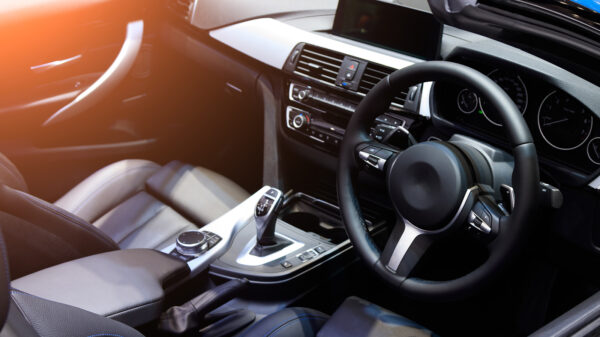
The cabin is minimalist by design.
There isn’t a giant touchscreen dominating the dashboard. There isn’t an attempt to turn the car into a luxury lounge.
Instead, you get a driving environment built around the steering wheel, pedals, seats, and the road ahead.
The available carbon-fiber-reinforced plastic bucket seats hold you firmly through corners. They’re not the seats I’d choose for a five-hour highway trip.
But that’s not really the point.
The optional Weissach Package adds more carbon fiber, lightweight components, and other weight-saving details. U.S. pricing has been around the $12,500 range depending on model year and configuration.
I’d still tick that box.
Practicality? Don’t Make Me Laugh
Let’s be real.
This is not a practical car.
It’s a two-seater with limited luggage space: approximately 5.2 cubic feet in the front trunk and 4.2 cubic feet behind the seats.
That’s enough for a weekend away if you pack like you’re preparing for a space mission.
Visibility isn’t its strongest point either. The high rear deck can make reversing awkward, and the stiff suspension means rough roads aren’t exactly relaxing.
The brakes can make noise at low speeds.
The ride can be harsh.
The seats aren’t designed around comfort first.
None of this matters much.
This car wasn’t designed for Costco runs.
Why the Spyder RS Matters More in 2026
This is where the Spyder RS becomes more interesting than simply being another very fast Porsche.
Porsche ended production of the combustion-powered 718 Boxster and Cayman in October 2025, closing the chapter on the internal-combustion 718 generation. Porsche has described the Spyder RS as the final newly developed 718 with a combustion engine.
That changes how you look at this car.
The Spyder RS isn’t simply another expensive roadster with an outrageous engine.
It’s a snapshot of an era.
A mid-engine sports car.
A naturally aspirated flat-six.
9,000 rpm.
No hybrid motor.
No turbocharger.
And an open roof.
That combination is becoming extremely difficult to find in a new car.
The next generation of the 718 family is moving in a different direction, making cars like the Spyder RS increasingly important to enthusiasts who care about the traditional sports-car formula.
That’s what makes the “last of a dying breed” description more than just a dramatic headline.
The Competition
Porsche listed the 718 Spyder RS from $170,100 in the U.S. before options and fees. At that price, the car occupies a strange place in the performance-car world.
It’s faster than many supercars from a decade ago, yet still sits below some of Porsche’s more expensive GT models.
Chevrolet Corvette Z06
The Z06 offers extraordinary performance for considerably less money.
Its naturally aspirated V8 produces a completely different soundtrack and character.
American V8 muscle versus German mid-engine precision.
Different religions.
Lamborghini Huracán Evo Spyder
The Lamborghini brings more drama, more visual theater, and the emotional appeal of a supercar badge.
But it’s also considerably more expensive to own and operate.
BMW Z4 M40i
The BMW is a comfortable roadster and a much easier car to live with.
But dynamically, it isn’t really playing the same game.
The truth is that the Spyder RS competes with itself.
There isn’t another new car offering this exact combination of a mid-engine layout, naturally aspirated flat-six, 9,000-rpm redline, PDK transmission, and convertible body.
If that’s the recipe you want, the alternatives get thin very quickly.
The Pros and Cons
What’s Great
- That engine. Seriously. One of the great naturally aspirated engines of its era.
- Exceptional steering and chassis balance
- Open-top experience that few modern sports cars can match
- Surprisingly usable when driven normally
- Extremely focused driving position
- A naturally aspirated 9,000-rpm flat-six
- Increasingly significant as the combustion-powered 718 era comes to an end
What’s Not
- No manual gearbox
- Ride quality can be punishing on poor roads
- Limited storage
- Expensive before options
- A fully equipped car can push well beyond the $200,000 mark
- The exhaust note can become tiring on very long highway drives
- The roof is far less convenient than a conventional powered convertible top
Should You Buy One?
If you’re buying it because you want the most practical Porsche for the money, absolutely not.
If you’re buying it because you love driving, understand what makes this car special, and can comfortably afford it, the argument becomes much harder to ignore.
The Spyder RS isn’t sensible.
That’s the point.
Cars like this aren’t going to become more common.
A naturally aspirated flat-six that revs to 9,000 rpm, sits behind the driver, and sends its power through a dual-clutch transmission is already an increasingly unusual formula.
And now that Porsche has ended production of the combustion-powered 718 generation, the Spyder RS carries even more significance.
Future enthusiasts may look back at cars like this the way we look at some of Porsche’s great analog sports cars from decades ago.
Not because they’re perfect.
Because they captured something that was disappearing.
The Spyder RS is the last dance of the combustion-powered 718 at its most extreme.
Buy it if you can.
Drive it.
Find a good road.
Drop the roof.
And, when the conditions are right, let that flat-six run all the way toward nine thousand rpm.
Your future self might thank you.
For more automotive stories, reviews, and deep dives, visit Next Apps Zone Cars — including our BMW Alpina B7 review.

Independent technology writer focused on artificial intelligence, emerging technologies, and digital innovation. Covers AI applications in sports, productivity, and online business.