




































Two factories stand on the same land, and they are not both going to survive.
The first factory mass-produces AI-generated articles hundreds of pages a week, generated by language models, pumped into search engines. It looked, in 2023 and 2024, like the smartest machine ever built: infinite supply, near-zero marginal cost. In 2026 it is closing its doors, and the closing isn’t an accident. The second factory — smaller, quieter, and far more expensive to build — produces something different: not articles, but systems. It automates the workflow around content, not the content itself. That factory is where the money has gone.
This is a tour of both. It’s also a warning to anyone still standing in the first one.
The old factory: mass-produced AI articles
You know the product line. “The 15 Best Tools for X in 2026,” written by a model in forty seconds, published across a network of sites, monetized with affiliate links. The economics looked unbeatable: a machine that never sleeps, never writes a bad first draft, and produces a thousand pages for the price of a human’s week.
The machine’s flaw was hidden in its own efficiency. It produced supply without producing value. The pages had no experience behind them, no testing, no measurements, no reason to exist beyond occupying a spot in a ranking. And the system that ranked them Google had spent years building exactly the quality filters designed to detect this: the Helpful Content updates, the thin-content demotions, the algorithmic reclassification of “aggregated” content. The flood of AI-generated pages that broke through in 2023-2024 was met by a quality system designed to sweep it away, and the sweep is now in its consolidation phase.
The shutdown notice
The old factory’s failure wasn’t a rumor. It was documented in three places at once:
- The algorithms stopped paying. AI-generated affiliate content became a filter target, not a growth hack. Pages that scaled by repetition were demoted or disappeared from rankings entirely.
- The audience developed detectors. Nearly half of consumers now report suspicion of reviews that read like AI-generated content. A page that feels machine-made converts worse than a page that doesn’t — the reader’s instinct became an anti-cheat system.
- The trust layer became the requirement. The content that ranks and converts in 2026 is the content that proves experience: first-hand testing, original numbers, specific measurements. None of that can be generated in bulk, because none of it exists in bulk.
The shutdown notice, in one line: mass-produced AI articles solved the wrong problem. They automated the production of words when what the market rewards is the production of proof — and proof cannot be synthesized.
The new factory: automation as the business
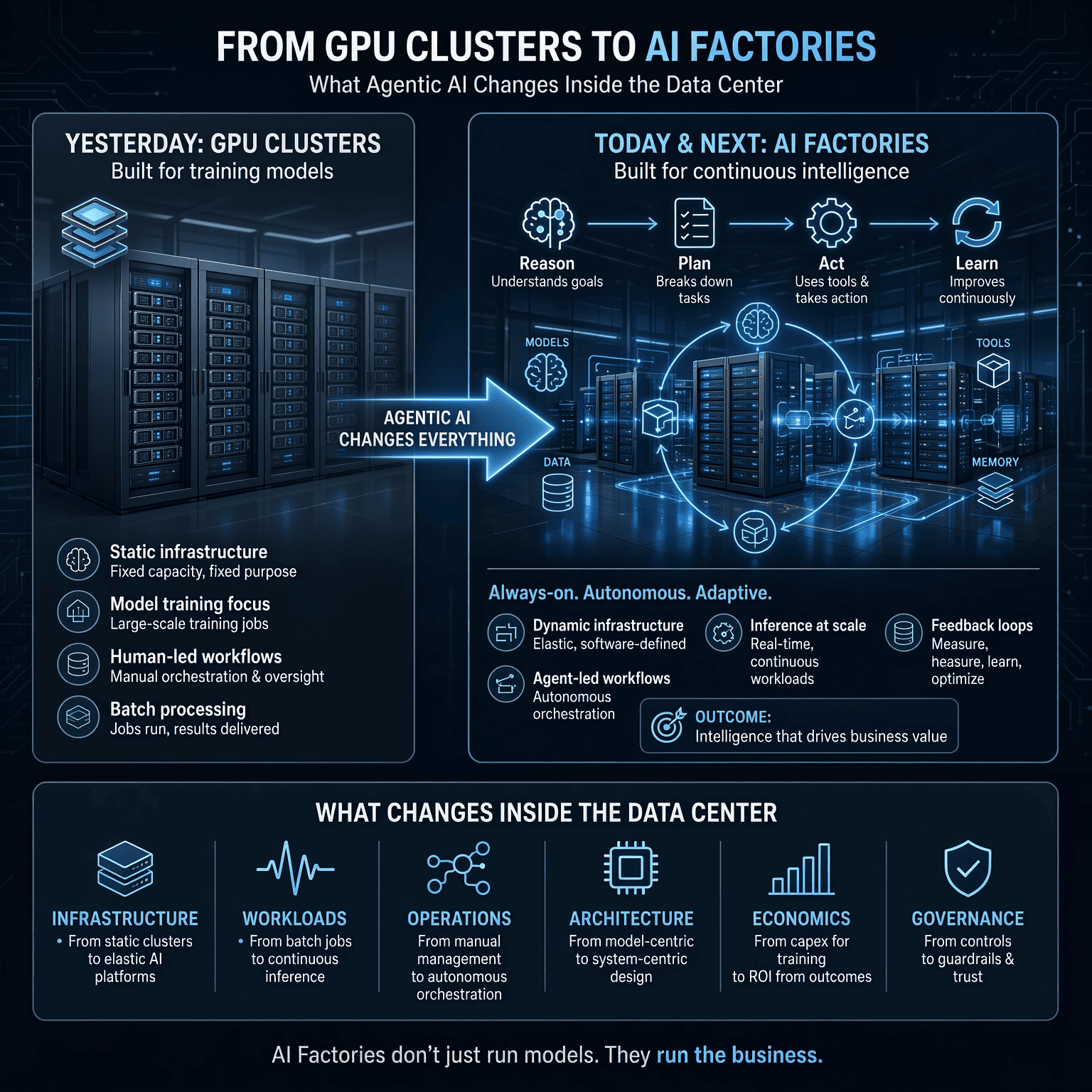
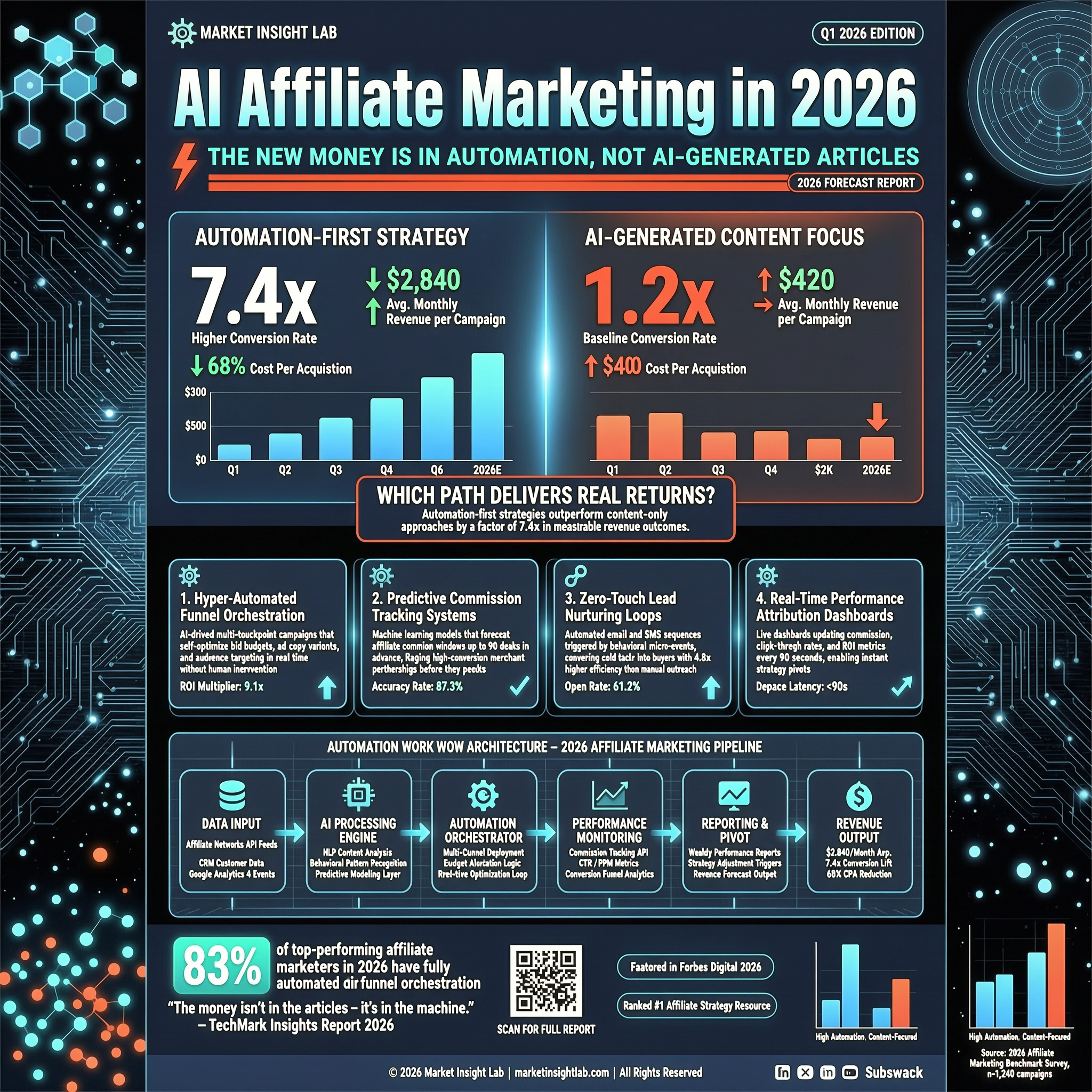
Here is the distinction that separates the two factories, and it’s worth stating slowly: AI-generated content automates writing. Automation automates the business. The first is a faster typewriter. The second is a different machine entirely.
The new factory doesn’t ask “how do I write a thousand articles?” It asks “how do I build a system that researches, drafts, distributes, measures, and optimizes — with a human standing at the one station that creates trust?” The words become one step in a pipeline, not the product. The product is the pipeline itself: a system that compounds, that updates, that measures, that runs whether you’re writing or not.
The production line
Walk the floor. The new machine has five stations, and understanding it means understanding that only one of them is about writing:
Station 1 — Research and data ingestion. The system pulls real-time data: product specifications, current pricing, availability, updates. This is the part that turns a page into a feed. Content built on live data doesn’t age; it maintains itself. This station is non-negotiable, because the formats that survive in 2026 are the ones that are true right now, not the ones that were true last year.
Station 2 — Drafting. AI writes the first draft here, and this is where the mass-production factory stopped — and died. The draft is raw material, not product. It becomes valuable only when it passes through the next station.
Station 3 — The human station. This is the station you cannot automate, and the one that justifies your existence: testing the product, verifying the numbers, adding the first-hand experience, the original images, the measurements, the honest caveats. This is the station that creates proof — the exact thing the AI engines cite and the exact thing a wary public trusts. Automation doesn’t replace this station. It surrounds it.
Station 4 — Distribution. The system multiplies reach: emails to the owned list, scheduled social posts, multi-channel syndication, updates pushed to subscribers. The affiliates who survived every algorithm update of the last two years are the ones with three or more channels — and the ones with an audience they own outright.
Station 5 — Measurement and optimization. Server-side tracking, intent-based attribution, conversion data fed back into Station 1. The machine watches its own output, learns which formats and which products convert, and reallocates effort automatically. A factory that can’t measure itself is just a printing press.
The bill of materials
The good news about building this machine is that the parts are cheap. The AI engines, the automation platforms, the tracking tools — the genuinely effective ones have real free tiers, and a working production line can be assembled at zero cost before it ever spends a dollar. That’s not an argument for delay; it’s an argument for building the system first and paying for scale later — the tools that actually work, at the free level, are the ones worth wiring in. The expensive part of the new factory is not the equipment. It’s the two things no tool provides: the first-hand experience at Station 3, and the discipline to let the system run and measure instead of constantly rebuilding it.
The product
So what does the new factory output, if not articles?
- Live reference pages — current pricing and availability, maintained by the data ingestion, cited by the AI engines instead of buried by them.
- Documented journeys — the six-month tests, the real measurements, the honest numbers that no model can generate because they didn’t happen to a model.
- Structured answers — clear, direct, self-contained sections (the 40-to-75-word format research shows AI engines prefer to cite), written so that both a person and a machine can quote them.
- An owned audience — the email list, the community, the relationship that no ranking update can confiscate.
None of these is “an article.” All of them are assets. The distinction matters, because assets compound and articles decay.
The economics
The arithmetic of the two factories settles the argument:
The old machine’s math was volume × thin margin: a thousand thin pages, low trust, low conversion, commissions shrinking, rankings vanishing. The new machine’s math is system × compounding: one workflow that keeps producing proof, keeps its audience, keeps its data fresh, and keeps improving its own conversion. The difference is leverage — not the leverage of a faster typewriter, but the leverage of a business that runs on its own measurement.
And the compounding is real, not theoretical. There is a documented path from zero to real income built entirely on free AI tools — not by mass-producing content, but by building a working system and running it. The money in 2026 doesn’t go to the person with the most pages. It goes to the person with the working machine.
The safety inspector
Every factory gets inspected, and the new one has real hazards to name honestly:
- Automated junk is still junk. If the system produces content with no proof, it fails exactly like the old factory just faster. Automation amplifies a good process and a bad one equally.
- Over-automation is a compliance risk. The FTC now enforces its review rule with real penalties per violation. Automating fake or undisclosed endorsements is not growth hacking; it’s a priced liability. The human station is also the compliance station.
- The machine is only as good as its sources. If the data ingestion feeds on unreliable sources, the “proof” is fiction with a timestamp. Verification is a station, not a checkbox.
- Trust cannot be scheduled. The system can schedule distribution; it cannot schedule credibility. The moment automation replaces the human at Station 3 is the moment the factory starts producing the old product under a new name.
The final inspection
The verdict from the floor: AI-generated articles were the last gasp of the content factory. Automation is the successor of the business. The first machine made words cheaper. The second makes work cheaper — research, distribution, measurement, optimization — while leaving the one thing that matters in human hands: proof.
Build the system. Wire in the free tools. Put yourself at the station that automation can’t reach. And stop counting pages — start counting workflows. That’s the only factory that’s still hiring in 2026.

Independent technology writer focused on artificial intelligence, emerging technologies, and digital innovation. Covers AI applications in sports, productivity, and online business.