











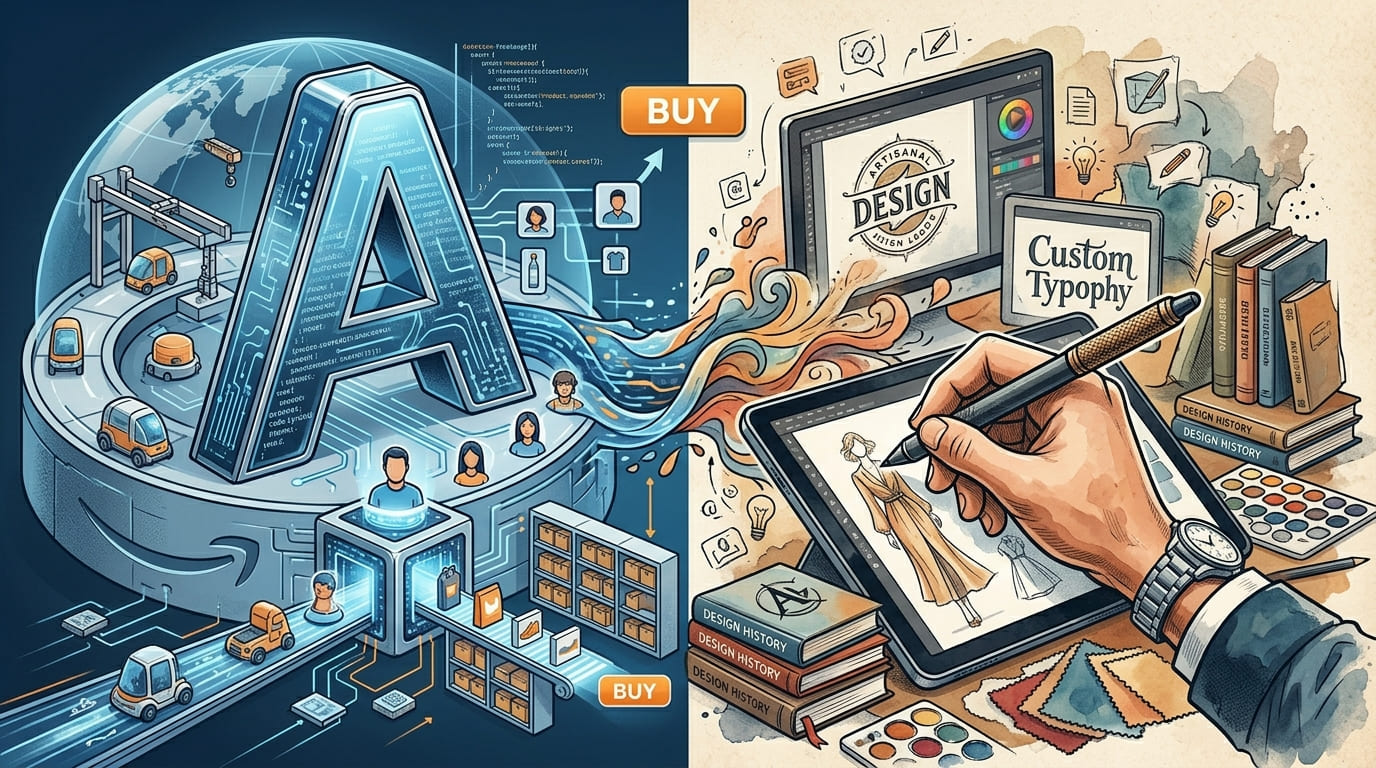
“What if anyone could replace a freelance designer with a single prompt?”
This question no longer feels theoretical. It is slowly becoming part of how online commerce works today.
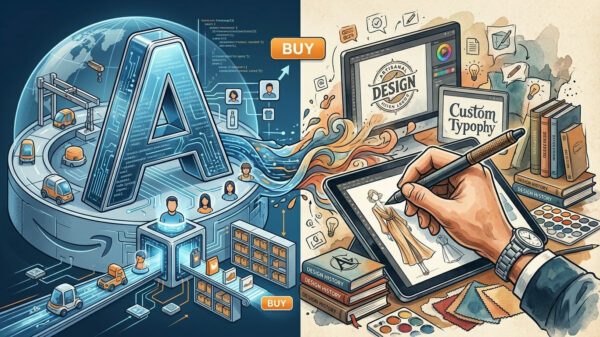
Amazon has been expanding its use of AI across its ecosystem. From product recommendations to shopping assistants, and now into content and design creation, the company is building tools that reduce the need for traditional design steps.
At the same time, Alexa is becoming more than a voice assistant. It is turning into a simple interface for interacting with commerce in a more natural way.
Behind all of this is a quiet tension.
On one side, there is opportunity. Small sellers can move faster and spend less. On the other side, there is disruption. Freelance designers may see parts of their work reduced or changed.
This is not a sudden replacement. It is a gradual shift in how e-commerce content is created.
Inside Amazon’s AI-Powered Design System
How AI turns prompts into product designs
Amazon is moving toward a system where simple text can become visual design.
A seller might write something like:
“A minimalist cat design for a t-shirt.”
In seconds, the AI can generate a usable design idea.
This connects directly to Amazon’s commerce ecosystem. Instead of hiring a designer first, users can go from idea to product almost instantly.
The workflow is changing.
Before, design was a separate step.
Now, it is built directly into the platform.
Alexa as a creative interface
Alexa is no longer only for small tasks like setting timers or checking the weather.
In Amazon’s AI vision, voice becomes a creative tool.
A user could say:
“Alexa, create a summer mug design with a beach theme.”
Instead of opening design software, users simply speak.
This makes design more accessible.
People who never used professional tools can now create product ideas on their own.
It reduces the distance between imagination and execution in e-commerce.
Connection with Amazon Merch on Demand
Amazon Merch on Demand is a print-on-demand system.
It allows users to upload designs and sell them on products like t-shirts, hoodies, and mugs without keeping inventory.
With AI added to this system, the process becomes even simpler:
- AI creates the design
- The user selects a product
- Amazon prints and ships it when someone buys it
This means one person can now run a small online store without a designer or stock management.
Design becomes part of the automated e-commerce pipeline.
When Commerce Becomes Automated Creativity
From human designers to AI-generated visuals
In traditional e-commerce, design takes skill, time, and tools.
Now, AI can generate visuals in seconds.
This creates a clear shift:
- Human designers focus on originality and taste
- AI focuses on speed and volume
For online sellers, speed often matters more than perfection.
That is why AI-generated visuals are becoming more common in commerce platforms.
But this also raises a simple question:
If everyone can generate designs instantly, what makes a product stand out?
The rise of “zero-skill entrepreneurship”
One of the biggest changes is the rise of what many now call “zero-skill entrepreneurship.”
It means people can start small businesses without design skills.
For example:
- A student creates t-shirt ideas using AI
- A parent designs mugs for a small online shop
- A hobby creator builds a niche product brand
No advanced tools are needed.
This is powerful because it opens commerce to almost everyone.
But it also increases competition, since more people can enter the same space.
Why Amazon is betting on AI-driven commerce
Amazon is not adding AI just for experimentation.
There are clear business reasons behind it:
- Faster product creation increases listings
- More listings increase chances of sales
- Personalized designs improve customer engagement
- Lower barriers attract more sellers
In simple terms, AI helps Amazon scale commerce more efficiently.
It also makes the platform more flexible, where products can be created and adjusted quickly based on demand.
Is This the End of Freelance Design Work?
Tasks most at risk of automation
Not all design work is affected in the same way.
The most vulnerable tasks are simple and repetitive:
- Basic logo design
- Simple t-shirt graphics
- Standard product mockups
These are exactly the kinds of tasks AI can already produce quickly.
For small budgets, AI tools may become the first option instead of hiring freelancers.
This changes the entry-level design market.
What AI cannot easily replace
Even with strong AI systems, some areas remain difficult to automate.
These include:
- Brand identity strategy
- Emotional storytelling through design
- High-level creative direction
These require human understanding of culture, emotion, and meaning.
AI can generate images, but it does not fully understand why a brand should feel a certain way.
That is still a human strength.
The shift from designers to “creative directors”
Instead of disappearing, many designers may move into a different role.
Rather than producing every visual manually, they may:
- Guide AI-generated ideas
- Refine brand direction
- Select the strongest creative options
In this model, designers become decision-makers instead of manual producers.
The job changes, but it does not disappear.
How Designers and Entrepreneurs Can Benefit
Using AI as a productivity multiplier
AI is not only a replacement. It is also a tool.
Designers can use it to:
- Generate ideas faster
- Explore multiple styles quickly
- Create early drafts in seconds
This leaves more time for refining and improving work.
For freelancers, it can mean higher output with less effort.
Building AI-assisted e-commerce stores
Small businesses can also benefit directly.
Instead of building large teams, a seller can:
- Use AI to create product designs
- Test different visual styles quickly
- Launch products faster in e-commerce platforms
This makes it easier to turn small ideas into real online stores.
AI and commerce tools together reduce both cost and time.
New freelance niches emerging
Even as some tasks disappear, new opportunities appear.
For example:
- Prompt design for AI tools
- AI branding strategy for businesses
- Editing and refining AI-generated visuals
These roles combine creativity with technical understanding.
Freelancers who adapt can find new demand in these areas.
What Happens When AI Becomes the Default Designer?
Hyper-personalized e-commerce
One major future shift is personalization.
Instead of one design for all customers, AI could generate variations for each person.
For example:
- A mug design based on user interests
- A t-shirt color adapted to preferences
- Product visuals tailored to individual shoppers
This makes e-commerce more personal and dynamic.
Each customer experience becomes slightly different.
The collapse of traditional design pricing
As AI becomes more common, basic design work becomes cheaper.
Simple tasks that once required freelancers may become free or nearly free.
This creates a split:
- Low-cost design becomes automated
- High-end design focuses on strategy and branding
The market divides into two levels: automated and premium human work.
The rise of hybrid human-AI creative ecosystems
The future is not purely human or purely AI.
It is a mix of both.
In this system:
- AI generates ideas
- Humans select and refine them
- Platforms like Amazon distribute the final product
This creates a balanced ecosystem.
Speed comes from machines.
Meaning comes from humans.
Not the End of Designers—But the End of Design as We Know It
AI did not replace designers.
It changed who gets to design.
The real shift is not about job loss. It is about access.
More people can now create products, build ideas, and participate in commerce without traditional barriers.
Design becomes less about technical skill and more about direction, taste, and decision-making.
The real winners are those who learn to design with AI, not against it.

Independent technology writer focused on artificial intelligence, emerging technologies, and digital innovation. Covers AI applications in sports, productivity, and online business.