

























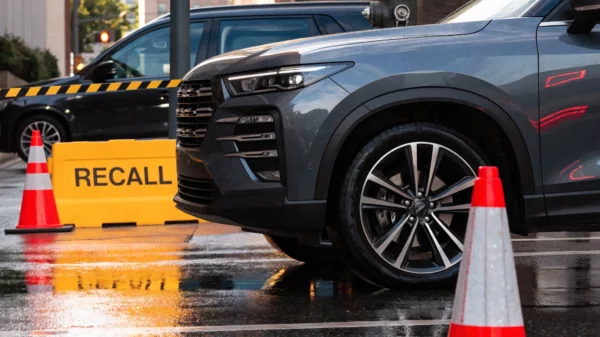















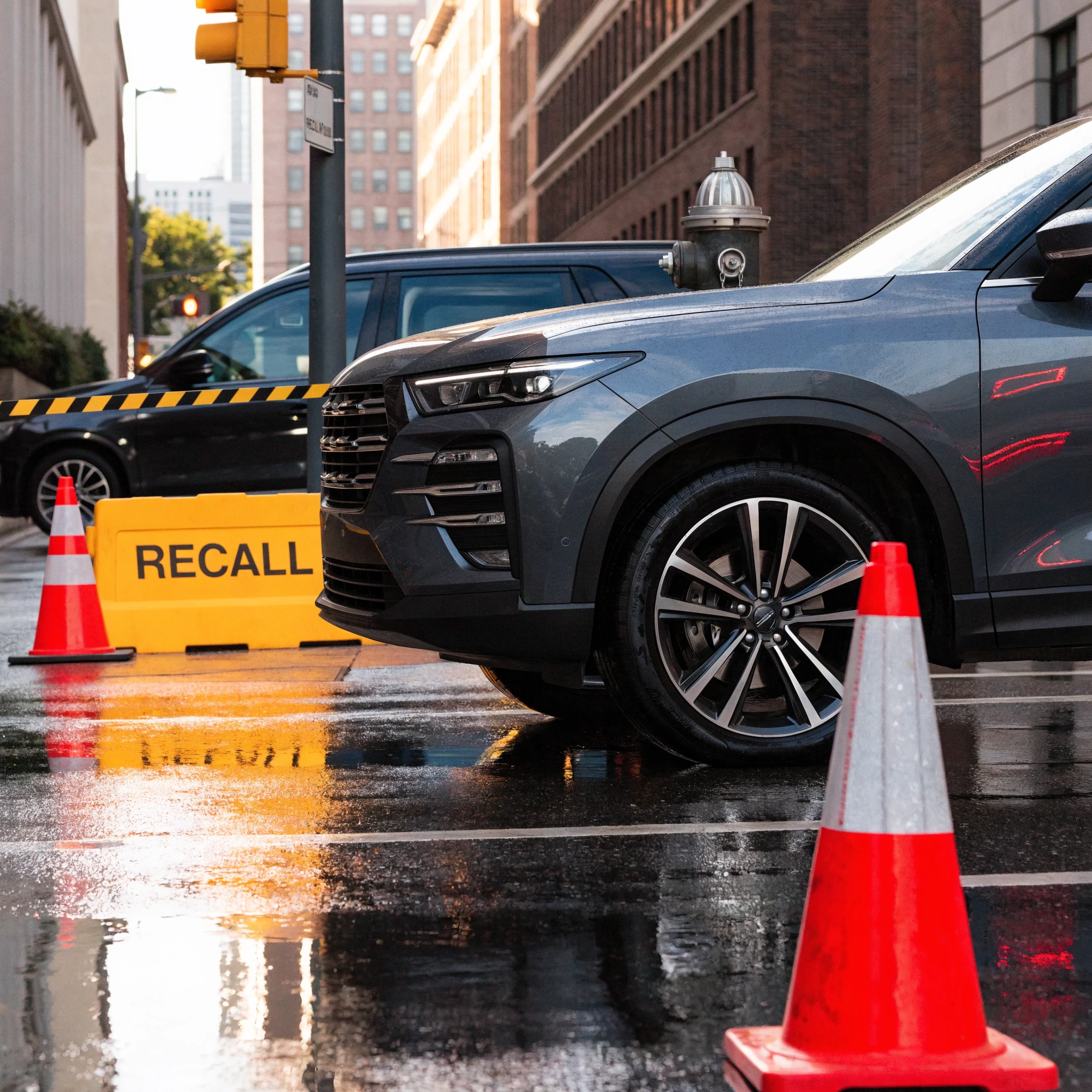
In 2025, more than thirty million vehicles in the United States were recalled — nearly a thousand separate campaigns in a single year. The first quarter of 2026 broke the all-time record, with over twelve million vehicles recalled in three months. And here is the paradox that makes the whole story strange: cars are measurably safer than they have ever been. Traffic fatalities in 2025 fell to their lowest level since 2019.
So why do modern cars the safest, smartest vehicles ever built — keep being recalled in record numbers?
The answer is that the two facts are caused by the same thing. The same technology that saves lives on the highway is also the most prolific source of defects in automotive history. This is the investigation report. Each root cause gets its own file.
File 01 — The Software Ghost
Start with the numbers, because they change everything. According to Recall Masters’ annual report, published in May 2026, software and electronics defects were the single most prevalent recall category in 2025: 119 campaigns covering 8.19 million vehicles — more than any mechanical category. Powertrain came second. The old boogeyman, airbags, had dropped to just nineteen campaigns.
Then 2026 opened the books. Q1 of 2026 saw 12.1 million vehicles recalled in a single quarter — the highest total ever recorded, driven almost entirely by electronic and software failures. One campaign alone, a bug in an integrated trailer module that simultaneously killed trailer brake and turn-signal function, swept up 4.3 million trucks and SUVs. A separate transmission software glitch that caused sudden unintended downshifts at highway speed hit 1.4 million F-150s.
Here’s what’s hidden about these defects: they have no physical presence. A broken bolt announces itself. A corroded brake line weeps fluid. Software does none of that. It fails silently, invisibly, often only under conditions the engineers never simulated — and it can take down the speedometer, the brakes, or the side airbags without a single symptom until it matters. The defects that define modern vehicle safety are no longer fractured welds. They’re logic errors in code that a modern car carries by the millions of lines — more software, as the industry likes to point out, than a commercial aircraft carried in 2000.
File 02 — The Material That Time Destroys
Some hidden defects aren’t hiding in code. They’re hiding in chemistry.
The largest recall in automotive history was not a software bug. It was an airbag inflator that worked perfectly when new and failed years later — Takata’s propellant, a compound called non-desiccated phase-stabilized ammonium nitrate. Independent engineering established a three-part root cause: the propellant lacked a moisture-absorbing desiccant; the inflator assembly couldn’t keep moisture out in high humidity; and long-term exposure to repeated heat cycles did the rest. The chemistry degraded over time, and when the inflator finally deployed, it could burst into shrapnel instead of a cushion.
Roughly 23 million of the 28 million recalled Takata inflators used that vulnerable propellant. The recall stretched across nearly every major automaker, its remediation still generating activity years later. The engineering lesson is uncomfortable: a part can be perfect at manufacture and dangerous at ten years old, and no amount of testing on day one can fully predict what heat, humidity, and time will do to a sealed container of chemicals.
File 03 — The Supplier’s Single Point of Failure
Open Takata’s file once more, because it reveals the third hidden problem: the industry’s shared backbone.
A modern car is assembled from parts made by a network of suppliers — and when one supplier’s component is defective, the defect isn’t contained to one brand. It’s a fleet-wide event. Takata’s inflators ended up in vehicles from a dozen-plus manufacturers. The same concentration exists in semiconductors, airbag control modules, and software stacks: a handful of suppliers feed the entire industry, so a single production or design failure multiplies across millions of vehicles from dozens of brands at once.
This is why recall headlines so often say “affects every major automaker.” It’s not that the industry is failing together. It’s that the industry shares the same spine.
File 04 — The Manufacturing Slip
Not every defect is exotic. Some are profoundly ordinary — the difference between a drawing and a production line.
A 2026 Honda recall offers the cleanest example. The defect description reads like a lesson in process engineering: the rearview camera housing could be improperly bonded, allowing adhesive to separate over time; moisture then intrudes, corroding the internal electronics, until the camera image blurs, distorts, or goes black. A specification said “bonded.” A production line did it imperfectly on some units. Months later, moisture found its way in.
The hidden problem here is tolerance — the gap between design intent and manufacturing reality. When a component depends on adhesive, seals, or welds, quality lives and dies in process control: the humidity in the factory, the batch of adhesive, the calibration of the robot that applied it. Engineering can design the perfect part. Manufacturing has to build it a million times, identically, and that is a different discipline entirely — one that fails in ways no blueprint can show.
File 05 — The Testing Gap
Under every file so far lies the same root cause, and it deserves its own name: you cannot test your way to certainty in a system this complex.
Modern vehicles combine hardware, sensors, and software into a web with more possible interactions than any test lab can cover. The industry tests relentlessly — then real drivers, real weather, and real edge cases find the combinations the lab never did. That is why the defects keep surfacing: not carelessness, but combinatorial exhaustion. The conditions engineers didn’t simulate are exactly the conditions that produce the recall.
This is a problem the wider software world knows intimately. Complex systems are notorious for behaving in ways their own builders didn’t fully anticipate — and when the system is a car traveling at highway speed, the discovery is measured in recalls, not bug reports.
The two faces of the same code
Now the investigation turns to the paradox that started it. Because here is the uncomfortable truth: the software that dominates recall lists is the same software saving lives on a scale that can be measured.
Electronic stability control, automatic emergency braking, lane departure warnings — these are software systems, and they are working. Traffic deaths in 2025 fell to 36,640, the lowest since 2019, a 6.7% decline even as Americans drove nearly 30 billion more miles. The code architecture that can prevent a crash at 60 mph can also, in a rare failure, slam the brakes on the freeway or erase the speedometer on a cold January morning. Software is simultaneously the greatest safety advance in automotive history and its most prolific defect source.
And the same code that creates the problem also offers the fastest fix ever invented. Over-the-air updates mean a software defect can be repaired overnight, in the owner’s garage, with no appointment and no service bay — the way Tesla resolved every one of its software recalls. The industry’s first-year recall completion rate rose to 50.3% in 2025, partly because digital repairs are simply easier to execute. The contrast defines the modern industry: the OTA-capable manufacturers can patch an invisible bug in a night; the dealer-dependent ones leave drivers waiting for a repair they can’t see.
The unfinished repair
The final file is the one that affects you directly, because a recall is only as effective as its completion — and completion is far from certain.
Industry compliance rates hover around 80-85%, meaning millions of vehicles with open recalls are driving on roads at any given moment. The problem compounds with used cars: a recalled vehicle that changes hands carries its defect to a new owner who may never receive the notice. Carfax data suggests roughly seven million vehicles on U.S. roads today still carry unfixed backup-camera recalls — invisible failures, no symptoms, unresolved.
The practical instruction is simple and free: check your VIN at nhtsa.gov/recalls. Recalls never expire, and the repair is free — but only if you know the recall exists. If your airbag warning light has been on for more than a day, have it diagnosed before you drive again. When you shop for a used car, ask the one question no brochure will answer: when the software fails in this vehicle, can the manufacturer fix it over the air — or does a defect you can’t see become a service appointment you have to find time for?
The verdict
The hidden engineering problems behind vehicle defects are not one failure. They’re four, layered on top of each other: code too complex to test exhaustively, materials that degrade in ways time reveals, a supplier base so concentrated that one mistake echoes across the industry, and production tolerances that can never be perfectly controlled. Modern cars are recalled in record numbers precisely because modern cars are marvels of interdependent complexity — and complexity, by definition, has more places to hide a mistake.
The cars are safer than they’ve ever been. The systems that make them safe are the systems that fail. Both statements are true, and both are the same story. The engineering answer isn’t fewer systems — it’s humility: better simulation, more process control, designs that fail gracefully, and fixes that can reach the car without a service bay. And the driver’s answer is the shortest possible version of the whole investigation: check your VIN, fix it free, and don’t trust silence as proof that nothing is wrong.

Independent technology writer focused on artificial intelligence, emerging technologies, and digital innovation. Covers AI applications in sports, productivity, and online business.