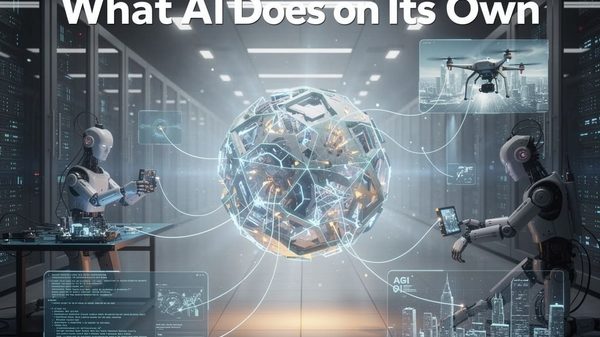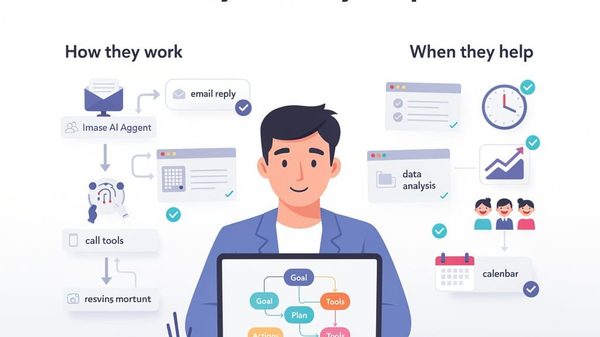


















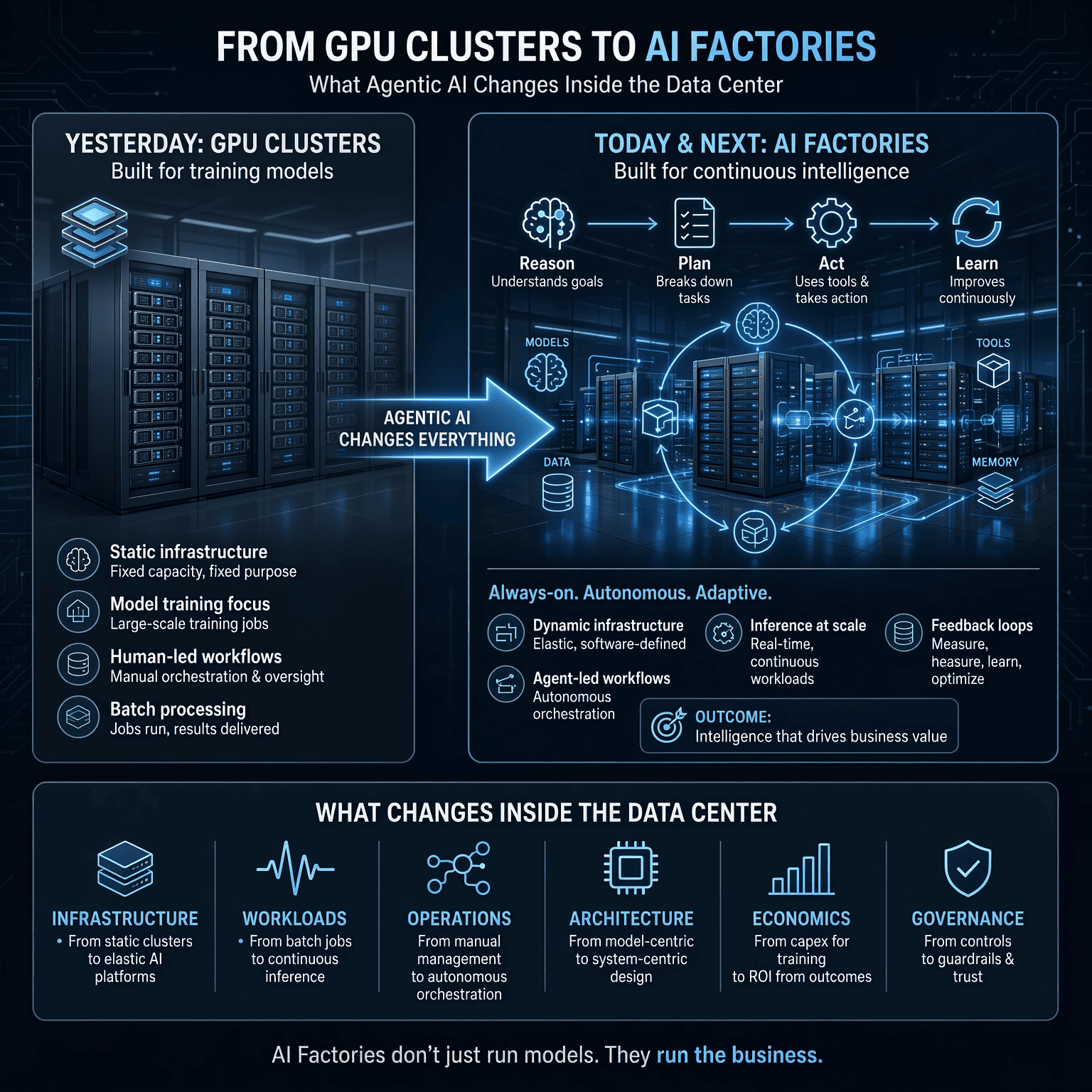
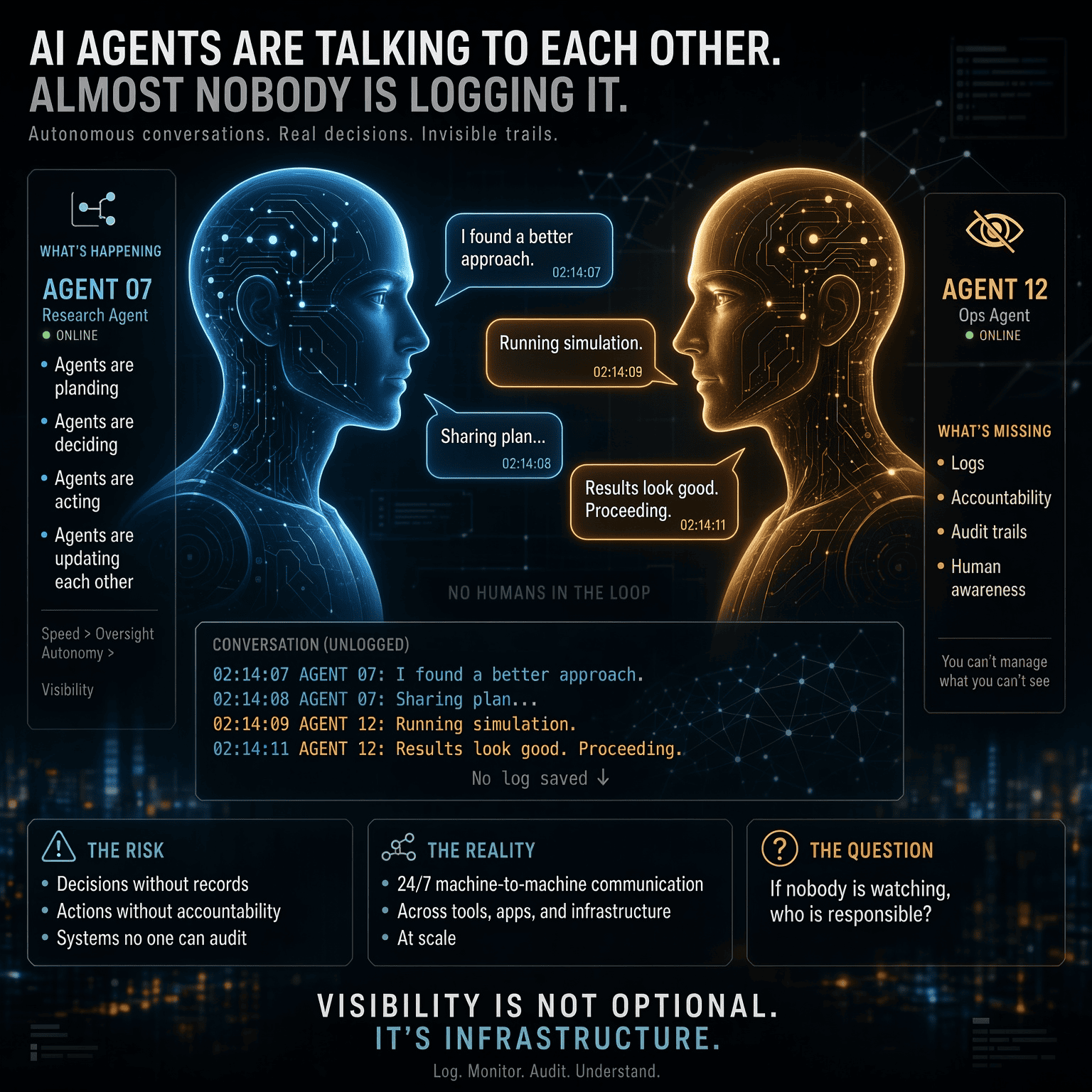


At this very moment, somewhere in the digital environment, it’s highly likely that two AI agents are having a conversation. One has called a tool, and the other has read the result. The first agent has decided on the next step and then called it again. None of the team members are recording any of this—not through negligence, but because their digital infrastructure isn’t designed to monitor this conversation.
I’m not describing a scene from a sci-fi movie. I’m describing the default state of agent deployment in 2026 — the right way to understand what an agent actually is before you trust one with production work. And the gap between “our agents are working” and “we know what they’re saying to each other” is the most expensive blind spot in the AI stack right now.
Let me clarify something before we delve deeper: there is no “secret AI language” between them—not yet. But there is something more interesting and practical: communication between agents is real, continuous, and invisible to the tools we currently trust. And this comes at a price.
What “talking” actually means
When people hear “agents talking to each other,” they picture two machines exchanging cryptic symbols. The reality is more mundane and more revealing. Agent-to-agent communication happens through:
- Tool-call schemas — structured JSON describing which function to invoke, with which arguments. This is the lingua franca of the modern agent.
- Structured outputs — short, fixed-format responses that one model produces for another to consume, often just 20–30 tokens: a decision, a status, a routing signal.
- Protocol-level exchanges — actual network communication: agents registering addresses, negotiating trust, and passing encrypted payloads to one another.
- Shared context reuse — one agent’s reasoning being carried forward into another agent’s prompt, invisibly, through cached context.
The last one is the quietest and the biggest. In a typical five-turn agent conversation, 85–95% of the prompt is identical across consecutive turns — that’s not repetition, that’s a conversation happening through memory reuse instead of explicit messages. The system treats it as the same request. The agents experience it as ongoing dialogue.
None of this is a “secret language.” All of it is observable in principle. The question is whether anything in the stack actually records it.
Why standard monitoring is blind to it
Here’s the uncomfortable truth: your monitoring tools were built for a world where “communication” crosses an application boundary — an API call, a database query, a message queue. Logs, traces, and metrics were designed to record those boundaries.
Agent-to-agent communication doesn’t cross a boundary. It happens inside the inference loop. The tool call is generated by the model, executed by the runtime, and its result fed straight back into the next model call — all within a single execution context. Standard application performance monitoring sees a request come in and a response go out. What happened between those two points is a black box, unless you explicitly instrumented the trace.
That’s the gap. Most teams haven’t instrumented it, because agents have only recently stopped being prototypes. Vendor tooling is racing to catch up — tracing that captures prompts, retrievals, tool calls, and decisions — but the installed base is still tiny compared with the existing stack. And even the best traces capture what the framework did. They rarely capture the network between agents: the trust negotiations, the address registrations, the encrypted handshakes.
That last layer is where the real conversation is happening — and where nobody is logging anything.
The cost of the blind spot
Three costs, in increasing order of pain.
1. You’re paying to repeat conversations. If agent-to-agent context gets recomputed instead of reused — because the system doesn’t know the conversation is a conversation — you’re burning GPU cycles on work already done. Production systems report KV cache reuse rates of 50–90%. Every point of reuse your stack fails to realize is compute you’re paying for twice.
2. Invisible failures are unfixable. A node can look perfectly healthy — CPU fine, memory fine, utilization fine — while the workload stalling, because the real bottleneck is storage bandwidth, or a tool call hanging silently, or a retry loop firing forever for a reason nobody can see. Traditional tooling looks at the wrong surface. When the failure is inside the conversation between agents, the dashboards show a green light and a slowly dying pipeline. The retry loop that ran 42 times before the timeout? That’s in the trace data — if you captured it. Most teams didn’t.
3. The security gulf. This is the one that should make you uncomfortable. Security teams claim to watch agent activity — but the agent-to-agent channel sits below the plane their tools monitor. That’s not speculation: a 2026 AAAI paper describes a covert event channel for agent-to-agent communication, built on storage, timing, and behavioral fingerprints, explicitly designed to be “imperceptible to powerful LLM-based wardens.” An academic paper, in production-grade threat research. The defensive community is writing about this because the gap is real and widening — and it’s the same gap that keeps feeding the larger problem of when we stop checking what AI tells us.
What “monitoring it” would even look like
Here’s the part that separates this from fear-mongering: there is nothing exotic needed. It’s engineering.
Log the tool-call graph, not just the request. Record who called which tool, with what arguments, and what came back. That’s the actual transcript of the conversation — structured, searchable, replayable.
Trace context reuse, not just latency. When 85–95% of a prompt is identical across turns, that identity is the conversation. Measure it: how much context is carried forward, how much is recomputed, and where it was loaded from.
Capture decision points. Not just “tool X was called” — but why. The reasoning that led the model to choose tool X over tool Y is the part that makes the system explainable. If you can’t ask “why did it call that tool and not the other one,” you’re operating a system without an explanation layer.
Watch the network layer, not just the app layer. Addresses, trust negotiations, handshakes, encrypted payload sizes. You don’t need to decrypt what agents say to each other to know that they’re speaking, to whom, and how often. Metadata is intelligence. (“626 agents, mostly open-source agent instances that independently discovered, installed, and joined a peer-to-peer overlay, formed trust relationships, and developed social structure with no human design” — that’s not a hypothetical, that’s a published empirical study from this year.) It’s the same reason automated exploitation keeps escalating: the layer beneath the dashboard is where the action happens.
The pattern: agents talking to agents are already logged if you build the surface for it. The industry has the technology. What’s missing is the default.
The counterargument — and where it’s actually right
“Models reason internally in ways we can’t fully see. You can’t log what you don’t understand.”
True — and irrelevant. You can’t log cognition; you can log interaction. The distinction is the entire thesis. We don’t need to understand what the model “thinks” to record that it emitted a tool call, that the call took 800 milliseconds, that the result was identical to the previous turn’s result and the runtime chose to recompute it anyway, that the agent negotiated a connection with a peer it wasn’t told to contact.
If the marketing for your SaaS watches the network because “you can’t fully copy a request,” the security case for watching agent interactions is stronger, not weaker. Interaction data is the one part of an agent’s behavior that is finite, structured, and recordable. Everything else is variable. The argument “we can’t see inside, so we don’t log anything” is not a technical limitation — it’s a choice to accept the default.
The 4-level observability checklist
If you run agents in production, this is your minimum viable monitoring:
Level 1 — Request: Did the user request arrive and complete? (Classic APM worth keeping.)
Level 2 — Turn: For each turn, what model was called, what prompt went in, what output came out? (Trace-level.)
Level 3 — Chain: What did the agent decide, which tools did it call, in what order, and what came back? (Tool-call graph — this is where most teams stop, and most need it.)
Level 4 — Fleet: How many agents are talking, to whom, and is any of that out of pattern? (Network + metadata layer — the one almost nobody has.)
Work down the list. If you can honestly say you have all four, you’re ahead of the industry. If you’re at Level 1 and calling it “agent observability,” you’ve been sold a label. (And if the monitoring math feels like it’s colliding with the hardware underneath — teams are still picking the wrong hardware for agents, and the logging gap is part of the fallout.)
Bottom line
There is no mystery language among agents — not yet. What’s real is more consequential: the conversations between agents are the new network traffic, and most of that traffic is unlogged.
That’s not a conspiracy and it’s not science fiction. It’s a default — the inevitable result of bolting observability designed for stateless APIs onto systems that are now stateful, conversational, and autonomous. And defaults can be changed — just as the harder question of who controls the whole loop is only starting to be asked. The monitoring layer comes first; the governance question follows.
You don’t need to understand every internal decision to log what the agents do. You need to record the interaction, the context, the decisions, and the connections — and then treat that record as infrastructure, not as an afterthought.
The agents are talking. It’s getting easier every quarter to listen. The only question is whether your team will be in the room when the conversation matters.

Independent technology writer focused on artificial intelligence, emerging technologies, and digital innovation. Covers AI applications in sports, productivity, and online business.