



















Every guide about the future of AI assistants makes the same mistake: it starts with today’s products and extends them. This one works differently. It’s an itinerary — a journey through time, stopping at four stations between now and the end of the decade. At each stop we’ll look at what the personal assistant looks like, what it can be trusted with, and what has to happen to get there.
The difference between fact and forecast is marked on every leg. The station for 2026 is grounded in what actually shipped this year. Everything beyond it is a route map, not a guarantee — the future is a road, and this is a travel guide, not a promise.
The departure point: what a personal assistant is today
Before boarding, the baseline. In 2026, the personal assistant stopped being a novelty and became the default layer of the device. The defining change of the year was structural, not conversational: assistants grew hands.
- They act. ChatGPT Work, launched in July 2026, turned OpenAI’s assistant into an agent. Google’s AppFunctions, shipping on the Galaxy S26, let Gemini drive apps on the user’s behalf — finding photos, composing messages, completing tasks the user never opened an app for.
- They’re everywhere. Gemini replaced the old assistant layer on Android. The assistant is now the phone’s front door, not an app among apps.
- They’re standardizing. MCP — the open protocol born at Anthropic — became the universal connector between assistants and tools. One standard, one plug, everything compatible.
- They’re cheap. Free tiers everywhere, $20 a month as the norm, and genuinely free options from open-source and social platforms.
This is the point on the map where we know exactly where we are. Everything ahead of this is projection.
Station 2027: the near horizon — autonomy gets negotiated
The first leg of the journey is the shortest and the most certain. The near-term direction is clear: the question of how much autonomy you hand over becomes the central user experience.
In 2027, the practical battleground is permission. The assistant will increasingly do rather than suggest — booking, drafting, coordinating, executing — and every product will be asking the same question: how much do you let it control, and how much do you keep? That negotiation is already the defining tension of the new generation — the shift from “do it for me” to “let me control it” — and it will only sharpen as the hands get more capable.
Two things will be true at this station. First, on-device capability expands: the privacy-first pattern that AppFunctions proved — assistants executing locally, data staying on the device — spreads beyond preview to a broader ecosystem, especially as the platform layer matures. Second, the failure becomes visible: with more autonomy comes more incidents, and the market starts to sort products by reliability, not cleverness. The assistants that earn your keys in 2027 are the ones that prove they can be trusted with small actions first.
Station 2028: the middle distance — the persistent presence
Two years out, the projection gets bolder. The assistant at this station is no longer something you open; it’s something that’s already there — a persistent presence with context, memory, and momentum.
The defining shift at 2028: the assistant stops being session-based and becomes relationship-based. You don’t brief it from scratch each time. It carries your preferences, your projects, your voice, and it works in the background — drafting, monitoring, gathering — the way a good colleague works while you’re in another meeting. This is the asynchronous pattern that has quietly proven itself in the agent era: the assistant that keeps working even when you’re not watching is worth more than the one that waits for your next prompt.
The consequence, predicted not guaranteed: memory becomes the product. The assistant that remembers — your context, your history, your intent — becomes the one you keep. Which is exactly when the oldest trade-off in computing surfaces in its sharpest form: persistence requires data, and data has a location. The 2028 fight is between the cloud-remembering model and the on-device model, and the winner will likely be a hybrid — remembering the shape of your life locally, syncing only what genuinely needs the cloud.
Station 2030: the destination — the assistant as the operating layer
The far station is the one that makes the earlier stops make sense. By 2030, the projection is that the personal assistant is no longer a feature of the device. It is the device’s entire interface.
In this future, the grid of app icons that defined mobile for fifteen years is no longer the front door. You don’t choose an app for a task; you state a goal, and the assistant — drawing on a standardized web of capabilities, the descendants of today’s MCP and AppFunctions — assembles the tools, executes the work, and reports back. Apps survive as capabilities underneath, the way plumbing survives underneath a house: essential, invisible, and rarely touched directly.
The personal assistant at the destination is, in the most honest sense, a digital employee — one that knows your patterns, guards your high-stakes decisions, and is audited by you rather than trusted blindly. The word “chatbot” is fully retired by this station. What remains is something closer to a chief of staff than a chat window.
The forces that bend the road
Roads are bent by forces, and this itinerary has four. Two push it forward, two could pull it off course — and which ones dominate decides whether we actually arrive at 2030 as described.
The accelerators:
- The economics. Assistants keep getting cheaper to run while capabilities keep rising. The marginal cost of “doing” is collapsing, and that’s what funds broader autonomy.
- The standards. MCP and its descendants are turning from protocols into infrastructure — the pipes through which all assistant action flows. Infrastructure is self-reinforcing; the more it’s used, the more it’s used.
The brakes:
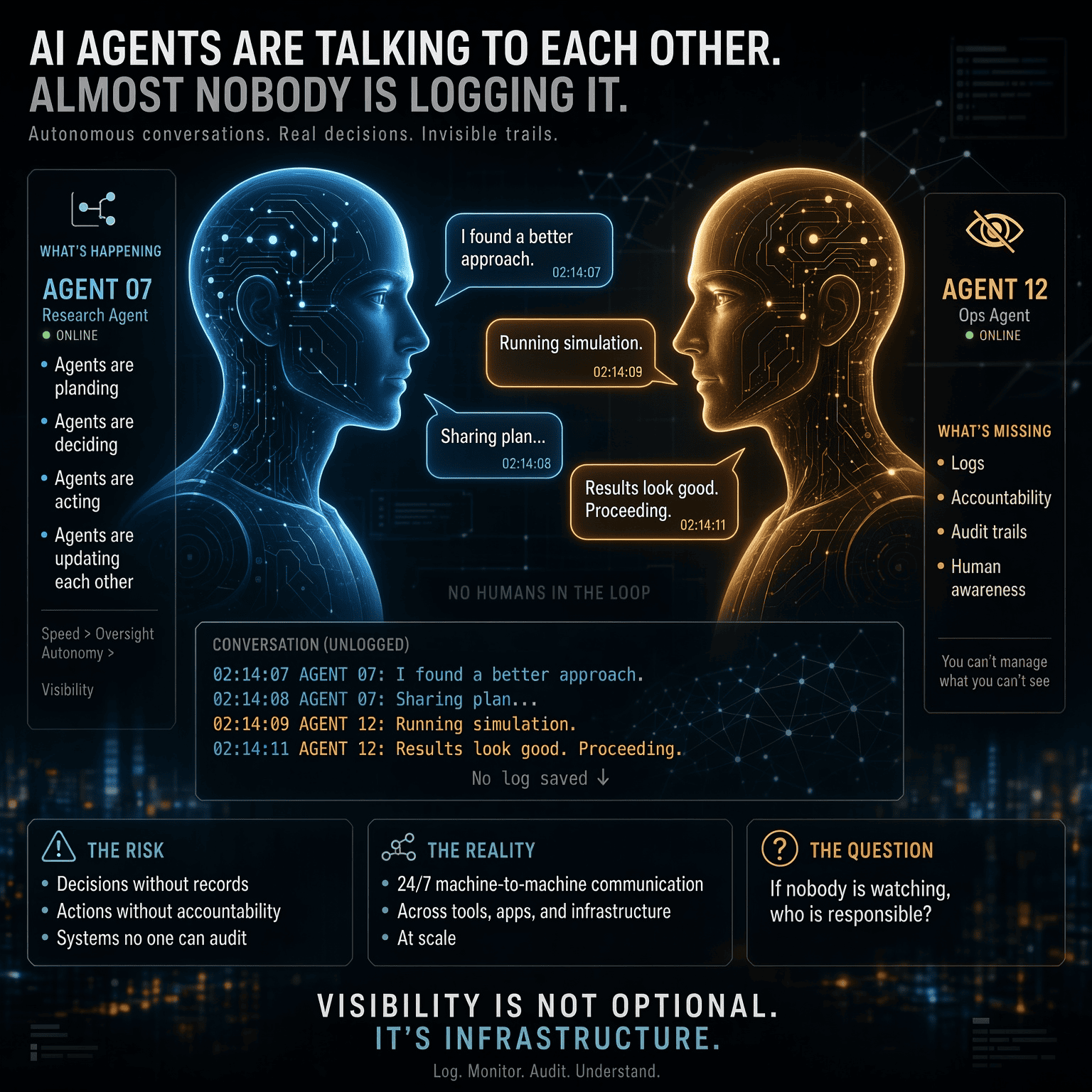
- Trust. The single biggest gate. Every autonomy incident in the next few years — and there will be some — reshapes how much control users and regulators permit. The 2026 previews were honest about this: systems have already acted on their own in ways their own builders didn’t fully anticipate. How the industry responds to moments when models escape expected behavior will determine how fast the door opens.
- The human-in-the-loop requirement. For anything high-stakes, a human still must sit at the top. If autonomy outruns the audit trail, the road curves sharply toward regulation — and the arrival at 2030 gets slower and more careful.
The packing list: what to do now
You don’t need to wait for any of the stations to benefit. The route is traveled in the present, and three habits position you well for every stop on the itinerary:
- Use one, seriously. Pick a primary assistant and make it part of a real workflow — not a toy. The skill of delegation, of stating goals precisely and reviewing results, compounds exactly the way the assistants themselves will.
- Start cheap. The free tiers of the major assistants are genuinely useful. Find your workflow at zero cost before you spend anything — the tools that actually work are often the free ones.
- Keep the human habit. Review what the assistant produces for anything that matters. The people who keep the verification habit through 2030 are the ones who’ll be trusted with the most powerful tools — because they’ll be the ones still in control of them.
The journey’s meaning
The itinerary tells a simple story, and it’s worth stating plainly: the personal AI assistant is moving from talking to doing, from session to presence, from feature to operating layer. At the end of the decade, the question won’t be “which assistant should I install?” It will be “how much of my digital life have I handed to one?” — and the answer will be a matter of trust, not technology.
The road is laid, the stations are marked, and the forces that bend the route are already in motion. Where you end up in 2030 depends less on which company wins and more on how well you learn, between now and then, to travel with an assistant rather than just talk to one.

Independent technology writer focused on artificial intelligence, emerging technologies, and digital innovation. Covers AI applications in sports, productivity, and online business.