






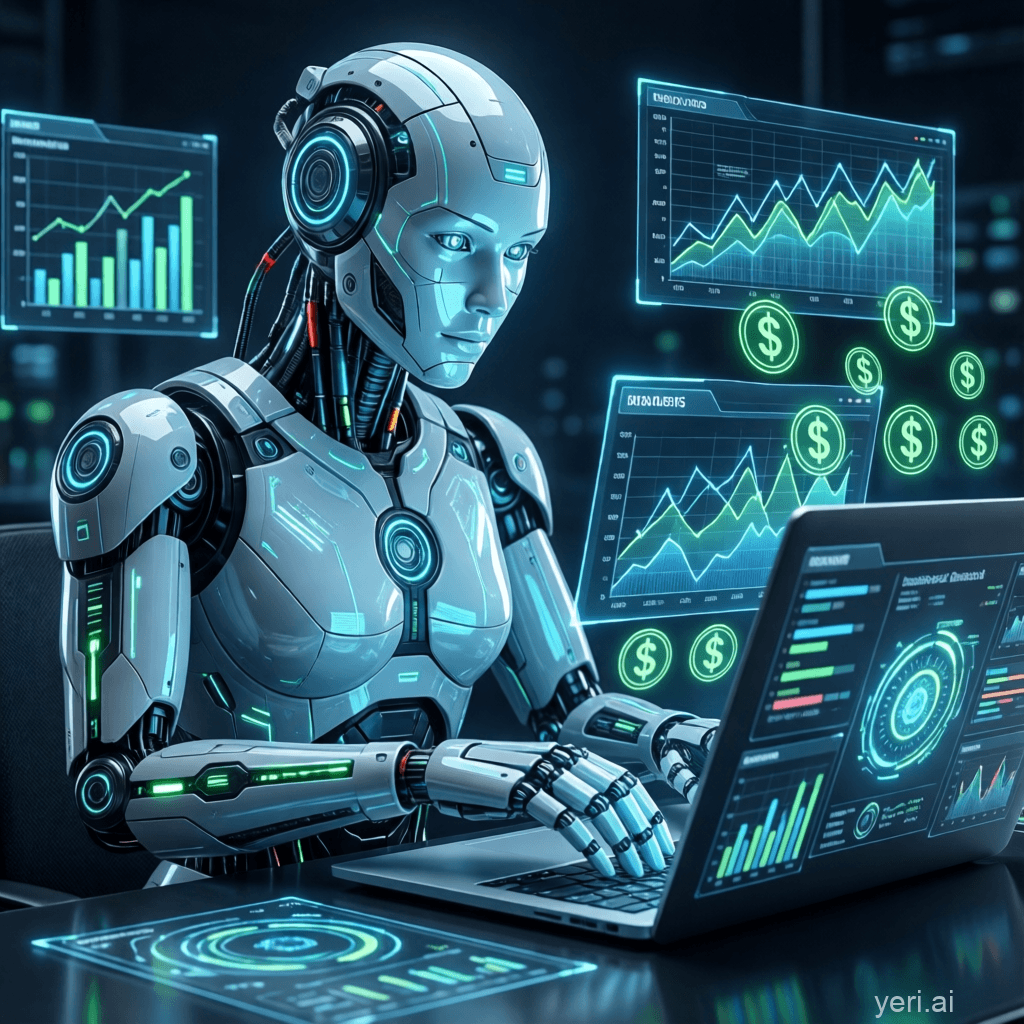



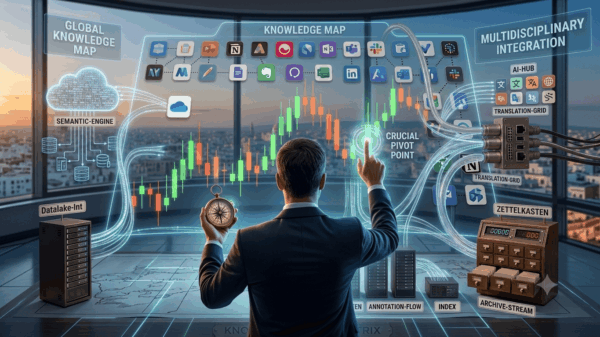











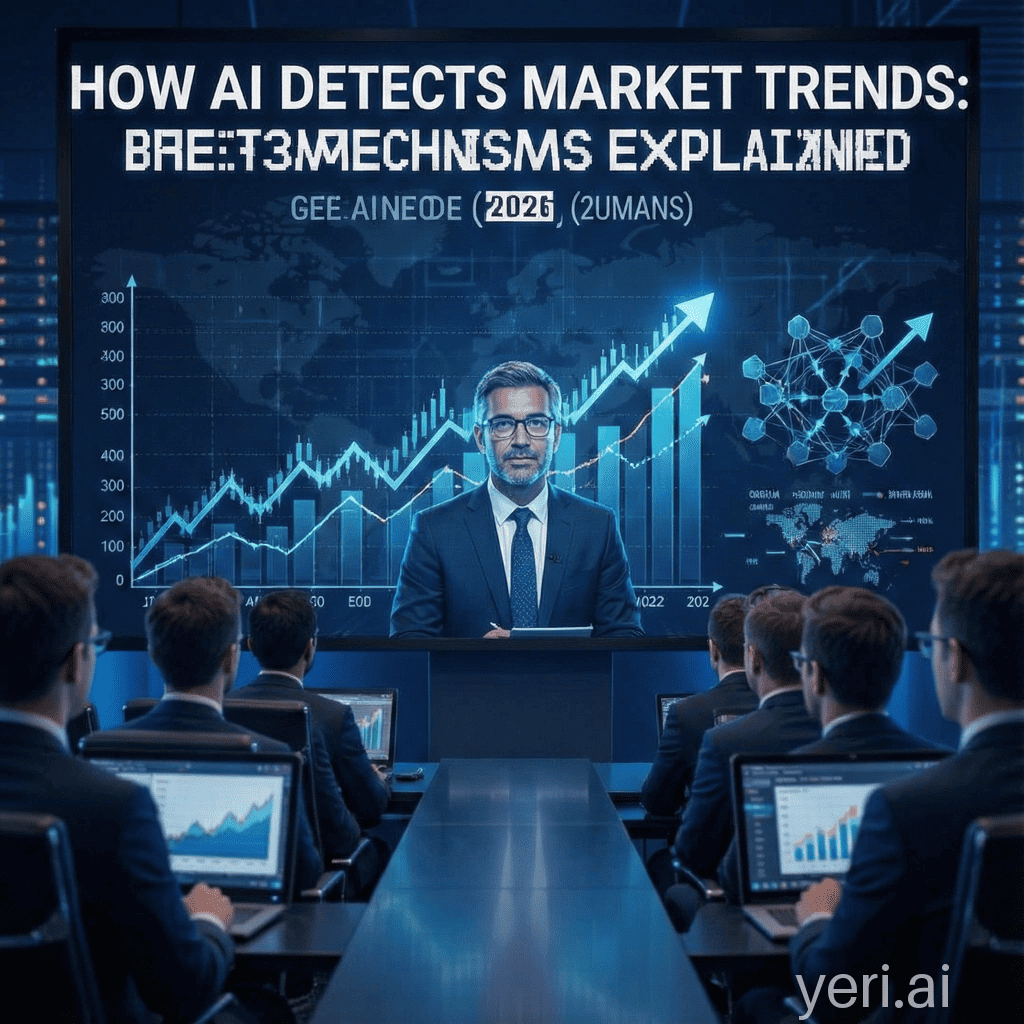
AI detects market trends before humans by processing thousands of data points simultaneously — price, volume, news, social sentiment — and identifying subtle patterns the human brain simply cannot track at scale. A human analyst might spot a bullish flag formation on one chart. An AI model can scan 500 instruments, cross-reference them against 40 economic indicators, and flag an emerging sector rotation before a single candlestick confirms it. The advantage isn’t just speed. It’s breadth.
But this capability has sharp limits. Models trained on historical data can mistake noise for signal, and they fail catastrophically during events that have no precedent. Here is how early detection actually works, where it breaks, and what it means for traders who don’t work at Renaissance Technologies.
Why Speed Alone Isn’t the Answer
A computer can process a market move in microseconds. That’s table stakes now. Every institutional firm has low-latency infrastructure. Speed alone doesn’t give AI its edge in trend detection.
The real difference is dimensionality. A human trader tracks maybe 20 to 50 variables during a session — a few charts, some news headlines, an economic calendar. An AI model ingests thousands of variables per asset, across hundreds of assets, and does it continuously without fatigue.
The Real Advantage: Simultaneous Processing
When a central bank makes an unexpected rate decision, a human scrambles to check the USD pairs, then the bond market, then maybe gold. An AI model processes all of those reactions in the same millisecond. It sees the dollar drop, the yield curve steepen, and gold spike as one cohesive signal — not three separate events.
This is called cross-asset confirmation, and it is where early detection lives. The trend hasn’t appeared on the EUR/USD chart yet, but the model already flagged it because Bund yields and gold both moved in the same direction first.
Pattern Recognition at Scale
Pattern recognition is another layer. Humans are good at spotting familiar shapes on charts — head and shoulders, double tops, flags. But we are terrible at spotting subtle statistical patterns across multiple timeframes and instruments simultaneously.
AI models, particularly convolutional neural networks, can be trained on decades of price data to recognize the statistical signatures of emerging trends. They don’t look for the visual shape of a flag pattern. They look for the probability distribution that historically preceded a breakout. Often, the visual confirmation comes later.
The Three Mechanisms Behind Early Detection
Early detection is not one trick. It is a combination of three distinct mechanisms that work together.
1. Anomaly Detection in Market Data
Every market has a baseline rhythm — normal volatility, normal volume, normal spread behavior. AI models learn this baseline and flag deviations from it. A sudden spike in volume on an otherwise quiet pair, with no obvious news catalyst, is the kind of signal a human might miss until the move is underway.
Anomaly detection models don’t need to know what caused the deviation. They just need to flag it. By the time a human trader opens the chart and asks “what happened?”, the model has already categorized the anomaly, compared it to historical analogs, and assigned a probability to each possible outcome.
2. Natural Language Processing
News moves markets. But by the time you read the headline, open your platform, and check the chart, the move has already happened. The edge is in reading news as it breaks — and more importantly, reading the sentiment beneath the words.
NLP models scan thousands of news articles, central bank statements, earnings transcripts, and social media posts every second. They assign sentiment scores, flag contradictions, and track narrative shifts. A central banker using “concerned” instead of “vigilant” is the kind of subtle language change an NLP model catches instantly.
This is not about predicting the future. It’s about reacting to information faster than a human can physically read and process it. Over time, that speed compounds.
3. Cross-Asset Correlation Analysis
Trends rarely appear in isolation. A rally in oil often precedes a CAD strengthening. A drop in tech stocks might show up in bond yields before it hits the Nasdaq. AI models track hundreds of these correlations simultaneously and detect when they shift.
When a correlation that held for five years breaks, that is often the earliest signal of a regime change. Think of the breakdown in the dollar-oil correlation during the pandemic. Models that tracked that relationship in real time caught the shift earlier than humans who relied on decade-old assumptions.
Where AI’s Early Detection Actually Fails
This is the part most articles skip.
False Signals and Overfitting
Every AI model suffers from false positives. Markets generate enormous amounts of random noise, and models trained on historical data will inevitably find patterns that don’t exist. This is called overfitting — the model memorized the past instead of learning generalizable rules.
A fund might deploy a model that detected 80% of past trend reversals correctly. Then the model proceeds to generate 15 false signals in a row. The historical data had a structural pattern that no longer exists.
The only defense is rigorous out-of-sample testing and a human overlay. Every AI-driven trading desk I have seen still has a human deciding whether to act on the signal.
The Black Swan Blind Spot
By definition, unprecedented events have no training data. The 2008 crash. The Covid crash. A surprise war. A central bank doing something it has never done before.
AI models are inherently backward-looking. They project the statistical patterns of the past into the future. When the future stops resembling the past, the model becomes a liability. This is not a solvable problem with current technology. It is a fundamental limitation.
A broader look at AI predictions across different domains shows the same pattern — AI excels in environments with stable patterns and fails in environments with structural breaks. Markets are full of structural breaks.
Real-World Examples of AI Detecting Trends Early
Quantitative hedge funds have used these techniques for over a decade. Renaissance Technologies, Two Sigma, DE Shaw — these firms built their returns on detecting trends earlier than the rest of the market.
For retail traders, the same technology is now available through platforms like Tickeron, which uses AI to generate trading signals based on pattern recognition. The difference is scale, not methodology. A retail AI tool uses the same anomaly detection and pattern matching principles, tuned to the assets and timeframes retail traders actually trade.
How Retail Traders Can Use This (Without a Quant Team)
You don’t need a PhD in machine learning to benefit from AI-driven trend detection. Here is what actually works at a retail level:
Use screening tools. Platforms like TradingView offer AI-powered scanners that flag unusual volume, volatility expansions, or pattern formations across thousands of assets.
Follow sentiment data. Free tools track aggregated sentiment from news and social media. When sentiment diverges sharply from price, it often precedes a reversal.
Check correlation shifts. If a pair you trade normally follows oil, and suddenly it stops, ask why. That divergence is often the first sign of a regime change.
Automate your watchlist. Set alerts for anomalies rather than price levels. A volume spike or a volatility expansion is often a leading indicator.
For a deeper look at how AI is changing the broader financial services landscape, this guide covers the practical applications reshaping the industry.
Frequently Asked Questions
Can AI really detect market trends before they happen? Not before they happen — before they become obvious. AI spots subtle statistical shifts that precede visible price moves, but it does not predict the future.
How much faster is AI than humans at trend detection? It varies. For some signals — like sentiment shifts from news — AI detects trends seconds to minutes faster. For cross-asset correlation breaks, it can be hours or days faster.
Is AI market trend detection accessible to retail traders? Yes. Several platforms offer AI-based screening and signal generation at retail price points. The technology is no longer exclusive to institutional funds.
Why do AI models generate false signals? Markets contain substantial random noise. AI models, especially those overfitted to historical data, often mistake noise for a pattern. This is the biggest operational risk in AI-driven trading.
Do hedge funds actually use AI for trend detection? Most major quantitative funds do. Renaissance Technologies, Two Sigma, Citadel, and others have used machine learning for trend detection and signal generation for over a decade.
Can AI detect black swan events? No. Black swan events are unprecedented by definition, and AI models can only recognize patterns they have seen in training data.

Independent technology writer focused on artificial intelligence, emerging technologies, and digital innovation. Covers AI applications in sports, productivity, and online business.