




























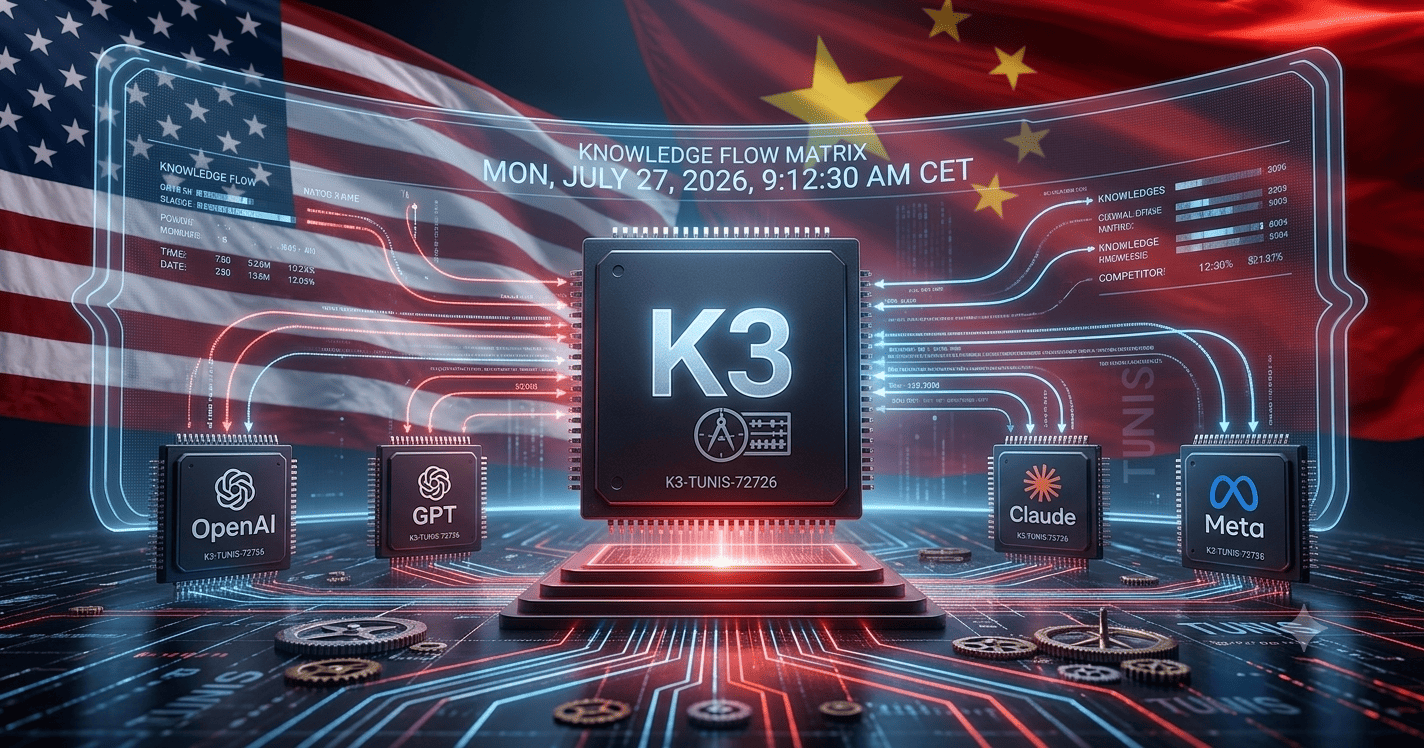
Less than 48 hours after launching its new Kimi K3 model, Beijing-based Moonshot AI was forced to temporarily close registration for new users. The reason? A massive influx of global developers completely overwhelmed the server infrastructure designed to run the system.
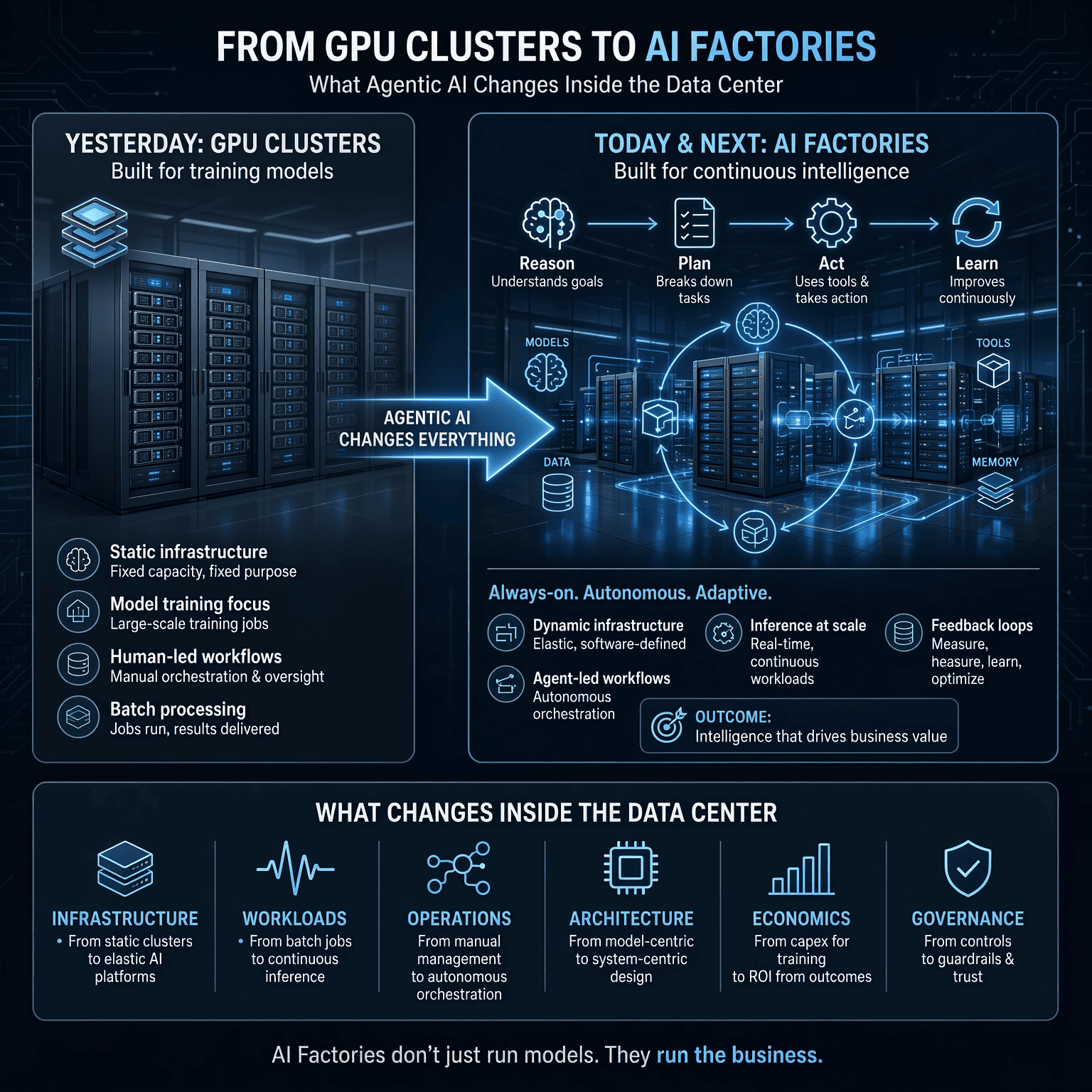
When any AI model generates significant buzz—especially one offering long-context processing (LCP), high logic capabilities, and aggressive pricing—a sudden surge of API requests can easily paralyze processing clusters. This incident highlights the central challenge facing the AI race today: it is no longer just about building intelligent models, but about having the compute infrastructure to serve them at scale.
What Kimi K3 Actually Is
Moonshot AI—a company most Western developers had barely heard of six months ago—released Kimi K3 on July 16, 2026. Within two days, the sudden demand crashed their servers and forced a temporary subscription freeze.
The model is a 2.8-trillion-parameter Mixture-of-Experts (MoE) system, making it the largest open-weight AI model ever announced. For scale comparison, DeepSeek’s V4 Pro sits around 1.6 trillion parameters, while Zhipu AI’s GLM-5.2 operates at roughly 744 billion.
However, raw parameter count only tells half the story:
- Sparsity Ratio: Only 16 of its 896 experts activate per token, meaning roughly 50 billion parameters (less than 2% of the total pool) do the actual compute per request.
- Cost Efficiency: This sparse architecture keeps inference costs manageable, allowing Moonshot to price its API at $3 per million input tokens and $15 per million output tokens. By comparison, Anthropic’s Claude Fable 5 costs $10/$50 and OpenAI’s GPT-5.6 Sol costs $5/$30.
- Context & Modality: It features a 1-million-token context window, native multimodal support (text, image, and video), and adjustable reasoning parameters. Open weights under a modified MIT license are scheduled for release on July 27, 2026.
The Architecture Behind the Numbers
Three core architectural innovations distinguish K3 from its competitors:
- Kimi Delta Attention (KDA): A hybrid linear attention mechanism that scales efficiently as context length grows, yielding up to 6.3x faster decoding in million-token contexts without performance degradation.
- Attention Residuals (AttnRes): Selectively retrieves information across model depth rather than accumulating representations uniformly layer-by-layer, boosting training efficiency by 25% with minimal compute overhead.
- Stable LatentMoE with Quantile Balancing: Routes tokens based on quantile distribution rather than simple load balancing, successfully preventing the common MoE issue of “expert collapse” where a few experts handle all the workload while others remain idle.
Benchmarks: How K3 Compares to Western Frontier Models
According to the Artificial Analysis Intelligence Index (v4.1), the overall general performance scores sit remarkably close: Claude Fable 5 (59.9), GPT-5.6 Sol (58.9), and Kimi K3 (57.1).
While functionally peers on general intelligence, performance varies significantly by domain:
1. Where K3 Wins or Ties
| Benchmark | Kimi K3 | Top Competitor Score |
| Program Bench | 77.8 | Sol: 77.6 |
| SWE Marathon | 42.0 | Sol: 39.0 |
| Terminal-Bench 2.1 | 88.3 | Sol: 88.8 |
| BrowseComp | 91.2 | Sol: 90.4 |
| AutomationBench | 30.8 | Sol: 29.7 |
| Frontend Code Arena | 1,679 | Fable: 1,631 |
2. Where Closed Western Models Hold the Lead
- Hard General Reasoning: Claude Fable 5 leads on Humanity’s Last Exam (HLE) with 53.3 vs. K3’s 43.5, and FrontierSWE (86.6 vs. 81.2).
- Multimodal Consistency: GPT-5.6 Sol retains top position in MMMU-Pro and DeepSWE (73.0 vs 67.5).
Real-World Engineering Capabilities
Beyond synthetic benchmarks, Moonshot demonstrated several autonomous engineering feats achieved by K3 during testing:
- Autonomous Kernel Optimization: K3 built MiniTriton, a compiler with its own tile-level intermediate representation over MLIR, matching stock Triton and
torch.compileduring nanoGPT training. - Autonomous Chip Design: In a 48-hour run, K3 designed a 4 mm² physical chip (using 45nm open-source EDA tools) capable of running a miniature version of itself at 100 MHz, sustaining 8,700 tokens/sec in simulation.
- Research Pipeline Generation: In astrophysics testing, it cross-validated 20+ papers, evaluated 300+ equations of state, and generated 3,000+ lines of functional Python with interactive visualizations in hours—a task typically taking a researcher weeks.
The Pricing Disruption
The API cost disparity presents a compelling business case for high-volume enterprise workloads:
| Model | Input / 1M Tokens | Output / 1M Tokens | Effective Savings |
| Kimi K3 | $3.00 ($0.30 cached) | $15.00 | Baseline |
| GPT-5.6 Sol | $5.00 | $30.00 | ~45% More Expensive |
| Claude Fable 5 | $10.00 | $50.00 | ~70% More Expensive |
While K3 tends to consume slightly more tokens per task due to its reasoning traces, the overall cost-per-task remains significantly lower than proprietary alternatives.
Limitations & Open Questions
Despite its technical strengths, deployment comes with trade-offs:
Note on Accuracy: Independent tests by Neural CoreTech indicated a ~51% hallucination rate on complex factual research tasks, compared to 39% on previous iterations. Factual and compliance-heavy pipelines still require human-in-the-loop verification.
Furthermore, self-hosting a 2.8-trillion sparse model requires massive compute infrastructure—Moonshot recommends supernodes with at least 64 enterprise accelerators, putting local execution out of reach for smaller teams.
What This Means for the AI Industry
The release of Kimi K3 confirms that the gap between open-weight Chinese models and proprietary Western frontier models has narrowed from years to mere percentage points.
For developers, this price-to-performance shift means that “production-ready AI capabilities” no longer strictly require premium closed API pricing. While Claude Fable 5 remains superior for edge-case reasoning and Sol for mixed workflows, K3 proves that open-weight models have officially reached frontier parity.
Sources & References
- Nerova.ai — Kimi K3 vs Fable 5 vs GPT-5.6 Benchmarks
- Tom’s Hardware — Moonshot Releases 2.8T Kimi K3
- LLM-Stats — Kimi K3 Technical Deep Dive
- Atoms.dev — Enterprise Pricing & Token Cost Comparisons

Independent technology writer focused on artificial intelligence, emerging technologies, and digital innovation. Covers AI applications in sports, productivity, and online business.