




































The weigh-in
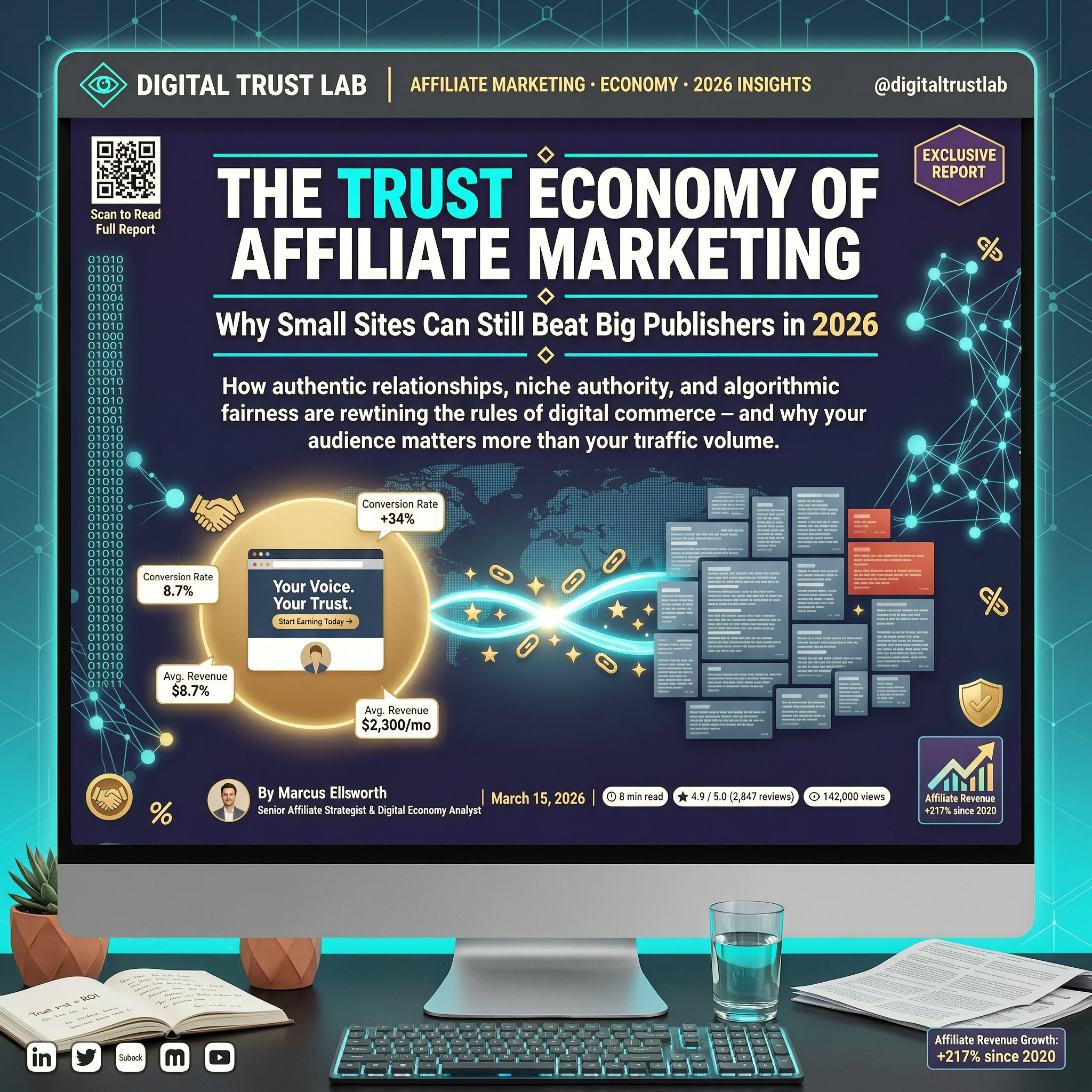
On paper, this fight should not be competitive. On one side: the big publishers — media companies with millions in budget, teams of writers, real domain authority, and years of ranking history. On the other side: the small site — one person, one niche, no budget, no team. The old math said the heavyweight wins every time, and for a decade, it did.
But the rules of the sport changed. In 2026, the heavyweight division was abolished — and the small site isn’t just competitive anymore. In the niches where it fights properly, it’s the favorite. This is the breakdown of why, round by round.
The weight classes are gone
The old advantages were structural, and the system that granted them was dismantled from two directions at once.
The algorithms stopped paying for bulk. Google’s Helpful Content era reclassified scale itself as a liability: thousands of thin pages, however well-branded, got demoted. It hit the big players too — including the giants that had optimized purely for volume. Meanwhile, the wave of mass-produced AI content that briefly looked like the ultimate scaling tool became the thing the quality systems were built to filter. Weight no longer predicts the outcome, because the referee now scores proof, not mass.
The traffic distribution changed venues. AI search went from 6% to 45% of discovery in a single year, and the citation game it plays doesn’t care about your domain authority. It cares about whether your content is the specific, quotable, authoritative source for a specific question. Authority, in that market, is earned per-topic — which is exactly where a small, single-niche site can match a giant.
The champion’s structural weakness
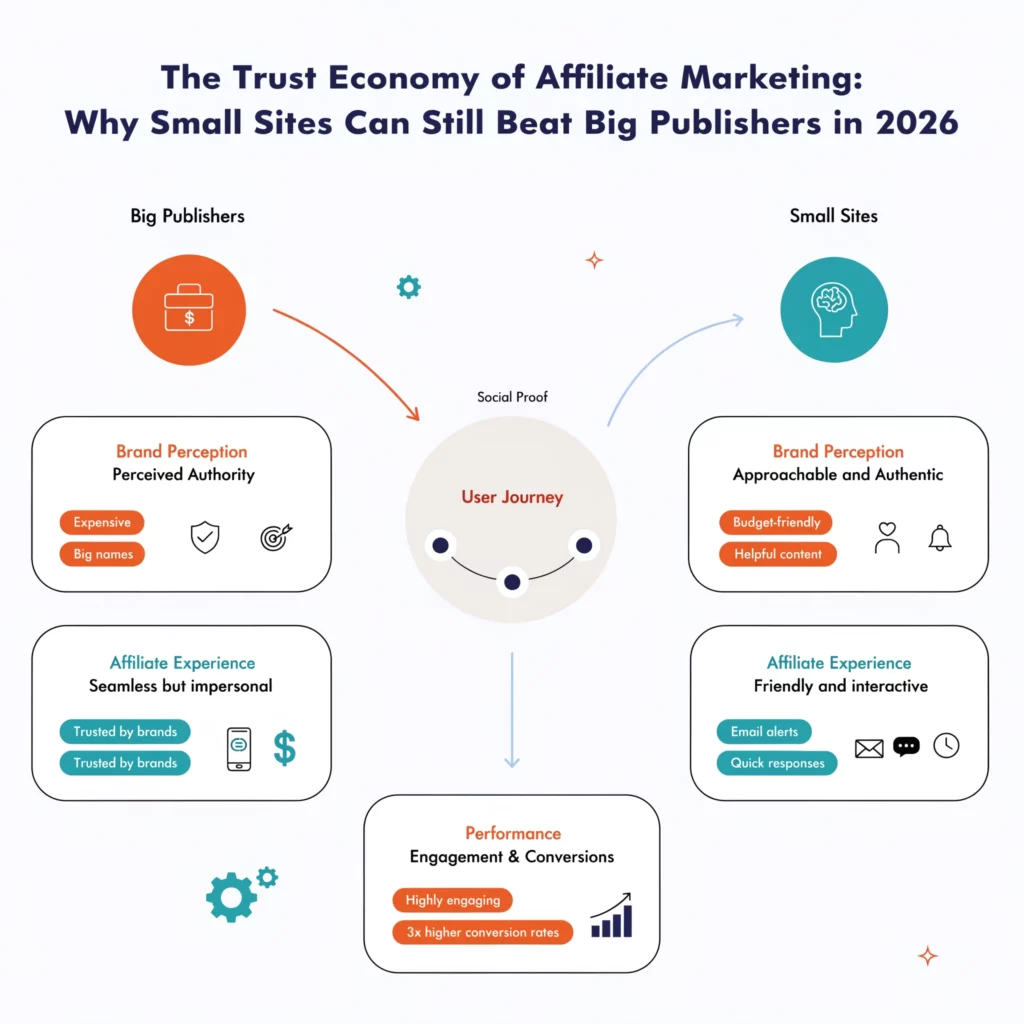
Here is the secret the big publishers don’t advertise: their scale is their vulnerability. A media site covering forty niches can’t test forty niches. Its reviews are written by rotating freelancers who’ve never touched the product, edited for SEO, and published under a generic brand. The more it publishes, the thinner its authority spreads — and the more its audience learns to read it as the noise it often is.
The structural weakness compounds: big brands carry suspicion now. Consumers have been burned too many times. When a giant publisher runs a “Best VPN” list that changes with every sponsorship deal, the trust it once had becomes a liability. The data on consumer behavior in 2026 is brutal to the format: a majority of consumers encounter fake or manipulated reviews within any twelve-month span, roughly three in ten report having been deceived by one, and more than half say they won’t buy if they suspect the reviews are fabricated. The public didn’t stop trusting reviews. It stopped trusting anonymous volume — which is the big publisher’s entire model.
The challenger’s weapon: trust
The small site’s weapon isn’t a different tool. It’s the one asset the heavyweight can’t purchase: specificity you can verify. A single niche. A real human name. Products actually tested. Measurements, images, honest failures, updates written by the same person who wrote the original. That is the profile both surviving ranking systems and wary consumers converge on — the “proof” that mass production cannot fake.
The consumer’s 2026 behavior makes the small site’s edge explicit: buyers read multiple sources, weight verified purchases, look for specific complaint patterns, and seek second opinions outside the primary review surface. The small site is the second opinion. It’s the place the calibration points at. And the same logic applies to the engines: research on what AI answer engines cite finds they prefer clear, first-hand, specific content — the exact thing a niche expert produces naturally and a generic publisher produces only by accident.
The rounds
Watch the fight dimension by dimension, and the pattern is consistent:
Round 1 — Depth. Big publisher: forty niches, no expertise in any. Small site: one niche, lived in daily. Round to the challenger, and it’s not close.
Round 2 — Proof. The big publisher can’t physically test fifty products a month; the small site tests the five that matter in its niche. Real measurements beat sponsored rankings every time — the reason the surviving review format is the narrow, data-heavy evaluation, like a single-tool review with actual trading data, rather than the “15 Best” list written by a freelancer. Round to the challenger.
Round 3 — The citation game. AI engines don’t cite brand names; they cite content. A small site that owns one question, answered authoritatively, gets quoted ahead of a giant that answered it shallowly. Round to the challenger.
Round 4 — The owned audience. The big publisher rents its traffic from the platforms. The small site, if it built the list, owns its audience outright — the newsletter, the direct relationship, the trust that no algorithm update can confiscate. In a market where discovery is migrating and volatile, the owned audience is the only stable asset on the board. Round to the challenger.
Round 5 — Speed. The small site pivots in a week; the big publisher needs a quarter and an editorial meeting. When the venue changes its rules — and it keeps changing them — agility is a survival trait. Round to the challenger.
Where the big still wins
Honesty requires the counterweight. There are fights the small site cannot win, and the smart small operator doesn’t enter them:
- Transactional commodity markets — “best mattress” or “best hosting” at scale, where the giants own the brand search, the comparison-shopping budgets, and the mass query.
- Category-level authority — the sites that are the name for an entire category, where people search the brand itself.
- Enterprise and affiliate-program negotiation — where deal size rewards a publisher’s reach.
- Raw discovery volume — for anything where a user doesn’t care who’s answering, the giant’s footprint still dominates.
The rule of the weight classes, restored: fight in the weight class you can win. The small site’s weight class is depth, proof, and trust in a specific niche — and in that class, the heavyweight’s muscle is useless.
The fight plan
For the small site that wants the win, the plan is shorter than the theory:
- Choose one niche and refuse to leave it. Depth is the only advantage you can defend.
- Prove everything. Test, measure, photograph, update. The proof is the fighter’s guard — the thing that survives contact with a skeptical audience.
- Put a face and a name on it. A human the reader can picture beats an anonymous brand. Personal authority is trust you can spend.
- Own the audience. Build the list from the first visitor. It’s the one thing the giants can’t take from you.
- Structure to be quoted. Answer-first sections, specific numbers, clear methodology — content the AI engines can cite and the wary reader can verify.
- Build at near-zero cost. The machinery of a small site — research, drafting, distribution — runs on genuinely free tools, which is exactly why the free-tier tools nobody is talking about are the small operator’s perfect starting arsenal.
The decision
The judges’ verdict in 2026 is not close: the heavyweight division is dead as a category. Scale no longer confers what it used to, because the thing that moves traffic — trust — was never a scale product. It’s a depth product. It’s built one verified claim at a time, in one niche, by one person the audience can picture and check.
Small sites can beat big publishers in 2026 not in spite of their size, but because of it. The giant publishes about everything and proves almost none of it. The small site publishes about one thing and proves all of it. In a market that now pays for proof and calls everything else noise, that’s not an upset. That’s the only fight worth entering and the challenger holds every advantage that matters.

Independent technology writer focused on artificial intelligence, emerging technologies, and digital innovation. Covers AI applications in sports, productivity, and online business.