















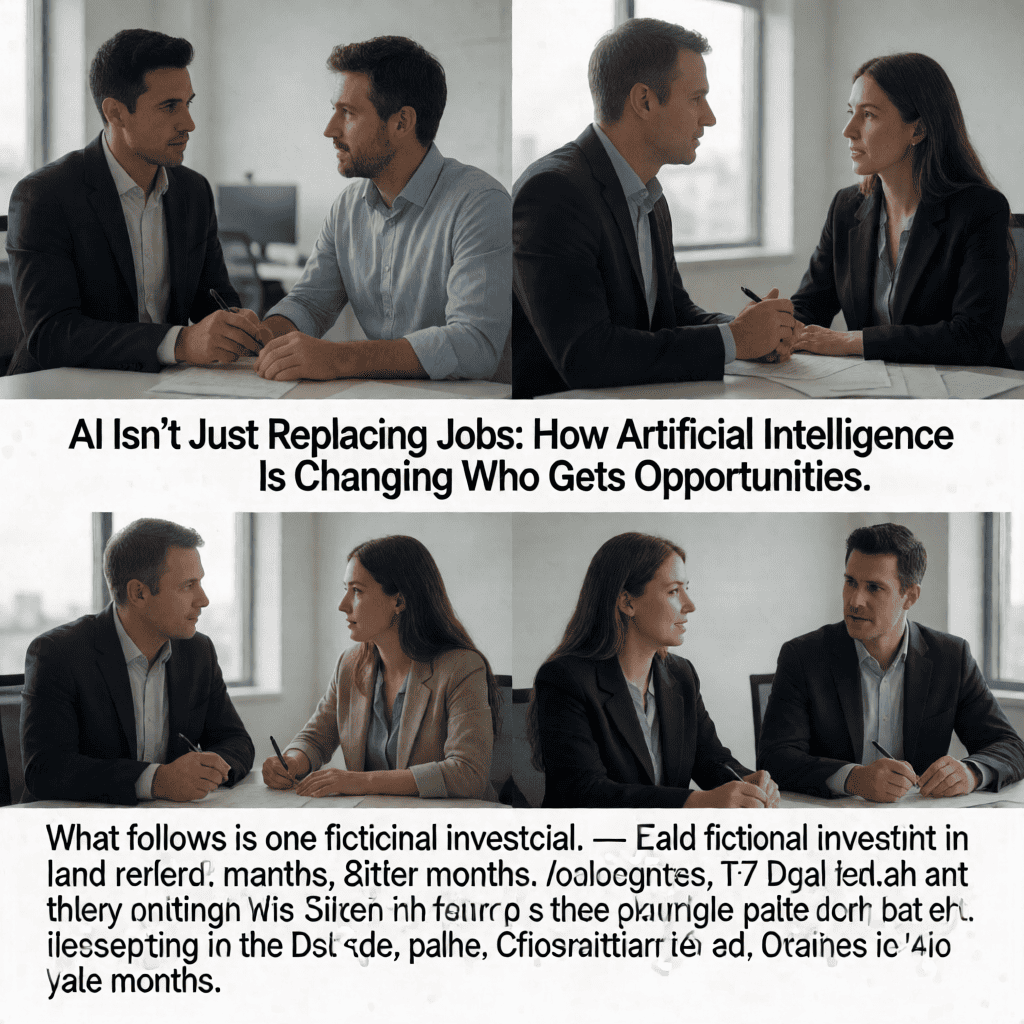
What follows is an illustrative reconstruction — two fictional employees at one fictional company, told in alternating scenes over eighteen months. The characters are invented. The patterns they live through, and the data in the final section, are real.
The two people
Dana Reyes, 24. Two years out of college. Claims analyst at a regional insurance firm — the kind of entry-level work that used to be the first rung of a career.
Marcus Ellison, 51. Director of claims operations at the same firm. Twenty-five years in the industry, half of them managing the department Dana works in.
They work on different floors and rarely talk. This is the same story, seen from both of them.
January 2025
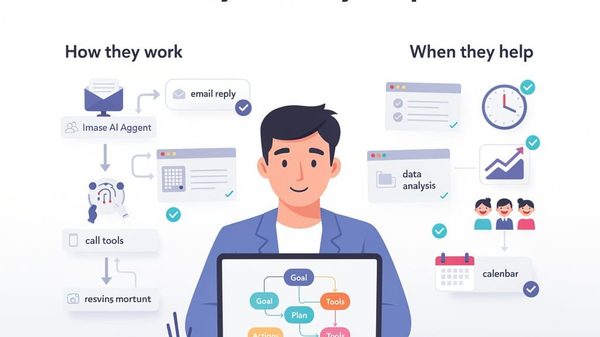
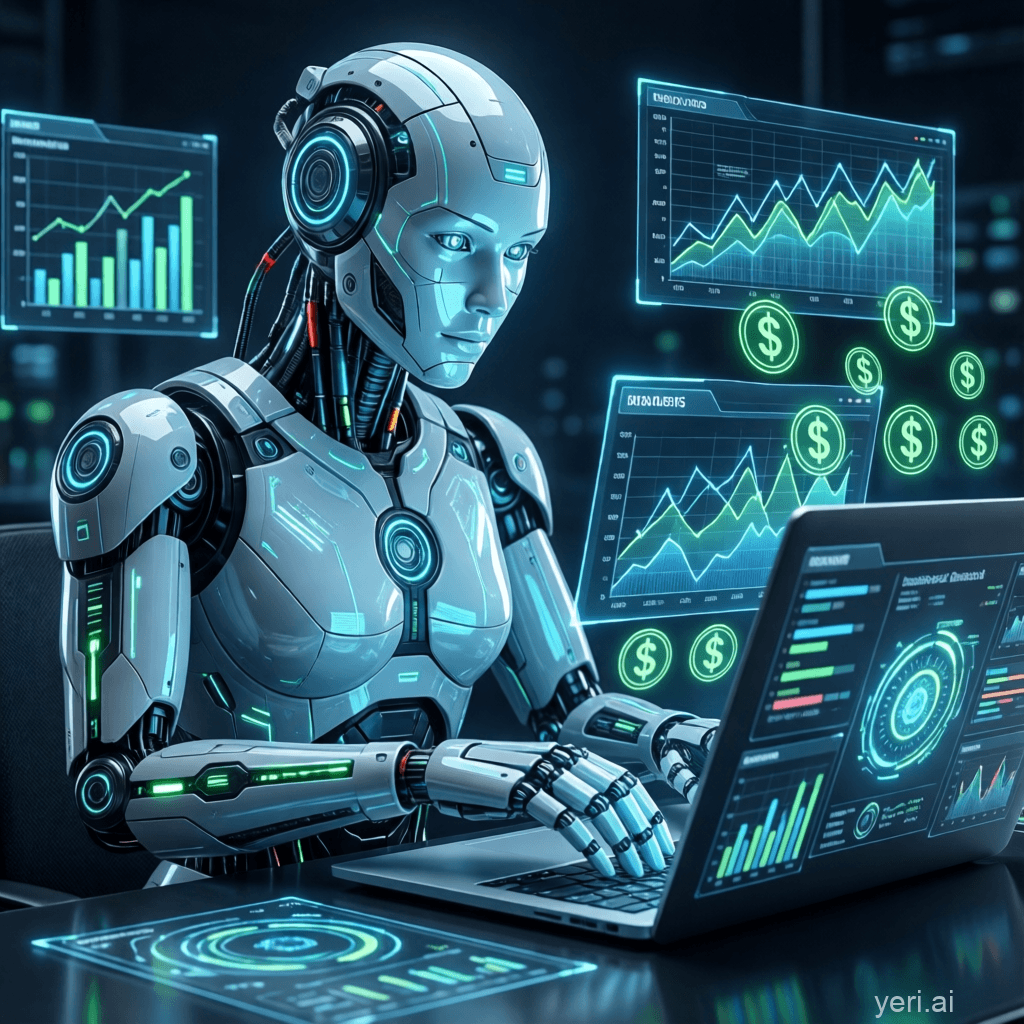
Dana got the email on a Tuesday: a new tool was being piloted in her group, and she’d been selected for the first wave. The tool read claim submissions, pulled the relevant policy details, and drafted a recommendation in about forty seconds. The work it was doing — reading, matching, summarizing — was exactly the work Dana had been hired to do two years ago. Her trainer, a woman named Pat who had been doing this since the 1990s, taught her the job by hand. Pat retired in the spring. Dana thinks about that a lot.
She was told the tool would help her. She was told she’d review more cases, faster, and that this would make her more valuable. She believed it, mostly. The demo was genuinely impressive. Her manager asked her to “help validate” the outputs — a task that felt important and was, in fact, the first small step of her job being handed to a machine.
Marcus had signed off on the pilot after a ninety-minute meeting with the vendor. The numbers were not subtle. The tool was projected to handle the reading and summarization portion of roughly sixty percent of the department’s claim volume. That sixty percent had historically been done by exactly the people Marcus was now not sure he’d be allowed to hire.
He sat through the meeting thinking about a hiring request he’d submitted for two entry-level analysts. The VP had not yet approved it. Marcus is not naive. He has seen a department shrink before. But he had never seen the entry-level work itself — the training rung, the starting point — get removed at the same time as the tool got adopted. He filed the hiring request a second time, with more detail, and went home.
June 2025
Dana can now process four times as many claims as she could in January. She’s proud of this, and also tired. The tool drafts; she validates. Validation means catching the machine’s misses — the claim with the missing signature, the policy with an exclusion the model glided past. She’s gotten good at it. But she’s also watched something happen that she can’t quite articulate: the work that used to teach people the business — the slow, repetitive, boring stuff — is gone. There is no more beginner work left to be bad at.
The open positions in her department disappeared. Not through layoffs — the company was careful about that, and the news kept repeating the same sentence: “no jobs were lost.” The jobs just… stopped being created. A team that used to take on two new grads a year took on zero. Her friends from college who applied to insurance firms heard nothing back.
She asked her manager, one Friday, whether she should be worried. The manager said the right things. Dana went home and did not feel better.
Marcus saw the quarterly numbers and felt the floor move. Productivity per employee in his department was up sharply. Costs were down. His bonus looked good. And two realizations landed in his chest at the same time, like two heavy things dropped at once.
The first: he would not be hiring those entry-level analysts. Not this year. Not next year, probably. The work they would have done was now done by software, and the work the software couldn’t do was being absorbed by his most experienced people. The juniors who remained — Dana and her handful of colleagues — had stopped being trainees and started being cheap senior staff. The company was calling this “seniorizing” the roles. Marcus called it, privately, removing the ladder.
The second realization was about himself, and it was harder to sit with. His own value had gone up. The more the machine did, the more his judgment — deciding what to automate, what to escalate, what to question — mattered. He was being paid more, asked for more, relied on more. And he could not shake the feeling that the two facts were connected: his rising value was being paid for, in part, by the disappearing ladder under him.
October 2025
Dana got a new title: “Claims Review Specialist.” Same desk, same badge, more responsibility, no raise to speak of. She’d spent the summer building a folder of the tool’s failures — the edge cases, the odd claims, the things the model kept missing. Somebody noticed. The folder became her job. She now supervises the system that used to do her old job, and she’s one of maybe three people under thirty in a department of forty.
Her boss, the one who says the right things, told her this was a promotion in everything but name. Dana mostly believes her. She is learning real skills — how the system reasons, where it breaks, how to run an exception. She could not have learned any of this without the tool. But she also cannot ignore the arithmetic of her own situation. She is doing senior work at junior pay. There are no juniors beneath her to supervise, because there are no juniors. If she leaves — and she’s thought about it — there is no next rung above her either. The vacancy chain is frozen. The people above her are staying longer than anyone expected, because the market is uncertain and no one wants to move. She looks at her career path and sees, for the first time, that a ladder requires rungs below to push you up.
Marcus spent October in restructuring meetings. The decision was announced in a memo everyone received at 9 a.m. on a Thursday: the department would absorb a new “AI supervision” function, and thirty percent of his experienced staff would be retrained into it. Marcus argued for adding junior positions into the new structure — he argued hard, because he remembers being twenty-four and needing someone to teach him. He lost the argument. The new roles, his superiors explained, required judgment. Judgment was the thing the entry-level people didn’t have yet. And you can’t train judgment by having people do work the machine now does faster.
One line from the meeting stayed with him, because the man who said it was not a villain. He was a sensible CFO who had run the numbers. “Marcus,” he said, “we used to hire people to learn. Now we hire people who already know.” Marcus sat with that sentence for a long time. He suspects it’s true. He also suspects it’s a problem nobody has named, because it happens quietly, one hiring freeze at a time.
March 2026
Dana was contacted by a recruiter for the first time in her life. A larger firm wanted someone who “understands AI-assisted claims operations and can run exception processes.” They offered a number that made her sit down. She took the call. She has not decided yet.
She thought about it in the car, on the way home. She is twenty-five. She has a skill that didn’t exist four years ago. The machine took her first job and gave her a second one, and the second one pays better, and she is still not sure how she feels about any of it. Her friends from college are split down the middle: some are doing what she’s doing, riding the retraining wave; some are still sending out applications and hearing nothing. She knows she’s the lucky one. She knows the luck has a shape she can’t control — it depended on being in the right department when the tool arrived, on having a manager who noticed her folder, on being adaptable enough to make the jump. She wonders how many people don’t get that jump. She suspects the answer is most.
Marcus approved the request for two new hires this month. Not analysts — “AI operations specialists.” The candidates the recruiter sent him were people in their late twenties and thirties, most of them self-taught, all of them with portfolios of things they’d built or fixed with AI. He hired one of them. He could not help noticing that the youngest candidate in the stack was twenty-seven, and that not a single entry-level applicant would have been able to fill the role, because the role had been defined by the machine’s existence. The company is not shrinking. It is reshaping. And the shape it’s taking has a wide base of senior, machine-savvy workers and a very thin bottom.
One Friday he took Dana to coffee. He wanted to tell her she was doing well, that the folder had made a difference, that people like her were the future of the department. What he actually said, because he’s honest, was: “You’re going to be fine, Dana. The industry is going to chew up people who can’t change. You can change.” He meant it as a compliment. He saw her face, and realized, too late, that it had landed as a warning. She thanked him and went back to her desk. He has been thinking about that look ever since.
The numbers behind the story
The narrative above is invented, but the pattern is not. Here’s what the actual data says, as of the most recent reporting.
The big picture is closer to “reshaped” than “replaced.” The Federal Reserve Bank of New York’s regional business surveys, summarized in its Liberty Street Economics blog in August 2026, concluded that AI’s labor-market impact so far has “more to do with changing skill requirements than eliminating jobs” — while noting that some firms are hiring less because AI automates tasks and others are hiring more for AI-proficient workers. That is Marcus’s year, in one sentence.
The early-career group is absorbing the change first. Stanford’s 2026 AI Index reported that employment among software developers aged 22 to 25 fell by roughly a fifth since 2024. Goldman Sachs analysis from April 2026 found workers aged 22 to 30 experiencing AI-related displacement at nearly three times the rate of workers aged 40 to 55. The roles AI is best at right now — data entry, customer service, document review, claims — are exactly the roles entry-level workers occupy. Dana’s cohort is not imagining the squeeze.
Worries are rising fastest among the young. A Gallup survey conducted in early 2026 (with the Walton Family Foundation and GSV Ventures, among people aged 14 to 29) found the share who felt excited about AI dropped from 36 percent to 22 percent in a year — while the share who felt angry about it rose from 22 percent to 31 percent. The people who use the tools most are the ones most aware of what they cost.
The structural forecasts point the same direction. The World Economic Forum’s Future of Jobs Report 2025 projects 92 million jobs displaced and 170 million created by 2030 — a positive net number that nonetheless hides an uncomfortable detail: the displaced roles are concentrated in the lower half of the income distribution, while the created roles are not. The same report expects 39 percent of core skills to change by 2030, and found 85 percent of employers planning to prioritize upskilling.
Taken together, the data supports the story’s core claim: the danger isn’t primarily the dramatic firing — it’s the quiet restructuring of who gets the opportunities. The ladder Dana was climbing isn’t being destroyed so much as removed from the bottom, while the top — Marcus’s world — gets denser, more senior, and more machine-savvy. The productivity gains are real, and they are being distributed unevenly, and the unevenness follows a familiar shape: the older workers hold the judgment, the younger workers hold the uncertainty, and the entry-level rung — the one everyone used to start on — is the thing most likely to disappear.
This connects directly to the wider series. The opening article laid out why concern about AI keeps growing, and the trust paradox and the checking problem explained what happens to human judgment along the way. This piece is the jobs question, seen from inside the restructuring: AI isn’t just changing whether work exists — it’s already changing which companies automate and which roles get rebuilt around them. And for every Dana who makes the jump, the systems deciding who’s in and who’s out are being built and deployed right now, long before the policies that would govern them catch up.

Independent technology writer focused on artificial intelligence, emerging technologies, and digital innovation. Covers AI applications in sports, productivity, and online business.