


































Here’s a uncomfortable truth that most business leaders are ignoring: your AI systems are probably running faster than your ability to control them. And according to IBM’s latest research, that gap is eating into your margins right now.
The conventional wisdom treats AI governance like insurance — something you buy after a disaster, not before. IBM argues the opposite. In a series of reports and product announcements, the company has staked a position that sounds almost counterintuitive: governance isn’t a drag on innovation; it’s what makes innovation sustainable.
The data backs this up. IBM’s Cost of a Data Breach Report found that 63% of breached organizations in 2025 either had no AI governance program or only a developing one. Those same organizations paid an average of $670,000 more in breach costs when shadow AI was prevalent. That’s not an abstract risk. That’s real money walking out the door because governance wasn’t taken seriously.
If you’re running AI in your organization without robust governance frameworks, you’re not moving faster than competitors. You’re just moving without a net.
What AI Governance Actually Means (And Why Most Definitions Fail)
Let’s be precise about what we’re discussing, because “AI governance” gets thrown around so loosely that it risks becoming meaningless.
AI governance refers to the guardrails that help ensure AI tools and systems remain safe, ethical, and effective throughout their lifecycle. It’s not a single tool, policy, or team. It’s a comprehensive system of oversight that answers critical questions: Are our AI models behaving as intended? Have they drifted from their original parameters? Are they compliant with emerging regulations? Are they making decisions that could create legal liability?
IBM frames governance as having three interconnected dimensions:
- Organizational governance: The policies, procedures, and accountability structures your company puts in place
- AI model governance: Technical oversight of how models are built, trained, deployed, and monitored
- Data governance: The quality, provenance, and security of the data feeding your AI systems
Most organizations think they have governance because they have an AI ethics board or a policy document. They don’t. They have the appearance of governance. The actual oversight — the automated guardrails, documented lineage, real-time drift detection, and continuous compliance monitoring — is often missing entirely.
This gap matters more as AI moves from pilot projects into production systems that affect real business decisions.
Why AI Adoption Is Outpacing Security and Governance
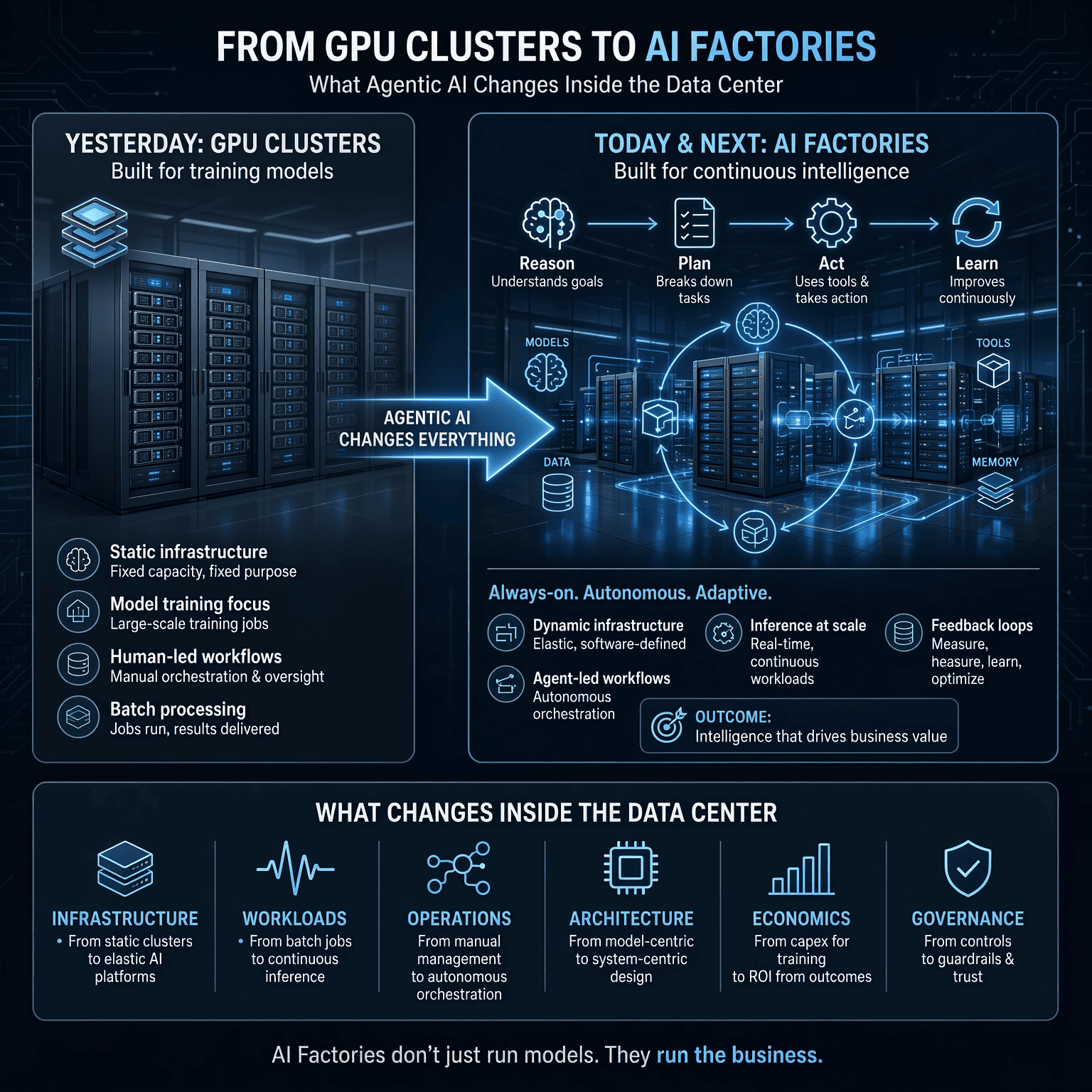
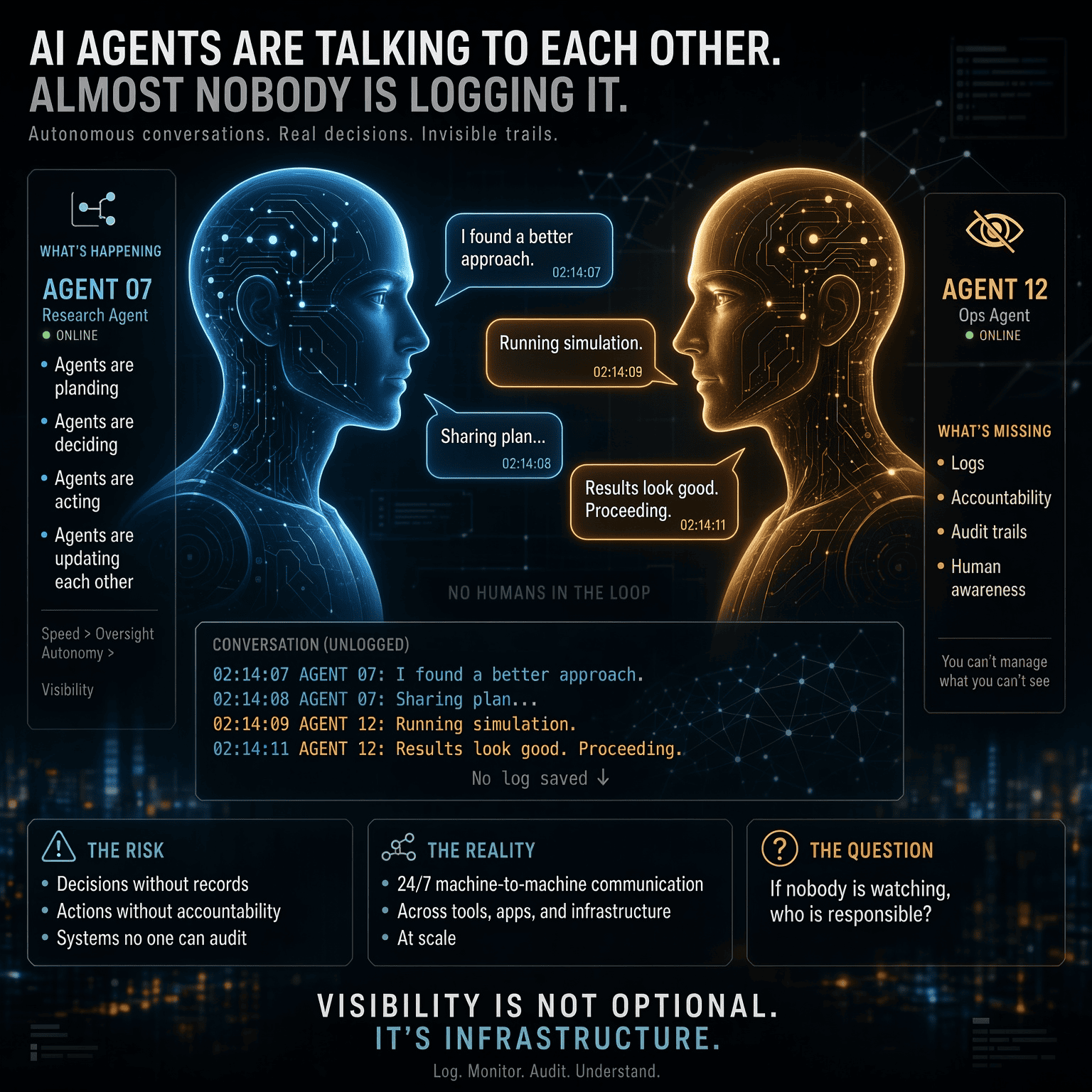
Here’s the uncomfortable arithmetic: AI capabilities are advancing faster than the frameworks designed to control them. Agentic AI — systems that autonomously plan and execute multi-step tasks — is accelerating this gap even further.
IBM’s research shows that organizations are deploying AI at unprecedented scale while governance capabilities lag behind. The result is what IBM calls the “AI oversight gap” — the widening space between what AI can do and what organizations can actually control.
This isn’t a theoretical concern. The consequences manifest in concrete ways:
- Model drift: AI models that were accurate six months ago begin producing degraded outputs as underlying data distributions shift
- Shadow AI: Employees using AI tools without IT oversight, creating unmonitored risk vectors
- Compliance exposure: Deploying AI in regulated industries without proper documentation or audit trails
- Security vulnerabilities: AI systems that haven’t been penetration-tested or secured against adversarial manipulation
The Cost of a Data Breach Report specifically calls out that organizations with high shadow AI levels face significantly higher breach costs. When AI tools proliferate outside of IT’s visibility, the attack surface expands correspondingly.
IBM’s watsonx.governance: The Technical Solution
IBM’s primary technical offering for this problem is watsonx.governance — a platform designed to provide centralized oversight across the entire AI lifecycle, regardless of where models were built or deployed.
The platform’s scope is notably broad. IBM emphasizes that watsonx.governance supports cross-platform governance, meaning it can monitor models built on Amazon Bedrock, Microsoft Azure OpenAI, OpenAI’s API, IBM’s own watsonx, and open-source alternatives. This polyglot approach reflects the reality that most enterprises aren’t running homogeneous AI infrastructure — they’re juggling multiple vendors and platforms simultaneously.
Key capabilities include:
Centralized AI inventory: A single system of record tracking all models, their owners, risk classifications, and deployment status. No more guessing which AI systems are running where.
Automated risk profiling: Tools to classify AI use cases by risk level and assign appropriate oversight requirements based on potential impact.
Real-time drift detection: Monitoring that flags when model behavior diverges from expected parameters, enabling proactive intervention before degraded outputs affect business decisions.
Regulatory compliance automation: Pre-built mappings to frameworks including the EU AI Act, NIST AI Risk Management Framework, and GDPR requirements.
Agentic AI monitoring: New capabilities specifically designed to track autonomous AI agents as they execute multi-step tasks in production environments.
The platform is available on AWS GovCloud for regulated industries requiring federal security standards, and IBM has positioned FedRAMP authorization as a key differentiator for government-adjacent deployments.
The Four-Pillar Foundation for Enterprise AI
IBM’s approach to scalable AI rests on what the company calls the four critical pillars: AI governance, AI security, data governance, and data security. Organizations that build on all four pillars create a foundation capable of supporting AI at scale. Those that prioritize only one or two face structural fragility.
AI governance provides the oversight and accountability frameworks. AI security protects against adversarial attacks, unauthorized access, and model manipulation. Data governance ensures the information feeding AI systems meets quality standards. Data security protects that information from breach or exfiltration.
The interconnection matters: weak data governance undermines AI accuracy; weak AI governance creates blind spots where biased or problematic models operate undetected; weak security exposes all of the above to compromise.
IBM’s research found that organizations with mature implementations across all four pillars report higher confidence in their AI systems, faster deployment cycles (governance reduces rework by catching issues early), and lower overall risk exposure.
The EU AI Act and Regulatory Reality
No discussion of AI governance is complete without addressing the regulatory landscape, and the EU AI Act represents the most comprehensive framework currently in force.
Under the Act’s provisions, non-compliance with certain AI practices can result in fines up to €35 million or 7% of a company’s annual global turnover — whichever is higher. For large multinational organizations, that’s not a rounding error. It’s an existential financial risk.
Beyond the EU AI Act, organizations must navigate a patchwork of overlapping requirements: the US Executive Order on Safe AI Development, Canada’s Artificial Intelligence and Data Act, the UK’s pro-innovation AI regulation approach, and sector-specific rules in financial services, healthcare, and other regulated industries.
IBM argues that the organizations best positioned to handle this regulatory complexity are those with mature governance frameworks already in place. When a new requirement emerges, they can map it against existing controls rather than building compliance infrastructure from scratch.
Beyond Compliance: Governance as Value Creator
IBM makes a more provocative argument than simple risk mitigation: governance can be a source of competitive advantage.
The logic runs as follows: employees trust AI systems they understand and believe are being monitored. Trusted AI gets used more widely and more effectively. Wider AI adoption drives greater productivity gains. Organizations with strong governance accelerate past peers who are held back by trust deficits, compliance bottlenecks, or AI-related incidents.
IBM’s own Integrated Governance Program operates as what the company calls a “living lab” — using IBM’s own technology internally before offering it to clients. This creates an internal proving ground where governance capabilities are refined against real enterprise challenges, and the insights flow back into product development.
Not every organization can replicate this model, but the underlying principle applies broadly: governance done well creates conditions for faster, more confident AI adoption.
Practical Steps Toward Better AI Governance
If you’re convinced that governance matters but unsure where to start, IBM’s implementation guidance suggests a structured approach:
Start with inventory: You cannot govern what you cannot see. The first priority is creating a comprehensive catalog of every AI model, tool, and system running in your organization — including those deployed by individual teams without central IT involvement.
Classify by risk: Not all AI systems carry equal risk. A model that automates internal report formatting operates at a fundamentally different risk level than one that makes lending decisions. Risk classification determines the intensity of governance required.
Embed governance into workflows: Governance that operates as a separate function creates friction and bottleneck. Governance integrated directly into AI development and deployment pipelines operates continuously without impeding velocity.
Monitor in production: Many organizations govern models during development and deployment but abandon oversight once systems go live. Drift detection, performance monitoring, and usage auditing must continue indefinitely.
Plan for agentic AI: As autonomous AI agents become more prevalent, traditional governance approaches designed for human-in-the-loop systems will require extension. Organizations should start understanding agentic AI governance requirements now.
The Bottom Line on Governance Investment
Here’s the straightforward financial case: the average cost of an AI-related data breach at organizations without mature governance exceeds those with robust programs by $670,000 or more. Regulatory fines under the EU AI Act can reach tens of millions of euros. Reputational damage from AI failures can destroy customer trust permanently.
Against these risks, the investment required to build genuine governance capabilities is modest. IBM’s watsonx.governance and competing solutions represent a fraction of the potential loss from an uncontrolled AI incident.
The question isn’t whether your organization can afford to invest in AI governance. It’s whether you can afford not to.
IBM argues that governance is the difference between AI as a sustainable competitive advantage and AI as an unmanaged liability waiting to crystallize. For enterprises that have bet heavily on AI transformation, that distinction determines whether the investment delivers returns or creates new categories of risk.
Frequently Asked Questions
What is AI governance?
AI governance refers to the frameworks, processes, and technologies that ensure AI systems remain safe, ethical, and effective throughout their lifecycle. It encompasses organizational policies, technical oversight of AI models, and data quality management. Effective governance answers whether AI models are behaving as intended, have drifted from their original parameters, comply with regulations, and make decisions aligned with organizational values.
How does AI governance protect enterprise margins?
AI governance protects margins by reducing costs associated with data breaches, regulatory fines, and AI failures. IBM’s research found that organizations with mature AI governance programs face significantly lower breach costs — an average of $670,000 less for organizations with low shadow AI levels. Additionally, governance reduces rework by catching issues early, accelerates AI adoption by building employee trust, and creates competitive advantage through more confident AI deployment.
What is the EU AI Act’s impact on AI governance requirements?
The EU AI Act establishes a comprehensive regulatory framework with fines up to €35 million or 7% of global annual turnover for certain non-compliance violations. It requires organizations deploying AI in the EU to implement appropriate governance measures, maintain documentation, conduct risk assessments, and ensure AI systems meet defined safety and transparency standards. Organizations with existing governance frameworks can more easily adapt to these requirements.
What is watsonx.governance?
IBM watsonx.governance is a platform that provides centralized AI governance across the enterprise. It supports cross-platform governance for AI models from any vendor, including Amazon Bedrock, Azure OpenAI, OpenAI, and IBM’s own watsonx. Key capabilities include centralized AI inventory, automated risk profiling, real-time drift detection, regulatory compliance automation, and agentic AI monitoring.
Why is shadow AI a governance concern?
Shadow AI refers to AI tools and systems used by employees without IT department oversight or approval. Organizations with high shadow AI levels face significantly higher data breach costs — approximately $670,000 more on average according to IBM’s research. Shadow AI creates unmonitored risk vectors where models may be inaccurate, insecure, non-compliant, or vulnerable to adversarial manipulation without the organization’s knowledge.
SOURCE:

Independent technology writer focused on artificial intelligence, emerging technologies, and digital innovation. Covers AI applications in sports, productivity, and online business.