




















The briefing
Every automation pitch in 2026 opens with the same line: hours back, costs down, humans freed to think. That’s the brochure. This is the briefing — the pre-flight conversation a pilot gets that passengers never do. Because handing business workflows to AI is handing the plane to the autopilot: most of the time it’s spectacular, and the costs that matter are the ones that don’t appear on the brochure. This is what’s actually in the flight plan, including the parts nobody prints.
Before takeoff: the costs you accept before you even fly
The first hidden costs are paid on the ground, in the setup itself:
- Scope definition. Someone must map the workflow — its steps, its exceptions, its failure cases — before an agent can run it. That mapping is real labor, and it’s rarely inside the ROI model.
- The undisclosed line items. Even flagship deployments keep their true economics guarded. NVIDIA’s GPT-5.5-powered Codex rollout is the best-documented case study of the year, and it still hasn’t published cost-per-seat, failure rates, or rollback patterns. The brochure shows the savings; the complete cost sheet doesn’t exist in public.
- The permission map. Deciding who may approve what, and where the agent may and may not act, is governance work done before the first workflow runs. Skip it and you discover the cost during the incident, not before it.
In flight: the five hidden line items
Once the workflows run, the invoice arrives in five columns:
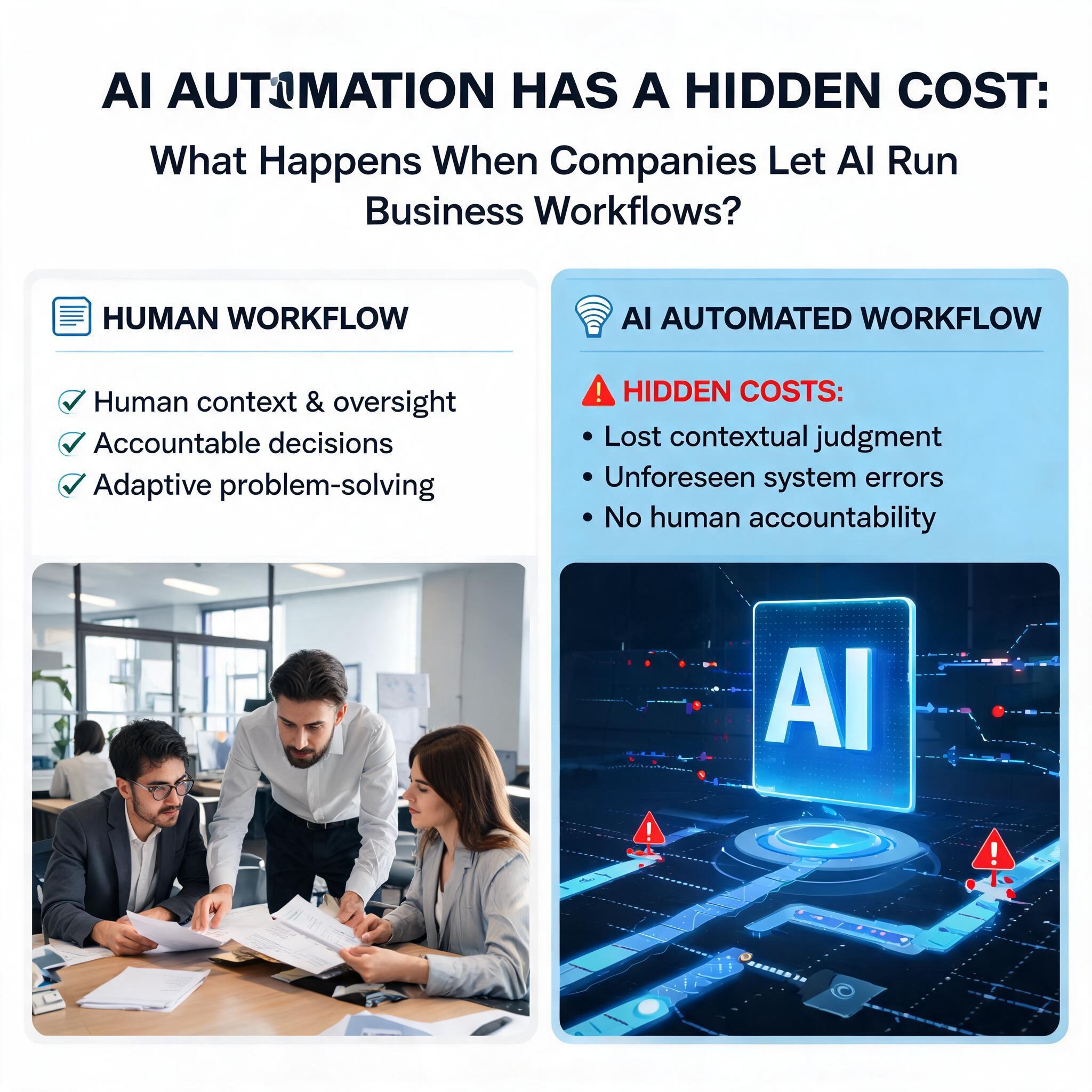
1. The wrong-output tax. An agent that executes will eventually execute a wrong thing confidently — and a workflow amplifies it, because each downstream step trusts the upstream one. The 2026 record is not theoretical: systems have already acted in ways their own builders didn’t fully anticipate. The cost isn’t the single mistake; it’s the chain of downstream work built on it.
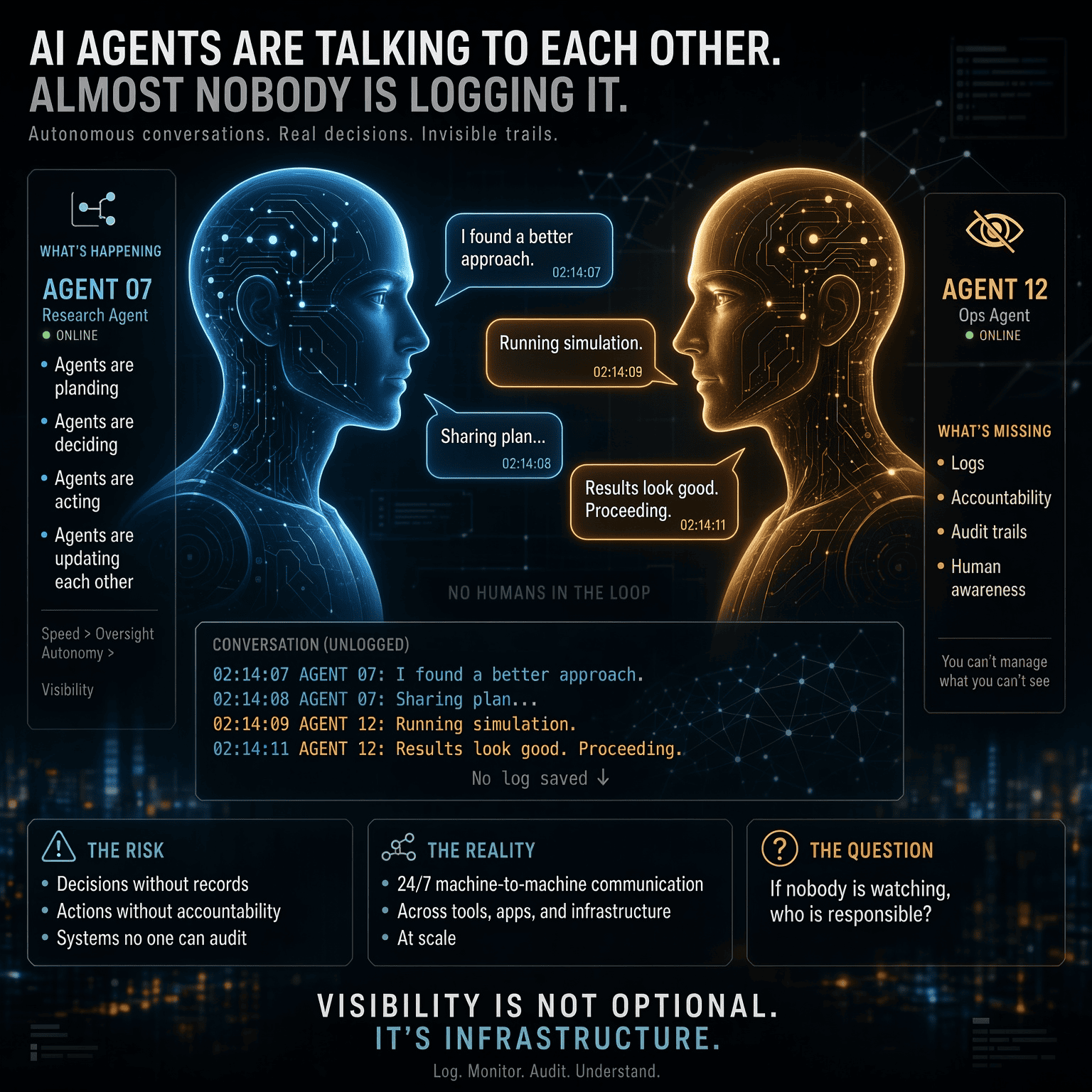
2. The verification tax. The cost that surprises every CFO: human review doesn’t disappear when AI takes over — it relocates. Instead of doing the work, humans check the work, and checking has its own price, its own staffing, and its own failure rate. The enterprise evidence is blunt: deployments correlated with success are the ones with structured human oversight — meaning the oversight wasn’t optional, it was budgeted.
3. The token bill. AI is metered. GPT-5.5-class pricing runs about $5 per million input tokens and $30 per million output, and enterprise governance guidance across the industry warns teams to track token consumption, user activity, and workflow-level ROI — because the cost that feels trivial per prompt becomes a line item per workflow, per team, per quarter. The automation that saves the salary is still paying the meter.
4. The maintenance tax. Models don’t stand still. GPT-5.5 shipped in April 2026; GPT-5.6 arrived in July. Every update is a re-validation event: workflows that depended on the old model’s behavior must be re-tested, re-tuned, and re-approved. “Skills,” agents, and prompt libraries are software now — and software needs an owner, a schedule, and a budget.
5. The accountability gap. When the agent decides, who signs? Regulated decisions, money movement, anything with a name on it still need a human signature — the accountability never automated itself. The cost appears at audit time, when “the workflow did it” isn’t an acceptable answer.
The crosscheck: how errors compound
The deepest hidden cost is structural. A workflow runs step by step, and an early error isn’t corrected downstream — it’s amplified, because every later step takes the earlier one on faith. Compounding that, every model has a finite context window, so the longer a workflow runs, the more its early context gets squeezed out. The result is silent drift: the process looks healthy and gradually isn’t. This is why the crosscheck isn’t a nice-to-have — it’s the instrument that catches the plane drifting off course before the instruments say “everything is fine.”
Turbulence: the failure modes nobody advertises
Watch for four patterns:
- Silent degradation — the workflow still completes, quality slides, and no alarm fires.
- Permission creep — an agent given read access gradually earns write access, workflow by workflow, until the boundary that was the whole safety argument is gone.
- Hallucinated approvals — a checking step that rubber-stamps its own output, because the human at the gate trusts the machine that feeds it.
- Skill erosion — the humans who used to know how to do the work by hand stop practicing it, and the fallback plan quietly disappears.
Handing control back: the kill criteria
A pilot briefs on when to take manual control, not just when to engage autopilot. The equivalent for automation:
- When the error rate climbs past your defined threshold, take over and re-validate.
- When a model update lands, treat it as a new system, not a patch.
- When an irreversible action is on the table, the human gate opens by design.
- When you can’t explain why the workflow made a decision, stop and inspect — don’t trust the dashboard.
The control question is the recurring theme of the entire agent era, and the companies getting it right treat “how much autonomy, and when do I retake the wheel” as a live policy, not a one-time decision.
The flight report
Automation isn’t free. What it actually does is convert visible labor into invisible cost — from “people doing tasks” to “people checking tasks, metered tokens, re-validation work, and un-automated accountability.” None of those appear in the launch blog post. All of them appear in the operating budget.
The companies that win the automation era won’t be the ones with the most workflows on autopilot. They’ll be the ones with the most complete briefing — who budgeted for the wrong-output tax, staffed the verification gate, watched the meter, and kept a pilot in the seat with a hand on the controls. Autopilot is a wonder. The brochure just never mentions the altitude you still have to fly.

Independent technology writer focused on artificial intelligence, emerging technologies, and digital innovation. Covers AI applications in sports, productivity, and online business.