



























If you’ve ever wondered what happens when one of the world’s most celebrated sports car manufacturers becomes the “featured marque” at the Goodwood Festival of Speed, the short answer is: magic. Lots of it.
When Porsche took centre stage at Goodwood, the German marque didn’t hold back. From the very first Porsche sports car ever built to rare rally monsters and one-off creations, the display spanned decades of engineering brilliance. The 2023 event — marking Porsche’s 75th anniversary — was particularly historic, transforming the rolling Sussex countryside into a living museum of Porsche history.
But the classics didn’t just sit pretty on display. Many of them roared up the famous 1.16-mile Hillclimb, thrilling the tens of thousands of spectators who lined the course across the four-day event.
The Star of the Show: Porsche 356 “No. 1”
No Porsche tribute at Goodwood could possibly begin anywhere other than the 356. After all, this is the car that started everything.
In 1948, Ferry Porsche and his team built the first Porsche sports car — originally called the “No. 1” — in a former sawmill in Gmünd, Austria. It was a humble beginning. The car used mechanical components borrowed from the Volkswagen Beetle, wrapped in a lightweight body designed by Erwin Komenda. But it established the blueprint: a rear-engined, lightweight sports car prioritising balance and driver engagement over raw power.
At Goodwood, Porsche brought this irreplaceable piece of history. The No. 1 Roadster made several runs up the Hillclimb, piloted by former Porsche WEC champion Mark Webber. The sight of the very first Porsche — created decades before the 911 became an icon — charging through the English countryside was genuinely moving for anyone who understands what this car represents.
The Porsche 356: Why It Still Matters
The 356’s story didn’t end with No. 1. Production evolved through several generations until it concluded in 1965 with the 356 C, by which point 77,361 examples had left the line. Every single one of those cars contributed to Porsche’s identity as a builder of driver-focused sports cars.
What makes the 356 so compelling — even by modern standards — is its simplicity. We’re talking about a car weighing just over 900 kilograms with a small-capacity flat-four engine producing anywhere from 40 to 95 horsepower depending on the variant. These aren’t numbers that sound impressive on paper. But on the road, the 356 rewards a different kind of driving. One writer recently described it as offering an “escape from it all” — a chance to disconnect from screens, from noise, from the relentless acceleration of modern life.
When you drive a 356, you’re not fighting the car. You’re working with it. The steering communicates. The chassis tells you what’s happening beneath the tyres. The engine note fills the cabin. It’s a conversation between driver and machine, and that conversation doesn’t exist in quite the same way in a Taycan, however brilliantly engineered that car may be.
Gerry Judah’s Central Feature: Art Meets Automotive History
Every year at Goodwood, the centrepiece outside Goodwood House is the Central Feature — a massive sculpture commissioned specifically for the event. For Porsche’s year as featured marque, artist Gerry Judah created something extraordinary.
The sculpture stood 28 metres tall, constructed from 50 tonnes of steel. Mounted upon it were six Porsche cars spanning the brand’s history:
- 1948 356 No. 1 Roadster — the car that started it all
- 1960 718 Formula 2 — open-wheeled racing heritage
- 1990 962C — the dominant Group C endurance racer
- 2009 911 Sport Classic — limited-edition 911 goodness
- 2023 911 (Type 992) — the current-generation icon
- 2023 963 — Porsche’s modern LMDh endurance racer
Some of these cars were mounted dramatically, even appearing upside down in places. The effect was theatrical and unforgettable. This marked the fourth time Porsche had been the subject of the Central Feature — more than any other manufacturer.
The Vision 357 Speedster: A 75th Birthday Gift
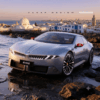
Porsche used the Goodwood stage to debut the Vision 357 Speedster concept. This was a birthday present to itself: a modern interpretation of the 356, rendered as an all-electric speedster.
The concept kept the 356’s essential proportions — that long hood, the rounded fenders, the compact cabin — but reimagined everything through a contemporary lens. Electric power, sustainable materials, and the latest manufacturing techniques. It was controversial in the best way: a conversation starter about whether heritage and electrification can coexist.
The Vision 357 Speedster wasn’t the only 356 homage on display. Porsche also showed the 911 Spirit 70 Edition — a special model from Porsche Exclusive Manufaktur celebrating the brand’s 1970s aesthetics with bold colours, Pasha interior upholstery, and retro decals.
Rare Classics You Wish You’d Seen in Person
The parade of rare Porsche machinery up the Hillclimb was where Goodwood really delivered. Here are some of the headliners:
356 SL Gmünd Coupé
This was the first Porsche to compete at the 24 Hours of Le Mans, winning the 1.1-litre class in 1951. The Gmünd Coupé represents Porsche’s first attempts at building a true motorsport weapon, and its presence at Goodwood connected directly to the brand’s racing DNA.
Porsche Salzburg 917K
This is the car that gave Porsche its first outright victory at Le Mans in 1970. The 917K — short for Kurzheck, meaning short tail — became an icon of the era when Porsche finally conquered the world’s greatest endurance race. Richard Attwood, one of the drivers who secured that famous 1970 victory, piloted it up the Hill.
Porsche 917/30 “Trigema”
This was the monster. A 1,200-horsepower beast that dominated the European Interserie championship in the early 1970s. Porsche’s Museum brought the first 917/30 ever built, finished in its unmistakable Vaillant-liveried livery.
One-Millionth 911
When Porsche’s one-millionth 911 rolled off the production line, it was treated as a historic moment. At Goodwood, this milestone car joined the parade, representing six decades of the model that became Porsche’s beating heart.
959 Paris-Dakar Rally Car
The 959 was Porsche’s technological showcase — a Group B rally weapon that also became the basis for a homologated road car. Seeing one of these in the metal, especially in a rally context, reminded everyone that Porsche’s off-road ambitions weren’t limited to the 911.
Porsche 928 “Trigema” Racing Version
The 928 as a race car is an unusual sight. The 1983 Trigema car was a rare homologation special, and its presence at Goodwood added unexpected variety to the Porsche display.
Cayenne Transsyberia
Yes, a Cayenne. But not just any Cayenne. The Transsyberia was a rally-prepped version built to tackle the gruelling Trans-Siberian route. It demonstrated that Porsche’s sporting ambitions extended beyond pure sports cars into the SUV realm.
Modern Porsche Presence: Racing DNA Lives On
While the classics stole the show, Porsche’s current motorsport programme was well represented:
- 919 Hybrid — Porsche’s Le Mans-dominating LMP1 car that eventually gave way to the 963 programme
- 963 LMDh racer — the modern endurance prototype still competing at the highest levels
- 963 RSP — a one-off Sonderwunsch creation bridging the road-legal hypercar and race car
- 911 GT3 R — the customer racing platform used in GT3 series worldwide
- Iron Dames 911 GT3 R — the trailblazing all-female team running in the current F1 movie
The 963 RSP was particularly notable. Based on the 963 Hypercar, this unique creation featured a 4.6-litre twin-turbocharged V8 producing around 680 horsepower. It was Porsche’s way of saying: the racing spirit doesn’t just live in purpose-built prototypes. It can be bottled and sold to collectors who want something truly one-of-a-kind.
Porsche Autokino: A Hidden Gem
Away from the Hillclimb chaos, Porsche set up something special called the Porsche Autokino — a drive-in movie venue concept housing 30 iconic Porsche cars across the decades. Part exhibition, part cinematic experience.
Visitors sat in cinema-style seats surrounded by classics including a 911 SC Alméras Frères Eminence rally car, a 550 Spyder, and even a 1960 Porsche-Diesel Junior tractor. Yes, Porsche built tractors. And apparently, one of the best seats in the Autokino was beside this agricultural oddity. It was a reminder that Porsche’s history isn’t just about 911s and race cars — it’s a broader story of engineering ambition across multiple vehicle types.
Porsche at Goodwood: Pros and Cons
Pros:
- Unrivalled access to rare vehicles — You simply cannot see some of these cars anywhere else
- Living history — Many cars run up the Hillclimb, making the experience active rather than passive
- Gerry Judah’s sculpture — A piece of automotive art that becomes more impressive in person
- Cross-generational appeal — Whether you’re into air-cooled 911s or modern GT3 RS models, there’s something
- The Porsche Club GB community — Up to 250 members display their own cars, creating a genuine club atmosphere
Cons:
- Crowds — Goodwood draws enormous attendance; weekdays are less packed than weekends
- Weather — It’s England. The Sussex sunshine that blessed some moments can disappear quickly
- Logistics — The estate is vast; comfortable shoes and planning are essential
- Ticketing costs — Premium experiences come with premium price tags
Tips for Experiencing Porsche at Goodwood
If you’re planning to attend a future Goodwood Festival of Speed, here are some practical pointers:
- Arrive early for the Hillclimb — The best vantage points fill fast. The first corner after the start line and the righthand section at Molecomb Corner are popular spots.
- Visit the Porsche stand first thing — It’s easy to spend all day there, but arriving early means more space to explore without crowds.
- Book the House of Porsche experience if available — This premium area near the Hillclimb offers dining options and proximity to the action.
- Check the schedule for parade runs — The rare classics don’t just sit static; they run specific laps. Know the times so you don’t miss the good stuff.
- Bring sun protection and rain gear — Both are essential in equal measure. English weather is unpredictable.
- Take time in the Porsche Classic area — The latest offerings from Porsche Classic are often underrated gems at these events.
- Consider a weekday — Thursday often offers smaller crowds while still featuring full programming.
For more automotive news, classic car coverage, and industry updates, visit Cars at Next Apps Zone.
Frequently Asked Questions
What is the Porsche 356 and why is it important?
The Porsche 356 was the first production sports car built by Porsche, with the first example completed in 1948 in Gmünd, Austria. Designed by Ferry Porsche and Erwin Komenda, it established the core principles that still define Porsche vehicles today: rear-engine layout, lightweight construction, and driver-focused dynamics. The 356 evolved through multiple generations until production ended in 1965, with over 77,000 examples built.
What cars were part of the Porsche Central Feature at Goodwood?
Gerry Judah’s Central Feature sculpture displayed featured six Porsche cars: the 1948 356 No. 1 Roadster, 1960 718 Formula 2, 1990 962C Group C racer, 2009 911 Sport Classic, the current Type 992 911, and the 2023 963 LMDh endurance racer. The 28-metre steel structure dramatically posed the vehicles, with some appearing upside down.
What is the Vision 357 Speedster?
The Vision 357 Speedster is a concept car unveiled by Porsche at Goodwood as a 75th anniversary celebration of the 356. It reimagines the 356’s classic proportions as a modern, all-electric speedster, combining heritage styling with contemporary electric propulsion and sustainable materials. It represents Porsche’s exploration of how classic design language can translate to future mobility.
How can I see rare Porsche classics at Goodwood?
The Goodwood Festival of Speed takes place annually in July at the Goodwood Estate in West Sussex, England. Porsche typically has a significant presence as either the featured marque or a major exhibitor. Attending on weekdays generally means smaller crowds. The Hillclimb runs continuously across all four days, with specific parade runs for rare machinery scheduled throughout.
What is the Porsche Autokino at Goodwood?
The Porsche Autokino was a specially created exhibition space at Goodwood combining classic car displays with a drive-in cinema atmosphere. It housed 30 iconic Porsche vehicles across the brand’s history, including rally cars, race cars, and unusual models like the Porsche-Diesel Junior tractor. It offered a more intimate viewing experience away from the main Hillclimb action.
The Final Word
Porsche’s presence at Goodwood isn’t just a display — it’s a statement. It says that heritage matters, that the cars of the past deserve to be celebrated and driven, and that the connection between Porsche’s history and its future is unbroken. The 356 that started everything charging up the same hill as the latest 911 GT3 RS isn’t just a photo opportunity. It’s a reminder that some things remain constant even as everything else changes.
If you ever get the chance to see Porsche at Goodwood in person, take it. Walk among the classics. Listen to the flat-four and flat-six engines sing. Watch a car that pre-dates your parents’ birth take a corner with the same agility it had seven decades ago. That’s what makes Goodwood special. That’s what makes Porsche special.
And that’s why we keep going back.

Independent technology writer focused on artificial intelligence, emerging technologies, and digital innovation. Covers AI applications in sports, productivity, and online business.