








One List, Three Companies, One Theory of the Case
Why BYD, Alibaba, and Baidu Were Added Together
If you follow tech news, you have seen the headlines: the Pentagon added BYD, Alibaba, and Baidu to a blacklist for Chinese military companies. Maybe you wondered what an electric car company and a search engine have in common. I wondered the same thing.
The Pentagon’s 1260H list started in 2021. Its job was to name Chinese companies with direct ties to the People’s Liberation Army. Early versions were straightforward: state-owned shipbuilders, aerospace contractors, telecom equipment makers. The list grew slowly.
The June 2026 update changed everything. In a single publication, the Department of Defense added about 60 new companies. Total count: 188. And for the first time, it included brands that normal people use every day. Alibaba runs Taobao and Alibaba Cloud. Baidu runs China’s biggest search engine and builds self-driving car technology. BYD makes more electric vehicles than any other company on the planet.
None of them build tanks. None are owned by the military. But the Pentagon says all three feed into China’s defense base through their technology, their supply chains, and their ties to state-run institutions.
The Common Thread: Military-Civil Fusion
The legal idea behind all this is called military-civil fusion.
The theory is simple. China’s government has spent years pushing civilian companies to develop technologies that work for both commercial and military use. Artificial intelligence. Satellite navigation. Advanced batteries. Cloud computing. All of it has two lives. A face recognition system can unlock your phone. It can also identify a target. A battery cell can power your family car. It can also power a military drone.
The Pentagon’s position: any Chinese company working in a dual-use sector is part of this system, whether they mean to be or not. They do not need proof that the company knowingly works with the military. They only need to show that the company operates in a field where the technology serves both purposes and has some link to China’s Ministry of Industry and Information Technology.
That is a very wide net. Critics say it could catch almost any Chinese company that does business in the US. Supporters say it simply acknowledges the truth: China does not separate civilian and military innovation the way the West does.
What the 1260H List Actually Does
Headlines make the list sound scarier than it is. Let me walk through what it really means.
The Pentagon’s 1260H list does not freeze assets. It does not ban trade. It does not stop American companies from doing business with listed firms. It does three specific things.
Direct Contract Ban (June 30, 2026). From this date, the Defense Department cannot sign or renew contracts directly with any listed company. If a listed firm sells something to the Pentagon — software, hardware, shipping services — those deals must end or move to a different supplier.
Indirect Contract Ban (June 2027). One year later, the rule widens. American companies that supply the Pentagon cannot hire listed companies as subcontractors. This one matters more because it reaches deep into supply chains.
The “Red Flag” Effect for Investors. The list does not carry automatic fines. But it creates what lawyers call compliance risk. Every American business that works with a listed company now has to ask: could this become a problem later? Investors in Chinese stocks have to consider whether tougher rules are coming. Most people see the list as a warning shot.
Companies can ask to be removed. Tencent was added in January 2025. It is still waiting. Alibaba and Baidu have both said they will fight their designations. It is not clear how long that will take.
The Tech War Before June 2026
Phase One: Huawei and the 5G Fight (2018–2022)
To understand why the 1260H list exists, you have to look at how the US-China technology fight got here.
The first phase started in 2018. The Trump administration added Huawei to the Commerce Department’s Entity List. The accusation: Huawei’s equipment could let the Chinese government spy on other countries. The US got allies to kick Huawei out of their 5G networks. It cut off Huawei’s access to Google’s Android and American chips.
This phase was narrow. One company. One technology. The theory was clear: stop Huawei from winning the 5G race, and you slow China’s rise. It worked in some ways — Huawei’s share of the global telecom market dropped. But Huawei did not die. It built its own operating system. It poured money into making chips at home. The company is still here.
Phase Two: The Semiconductor Crackdown (2022–2025)
The second phase was much broader. The US stopped looking at single companies and started looking at the entire chip supply chain.
In 2022 and 2023, the Commerce Department wrote rules to cut China off from the most advanced computer chips and the machines that make them. US semiconductor export controls to China hit Nvidia’s A100 and H100 chips, then the A800 and H800 workarounds, then the H20. The rules spread to chipmaking tools from Applied Materials, Lam Research, and KLA. The US leaned on the Netherlands and Japan to do the same.
The goal: create a technology gap China could not close fast. Advanced chips need extreme ultraviolet lithography machines. Only one company in the world makes them — ASML, in the Netherlands. Block those machines, the thinking went, and China stays years behind in AI computing.
The Entity List and Chip Export Controls. The Entity List ballooned. Hundreds of Chinese companies and research labs were added. The reason shifted. It used to be “this company helps the military.” It became “this company operates in a sector where advanced technology could help the military.” The definition of a national security threat kept expanding.
The Nvidia H200 Reversal and Congressional Backlash. Then, in December 2025, the Trump administration reversed course. It let Nvidia sell the H200 chip to China — about six times more powerful than the H20, which had been the ceiling. The conditions: third-party testing, a cap on volume, and a 25 percent tariff on every shipment.
Congress moved fast. The AI Overwatch Act, introduced in January 2026, would give Congress 30 days to review and block any license for advanced AI chips to adversaries. The bill reflected a simple frustration: if you sell China advanced chips with conditions, you have already given up the game.
The DeepSeek Lesson: Why Chips Are Not the Only Bottleneck. Then something happened that shook the whole strategy. In early 2025, a Chinese AI lab called DeepSeek released a model that matched or beat the top American models. It was trained on less powerful hardware.
DeepSeek proved that clever software can make up for weaker chips. The team used better memory management, smarter training data, and more efficient algorithms. The whole thing cost a fraction of what US companies spent.
This was an awkward moment for Washington. Export controls assume hardware is the only thing that matters. DeepSeek showed that is not true. If Chinese labs keep making progress on restricted chips, the whole export control strategy looks shakier.
What Changed — The “Everything Is National Security” Doctrine
From Specific Technologies to Entire Industrial Ecosystems
Each phase of the tech war got wider. First one company. Then one supply chain. Now the 1260H list covers almost every sector where Chinese companies have gotten big.
The June 2026 update marks a real shift in how the US government sees Chinese technology. The old view: you could tell civilian technology apart from military technology. AI chips for phones were different from AI chips for bombs. Family EVs were different from military vehicles. Cloud computing for shopping sites was different from cloud computing for the army.
That separation is gone. Under the military-civil fusion idea, any technology that could be used for both purposes is treated as if it already serves the military. The burden of proof has flipped. Companies are no longer innocent until proven otherwise.
You might ask: why is the US going after Chinese tech companies so broadly now? The honest answer is that the earlier strategies did not work well enough. Huawei is still in business. Chip controls did not stop China’s AI progress. Every targeted approach left gaps. The 1260H list is an attempt to plug them all at once.
Why Consumer Brands Are Now Targets
Three companies show how this logic plays out in different industries.
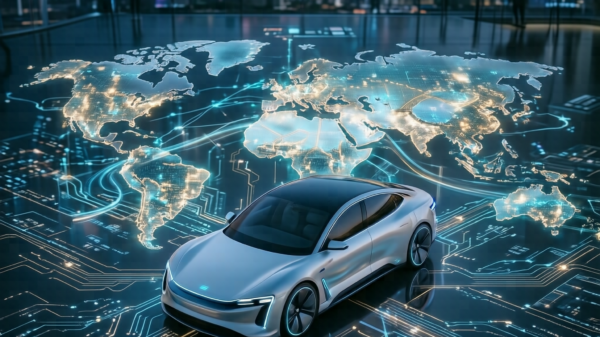
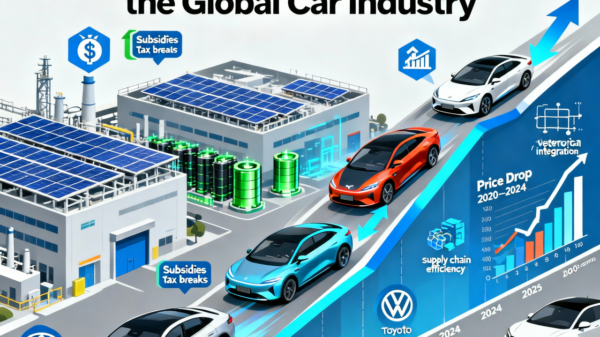
BYD: Electric Vehicles as a National Security Issue. BYD sells family cars. But those cars have advanced batteries, sensors, and internet connections that can collect and send data. The US has put a 100 percent tariff on Chinese EVs, banned Chinese connected car tech, and now named BYD a military-linked company. The fear is not that BYD’s cars will become weapons. It is that the data they collect — where you go, how you drive, who rides with you — could be accessed by Beijing. And the battery and chip supply chains BYD controls could give China strategic power.
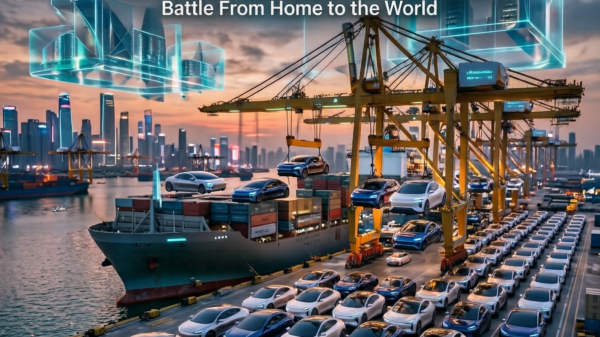
BYD’s answer: build factories everywhere else. Hungary, Brazil, Mexico, Canada. The company is building a global manufacturing network that does not depend on exports from China. Whether that will be enough for US regulators, nobody knows yet.
Alibaba: Cloud Computing and AI Infrastructure. Most people know Alibaba as an online shopping site. But Alibaba Cloud is one of the biggest cloud providers in Asia. Cloud infrastructure is about as dual-use as it gets. The same servers that run Taobao’s product recommendations can train AI models or process government records.
Alibaba also invests in AI companies through its cloud business. It is a major backer of Unitree Robotics, the humanoid robot company that also landed on the 1260H list. The Pentagon’s logic: Alibaba’s cloud, AI, and investments all feed the military-civil fusion machine.
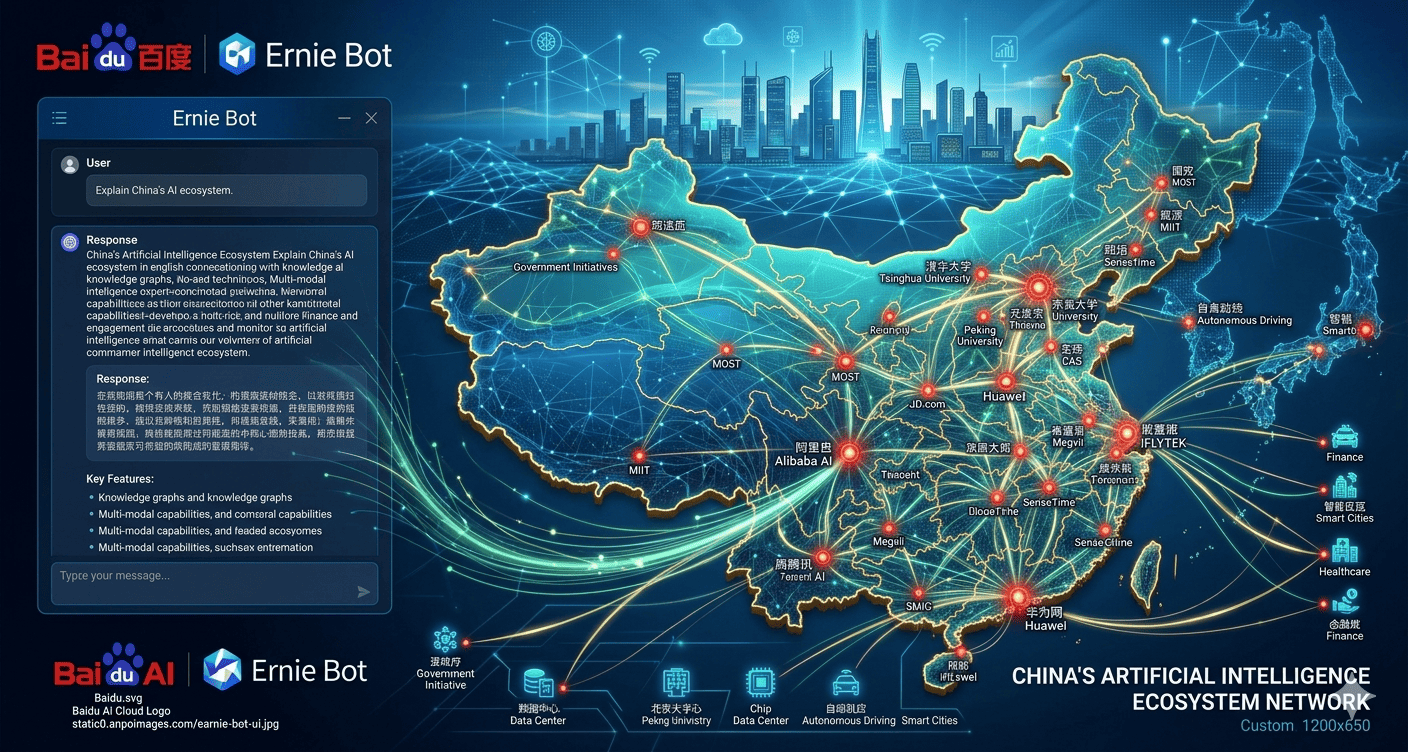
Baidu: Search Engines, Autonomous Driving, and Foundation Models. Baidu runs China’s main search engine. It has also poured money into self-driving technology through its Apollo platform. And it built Ernie Bot, one of China’s top large language models.
The national security worries stack up. Baidu’s search data shows what millions of Chinese citizens are looking for and reading. Its self-driving tech could be adapted for military vehicles. Its AI models could serve defense needs. And like Alibaba, Baidu works closely with state regulators and research labs.
Baidu says it will “not hesitate to use all options” to get off the list. It disputes the Pentagon’s claims.
The Fragile Truce That Wasn’t
The May 2026 Trump-Xi Summit in Beijing
The timing of the 1260H update is telling. Less than a month before the list came out, President Trump met with President Xi in Beijing. Both sides called it an effort to calm things down after years of tariffs and trade fights.
They agreed to set up a joint investment and trade board. They talked about tariffs, technology rules, and the broader competition. The public statements were careful, but hopeful.
Why the List Was Published Three Weeks Later
Then, three weeks after the summit, the Pentagon dropped the expanded list. The message: diplomacy and national security run on separate tracks. The White House may have wanted to wait. The Pentagon followed its own timeline.
Some analysts read the list as a sign that the summit delivered less than the official statements suggested. If the tech competition was really cooling off, they argued, the Pentagon would not have added 60 companies weeks after the leaders shook hands.
Others saw it as proof of internal fights inside the Trump administration. The State Department and National Security Council may have pushed for restraint. The Pentagon may have pushed for action. The Pentagon won.
The February Draft That Was Withdrawn — and What It Reveals
This was actually the second attempt. In February 2026, the Pentagon briefly posted a nearly identical version to the Federal Register — and then pulled it down within hours. No explanation.
The withdrawal fueled speculation that the February posting jumped the gun. Some reports said the White House was surprised and asked for a delay while the Beijing trip was being set up. The June version came back almost exactly the same. That suggests the Pentagon got what it wanted in the end.
The whole episode tells you something about how US policy toward China really works. Different agencies have different priorities. The Pentagon wants maximum restrictions. The White House thinks about diplomacy. Congress writes its own laws. Chinese companies have to navigate all three.
What Comes Next for Each Player
For BYD: Tariffs, the 1260H List, and the Manufacturing End-Run
BYD has the hardest road of any company on this list.
The 100 percent tariff already keeps its cars out of the US. The connected vehicle ban adds another wall. The 1260H designation makes any American company think twice before partnering with BYD on batteries or energy storage. And BYD is already fighting the tariffs in court through its IEEPA lawsuit.
BYD’s plan: build around the walls. It is bidding on the Nissan-Mercedes factory in Mexico. It is opening 20 dealerships in Canada after tariffs there dropped to 6.1 percent. It is building plants in Hungary, Turkey, and Brazil. Every new factory reduces its reliance on Chinese exports and opens another path into North America.
Here is the strange outcome we might see: BYD becomes the world’s biggest car company while barely selling anything in the United States. Washington tried to keep it out. It may end up with a stronger, more global company as a result.
For Baidu and Alibaba: Compliance Risk and the Cloud Question
For Baidu and Alibaba, the pain is different. Neither one depends on US defense contracts. Their exposure is through American cloud customers, advertising deals, and stock exchange listings.
The 1260H designation makes every US company that uses Alibaba Cloud or Baidu’s AI tools stop and think. Is this relationship safe? Most will keep going unless more rules come. But the uncertainty hurts.
Both companies say they will fight the designation. The removal process is vague. Tencent has been trying since January 2025. No progress yet.
For Tesla and American Tech: The Uncomfortable Middle
American companies with big China businesses face a problem that is not getting easier. The US government is squeezing Chinese technology. China is the second-biggest market for most US tech firms. You cannot serve both sides the same way anymore.
Tesla’s Dependence on the China Market. Tesla runs a factory in Shanghai that builds cars for China and for export. China is Tesla’s second market after the US. The Shanghai plant is Tesla’s most productive factory.
Tesla is not on the 1260H list. But its biggest global rival, BYD, is. The US has labeled BYD a military company while BYD charges into markets where Tesla also fights for sales.
Tesla is in an awkward spot. It benefits when the US puts pressure on BYD. But if Washington keeps widening its restrictions on Chinese tech, Tesla’s ability to operate in China could get harder. The company has not said anything publicly about the 1260H designations.
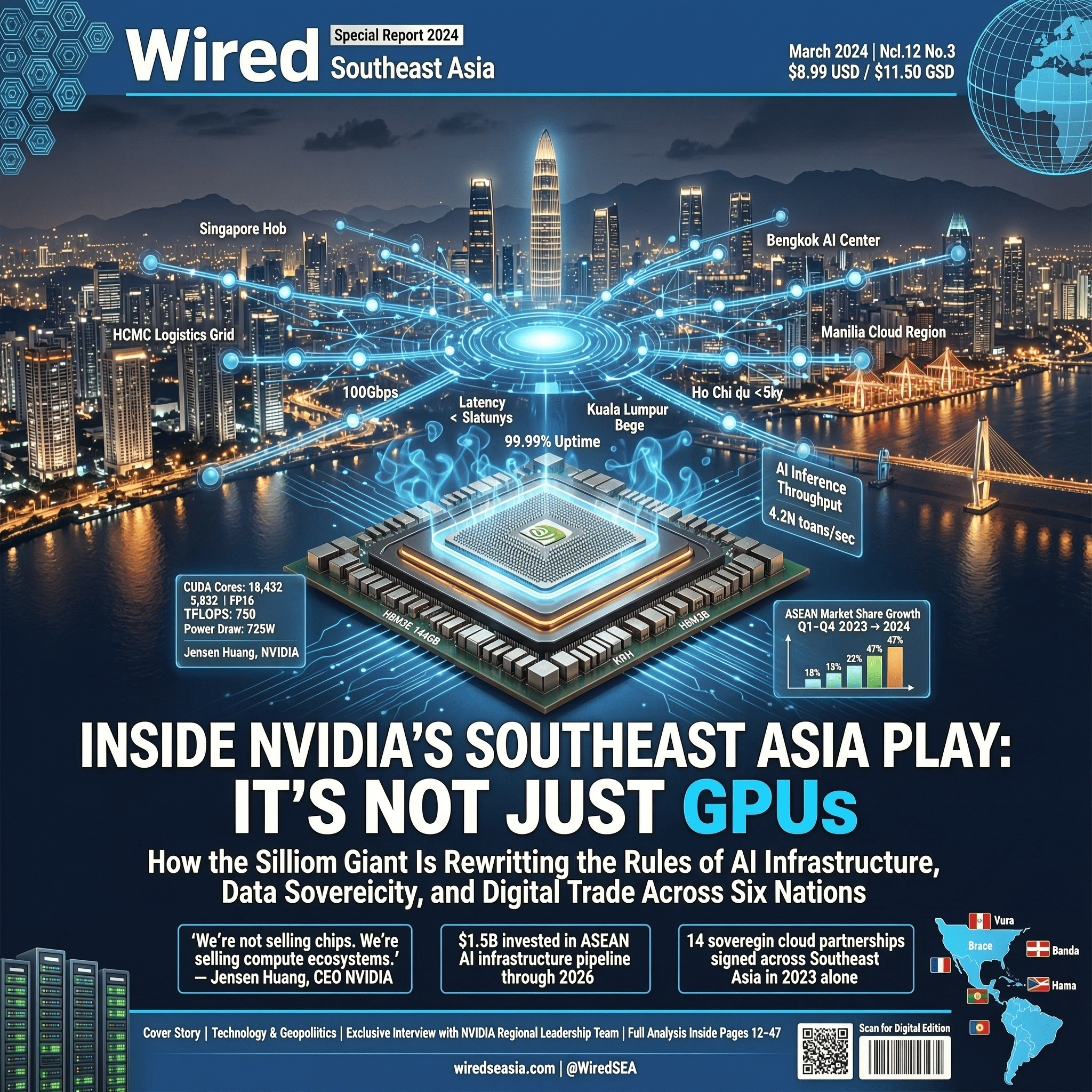
Nvidia’s Balancing Act Between Washington and Beijing. Nvidia has it even worse. It makes the best AI chips in the world. China wants to buy them. The US says no. Nvidia is stuck in the middle.
It has tried to thread the needle by building special chips for China that fall below US export limits. The H20, the H200, the Blackwell line — all subject to changing rules. The December 2025 decision to allow H200 sales with conditions gave Nvidia some breathing room. Congress is trying to take that away.
Nvidia’s CEO says the company is “serving the world” while following US law. That balancing act gets harder every time a new restriction lands.
The Bigger Picture
Why Export Controls Alone Cannot Win This Fight
The whole US strategy rests on one idea: hardware is the bottleneck. If China cannot buy advanced chips, it cannot build advanced AI. If it cannot build advanced AI, it cannot keep up with the US military.
DeepSeek cracked that idea open. It showed that smart algorithms can get you most of the way there with weaker hardware. That does not mean chips do not matter. It means they are not the only thing that matters.
Export controls are also hard to enforce. Chips are tiny, expensive, and easy to move quietly. Countries like Malaysia and Singapore have become middle points for restricted technology heading to China. The Bureau of Industry and Security does not have enough people to check more than a small number of shipments.
China’s Response: DeepSeek, Indigenous Chips, and Self-Sufficiency
China is not waiting for the US to ease up. The government has put billions into making its own semiconductors. Companies like SMIC and Hua Hong are building advanced factories. Huawei has its own Ascend AI chips. DeepSeek showed that software smarts can fill some of the hardware gap.
The long-term direction is clear: China wants to depend less on American technology. That is the exact opposite of what US policy aims to do. Export controls are supposed to keep China reliant on US chips. Instead, every restriction pushes China to build its own replacements.
The Paradox of Pressure
The 1260H list is where this approach leads. When narrow restrictions do not work, you widen them. From one company to one supply chain to one entire industrial ecosystem.
The risk: widening the net also weakens it. A list of 188 companies is harder to enforce than a list of 10. Telling allies that shopping websites and electric cars are national security threats is a harder sell. Treating every major Chinese tech company as a military asset is, in practice, a policy of economic separation — whether you call it that or not.
The US-China tech war has entered its third phase. The targets are bigger, the stakes are higher, and nobody knows how it ends. What started as a fight over one company’s 5G gear has turned into a question about whether the world’s two biggest economies can build separate technology systems — and what happens when they try.

Independent technology writer focused on artificial intelligence, emerging technologies, and digital innovation. Covers AI applications in sports, productivity, and online business.