








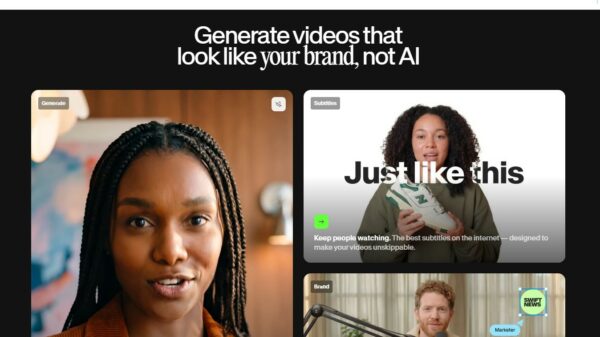





















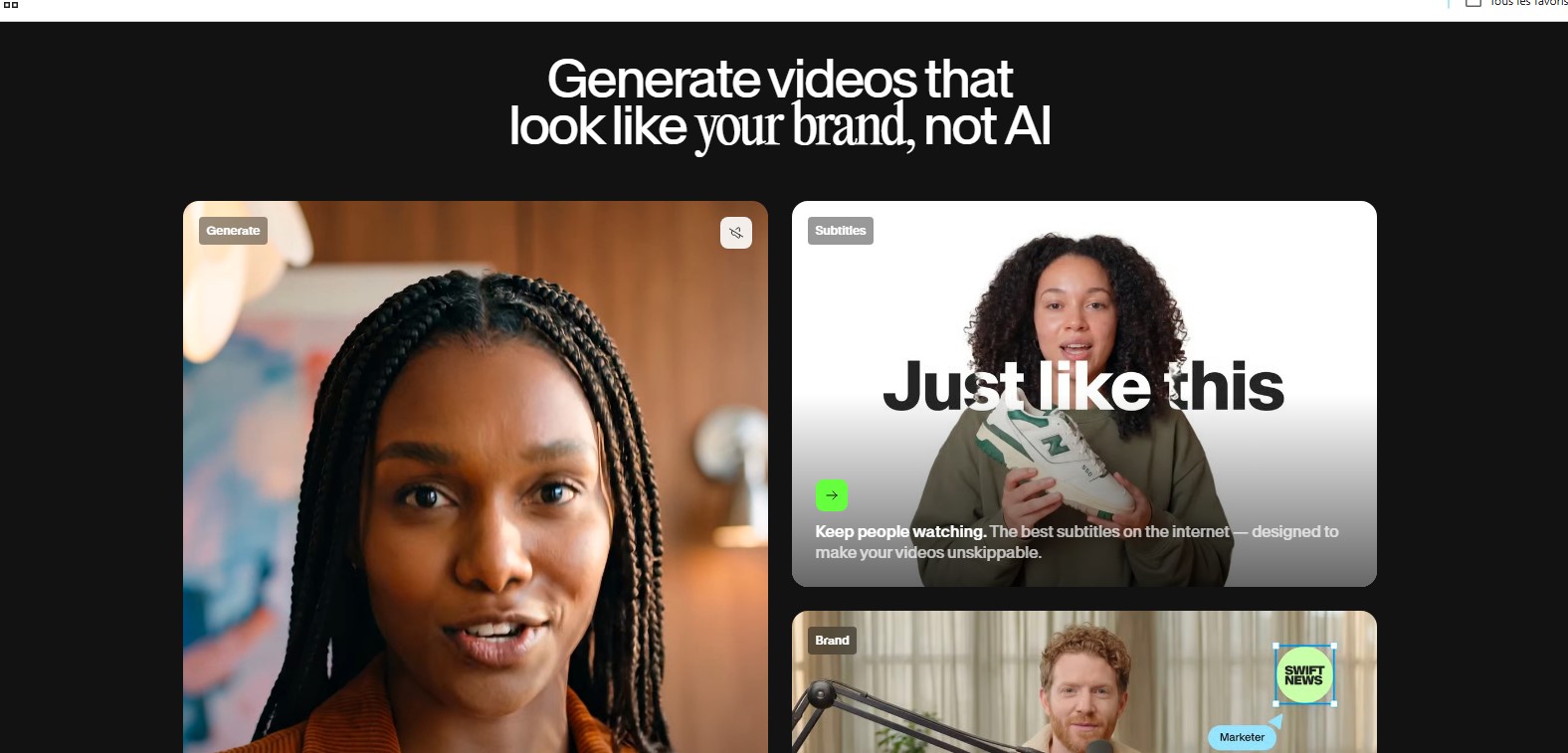
Scroll through TikTok or Instagram for a few minutes—with the sound off. You’ll still understand most videos. Why? Captions.
They’ve quietly become one of the most important parts of video content. Not just for accessibility, but for engagement, watch time, and even discoverability.
The good news is you don’t have to type them manually anymore. AI tools can handle most of the work in minutes. And if you play it right, you can even make money with AI tools by turning captioning into a simple service or content strategy.
Let’s break it down in a practical way.
🛠️ Tools That Actually Get the Job Done (and Pay Off)
There are dozens of tools out there, but not all are worth your time. These are the ones that are easy to use and can realistically help you earn.
Kapwing — straightforward and beginner-friendly
Kapwing is probably one of the easiest places to start. No complicated setup, no learning curve that eats your day.
Upload your video, click auto subtitles, wait a bit, then clean up the text. That’s it.
Where it gets interesting is on the money side.
If you’re just starting out, you can offer simple captioning services to creators who don’t want to deal with it themselves. Plenty of them exist.
Real use case: freelancing
Short videos can go for $5 to $15. Longer ones? Easily $50 or more.
It doesn’t sound huge at first, but stack a few clients and suddenly you’re looking at $300 to $1500 per month.
👉 If you’re testing the waters, this is a solid starting point. No need to overthink it.
VEED.io — fast, clean, and made for creators
VEED sits somewhere between a caption tool and a lightweight editor. It’s quick, which matters more than people admit.
If you’re running a YouTube channel (or planning to), captions can quietly boost your watch time. More retention usually means more reach. And eventually, more revenue.
Real use case: YouTube growth
Small channels might see an extra $50 to $300 per month once things pick up. Bigger channels? That can climb into the thousands.
It’s not instant, but it compounds.
👉 If you’re uploading regularly, try adding captions to your next batch of videos and compare the performance.
Descript — a different way to edit videos
Descript feels a bit different from the others. Instead of thinking in timelines, you work with text.
Edit the words, and the video follows.
It’s especially useful if you’re dealing with long content—podcasts, interviews, courses. You can cut it into smaller clips, add captions, and reuse it across platforms.
Real use case: content repurposing service
Businesses love this. One long video turned into ten short ones.
That kind of service can bring in $100 to $500 per client each month. A handful of clients, and you’ve got a steady income.
👉 If you like the idea of working smarter instead of harder, this tool is worth learning.
Submagic — for short-form content that pops
Some captions are just… boring. Submagic fixes that.
It adds movement, emphasis, and that TikTok-style energy that keeps people watching.
Is it necessary? Not always. But for short-form content, it helps.
Real use case: social media growth service
Creators care about engagement. If your captions help boost it, they’ll pay.
Packages for short videos can bring in $500 to $2000 per month depending on volume.
👉 If you’re targeting TikTok or Reels creators, this style is almost expected now.
Rev AI — when accuracy matters more than speed
Sometimes, “good enough” isn’t good enough. That’s where more precise tools come in.
Rev AI leans toward professional use—interviews, webinars, courses. The kind of content where mistakes aren’t acceptable.
Real use case: premium clients or agencies
Projects can range from $100 to $500, sometimes more.
Fewer clients, but higher value.
👉 If you prefer quality over quantity, this path makes more sense.
💡 Different Ways to Make Money with AI Tools
There’s no single path here. It depends on what fits you.
Freelancing
Simple, direct, and probably the fastest way to start.
You offer captioning. Someone pays you. Done.
It’s not glamorous, but it works.
YouTube or content creation
This one takes longer, but the upside is bigger.
Captions improve retention. Retention improves reach. And that eventually turns into revenue.
It’s a slower game, but more scalable.
Small agency model
This is where things start to grow.
Instead of one-off gigs, you offer monthly services—captioning, editing, repurposing.
Fewer clients, more consistent income.
🔧 Tips That Make a Real Difference
Some things seem small, but they change everything.
Clear audio matters more than the tool
Even the best AI struggles with bad sound.
You don’t need expensive gear. Just avoid noise and echo.
Don’t trust AI blindly
It’s fast, not perfect.
A quick edit can be the difference between amateur and professional.
Style counts (especially on social media)
Plain captions are fine. Styled captions perform better.
Highlight a word. Add rhythm. Make it easier to follow.
Pick the right format
YouTube likes SRT files. Social media prefers captions already embedded in the video.
It’s a small detail, but it matters.
Focus on a niche
Trying to serve everyone usually leads nowhere.
Pick a group:
- Coaches
- Small businesses
- Content creators
It’s easier to get clients when your offer feels specific.
🧾 Final Thoughts
Automated captioning isn’t complicated anymore. That part is solved.
What matters now is how you use it.
You can treat it as a small side hustle, a way to grow a channel, or the base of a service business. All of those paths are valid.
If there’s one thing to keep in mind, it’s this: tools don’t make money on their own. People using them well do.
Start simple. Improve as you go. That’s usually enough.
❓ FAQ
Can I really make money with AI tools like this?
Yes. Many beginners start with a few hundred dollars per month and grow from there. It depends more on consistency than anything else.
How accurate are AI captions?
Most tools are fairly reliable, but not flawless. Expect to fix a few lines here and there.
Do I need experience?
Not really. Basic editing skills help, but you can learn as you go.
Which tool should I start with?
Kapwing or VEED are good entry points. Simple, fast, and no steep learning curve.
How quickly can I earn?
If you go the freelancing route, you could land your first small job within days. Scaling takes longer, but it’s doable.
MORE IN NEXTA:
Best AI Video Generators in 2026: Runway Gen-4 vs Pika 2.0 vs Kling 2 Which One Should You Use?

Independent technology writer focused on artificial intelligence, emerging technologies, and digital innovation. Covers AI applications in sports, productivity, and online business.