


































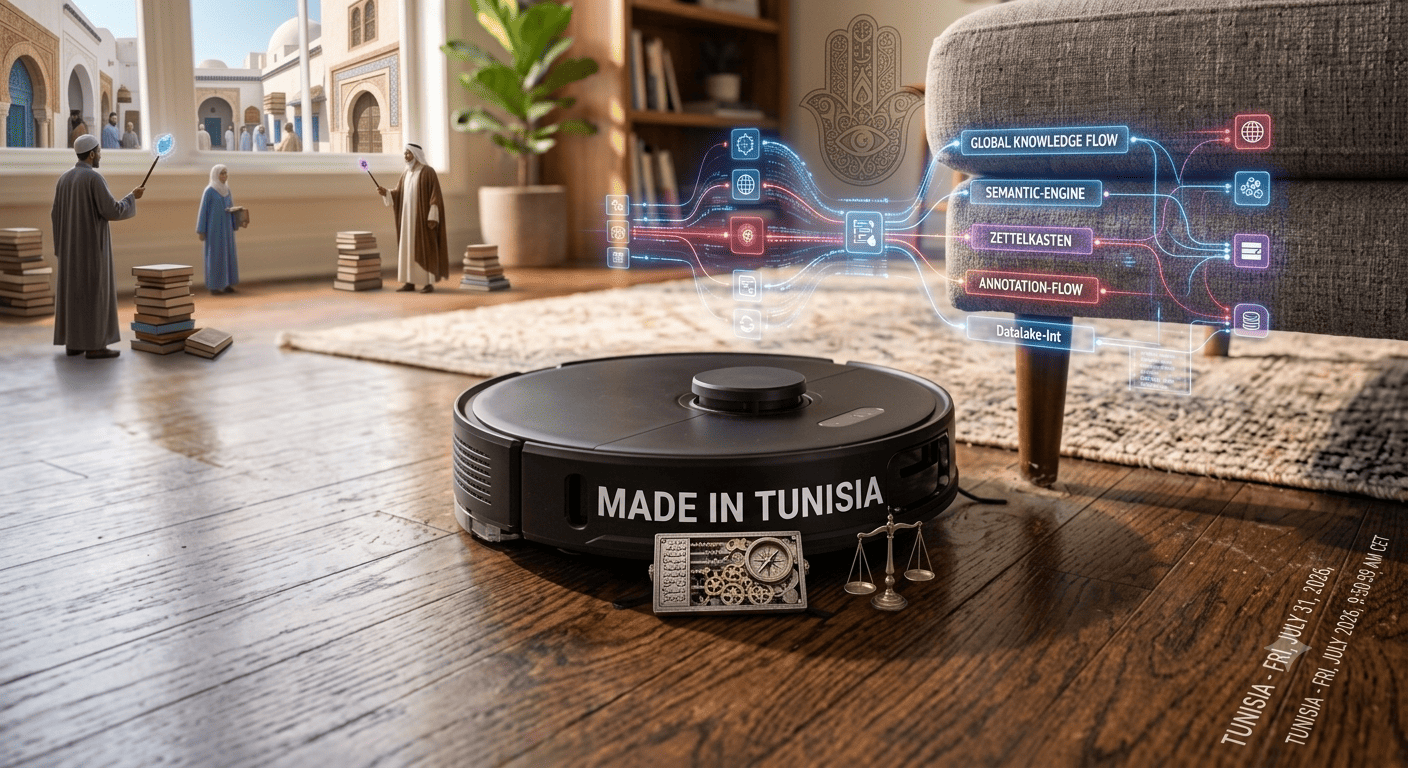
Let’s start with the sentence nobody expected to read this decade: your robot vacuum or Smart Vacuum knows the shape of your living room, and apparently, that’s a national security problem. The FCC has been sniffing around the whole category of connected appliances, and somewhere along the way, the conversation shifted from “this floor cleaner has a camera” to “this floor cleaner could be part of a foreign operation.” Both things can be true. The question is which one we’re actually talking about.
When Your Floor Cleaner smart vacuum Knows Too Much
Here’s the thing about smart homes that we all pretend isn’t happening: you’ve invited a parade of devices into your house, and each one of them is listening, watching, or at least taking notes. The vacuum maps your floor plan so it doesn’t run over the cat. The camera in the doorbell keeps an eye on the porch. The smart speaker sits in the kitchen, waiting for you to ask about the weather — and quietly making a copy of everything else you say. Individually, each of these is a convenience you paid for. Collectively, they’re the most intimate surveillance network ever assembled by people who just wanted to not bend over for a dustpan.
The absurd part isn’t that regulators noticed. The absurd part is how we got here. There was a moment, not too long ago, when the whole threat model was fictional — some TV show where a hacker turns a toaster into a spy. Then the Mirai botnet happened, and suddenly a bunch of compromised webcams and DVRs took down half the internet. It turns out the joke was on us: the appliances were always capable, we just hadn’t been worth the effort yet. Now we are. Every new smart gadget is another brick in a wall that somebody else might want to control.
So the FCC starts poking around, and that’s when the satire writes itself. Should the vacuum be certified? Should the kettle be regulated? Is the ice maker a vector? At some point you’re having a panel discussion about whether the refrigerator’s Wi-Fi chip needs a federal review, and the whole thing starts to feel like a Monty Python sketch with a quorum. You can’t regulate your way out of the fact that you strapped a microphone to a floor cleaner and told it to navigate your bedroom while you were asleep.
The Real Threat Isn’t the Vacuum
But let me be fair, because this is where the trade-offs get real. On one hand, security theater is a disease you don’t fix national security by putting a government sticker on a robot that still can’t tell a sock from a hazard. On the other hand, the people raising the alarm aren’t wrong. There are documented cases of robot vacuums being accessed remotely, of cameras being reached, of manufacturers collecting data and quietly phoning home with it. If you own one and it has a camera, you should assume that camera has been looked through. Not by spies, probably. But “probably” is doing a lot of work in that sentence.
That’s the uncomfortable middle we’re stuck in. You don’t want to live in a house where every appliance needs a clearance. But you also don’t want to discover, at the worst possible moment, that the smart home was never actually about making your life easier — it was about moving the risk into the living room where you’d forget it. The FCC can’t fix that. No agency can. All it can do is certify that the vacuum meets some minimum standard of not being an obvious hole, and then hand it back to you, still glowing, still listening.
Here’s my honest take, and it’s not the fun answer. The real threat isn’t that one vacuum cleaner is a spy. It’s that we’ve built a system where any single cheap device can become a beachhead and nobody wants to pay for the boring version of security that would prevent it. Updating firmware is boring. Regulating chips is boring. Arguing about a dust-collecting robot on national television is, unfortunately, very entertaining. And so we get the entertainment, and the kettles stay unpatched.
So yes, the smart vacuum is a threat to national security — in the same way a leaky faucet is a threat to the city water supply. Individually, it’s a nuisance. Collectively, it’s a system failure wearing a homegoods brand. The FCC is right to look. But if you think the fix is a hearing and a certification stamp, I’ve got a robot mop I’d like to sell you. It connects to the Wi-Fi, sees everything, and by the way it’s never had a firmware update. But it comes with a government sticker, so you should be fine.

Independent technology writer focused on artificial intelligence, emerging technologies, and digital innovation. Covers AI applications in sports, productivity, and online business.