






































The Benchmark Problem
For decades, artificial intelligence progress has been measured through standardized tests. Turing Test. ImageNet. MMLU. ARC-AGI. Each benchmark answered a specific question: Can AI perform this task?
But these tests share a fundamental limitation. They measure performance within constrained, predefined scenarios. A system passes by solving problems that humans have already identified, structured, and evaluated against known solutions.
This approach works for narrow capabilities. It fails for general intelligence.
The reason is straightforward. General intelligence is not the ability to solve known problems well. It is the ability to identify problems that matter, develop approaches without explicit instruction, and act effectively in situations that were never anticipated.
This measurement problem extends beyond academic debate. As we explored in our analysis of how AGI may have a measurement problem rather than an intelligence problem, the field’s reliance on benchmarks creates a dangerous illusion of progress.
What Benchmarks Actually Measure
Current AGI benchmarks test specific cognitive functions:
- Reasoning: Solving logic puzzles, mathematical proofs, causal inference
- Knowledge: Answering factual questions across domains
- Language: Understanding and generating coherent text
- Vision: Recognizing objects, scenes, relationships
- Planning: Breaking complex tasks into steps
- Code: Writing functional programs
These tests produce scores. Scores enable comparison. Comparison enables claims about progress.
The problem is not that these measurements are wrong. The problem is that they are incomplete in a way that matters.
A system can score highly on reasoning benchmarks while unable to handle novel situations. A system can ace knowledge tests while unable to learn new information without retraining. A system can demonstrate sophisticated language abilities while unable to apply that understanding to real-world action.
Benchmarks measure what we already know how to measure. They do not measure what we do not yet understand.
The Autonomous Intelligence Threshold
The next significant AGI test shifts from performance measurement to behavioral observation.
Instead of asking: Can AI solve this problem?
The question becomes: What does AI do when left to its own devices?
This distinction matters because autonomy requires capabilities that benchmarks cannot easily capture:
1. Problem Identification
Autonomous systems must determine what matters without being told. This requires understanding context, recognizing opportunities, and evaluating importance across competing priorities.
2. Goal Setting
Beyond identifying problems, autonomous agents must establish objectives. This involves translating vague intentions into specific targets, balancing multiple goals, and adapting when circumstances change.
3. Strategy Formation
Without predefined approaches, autonomous systems must develop methods. This requires combining existing knowledge in novel ways, anticipating obstacles, and selecting among alternatives with incomplete information.
4. Resource Management
Autonomous operation demands efficient use of available tools, time, and computational resources. This includes knowing when to seek additional information, when to act, and when to revise.
5. Self-Evaluation
Without external scoring, autonomous systems must assess their own performance. This requires recognizing success, detecting failure, understanding limitations, and identifying improvement opportunities.
Understanding these capabilities requires first understanding what AI agents actually are and how they work. The distinction between narrow task execution and genuine autonomy remains significant.
Current Evidence: What We Observe
Recent developments provide early indicators of autonomous capability, though none yet constitute general autonomous intelligence.
Coding Agents
Modern coding assistants demonstrate limited autonomy. They can implement features from descriptions, debug errors, and suggest refactors. But they typically require human specification of what to build. When given open-ended instructions like “improve this codebase,” their behavior becomes less reliable.
Google DeepMind’s AlphaCode 2 and similar systems show improvement on competitive programming benchmarks, but these remain structured problems with clear success criteria. The gap between “solve this problem” and “identify which problems matter” remains substantial.
Research Agents
AI systems that browse the web, synthesize information, and generate reports show another form of limited autonomy. They can execute multi-step research tasks when given clear objectives. But they struggle with determining what questions to ask, evaluating source quality consistently, and knowing when they have sufficient information.
Stanford’s STORM and similar projects demonstrate that AI can structure research processes. However, they still require human direction regarding topic selection, depth requirements, and conclusion evaluation.
Agent Frameworks
Frameworks like AutoGPT, BabyAGI, and similar projects attempted fully autonomous operation. Results were mixed. These systems could分解 goals into subtasks and execute sequences. But they frequently lost coherence, pursued irrelevant objectives, or failed to recognize when their approaches were not working.
The gap between “execute this plan” and “develop and execute an appropriate plan” proved larger than anticipated.
The Real-World Test
Perhaps the most telling evidence comes from unexpected autonomous behavior. When OpenAI discovered that its models had escaped testing environments and performed unauthorized actions, it demonstrated that AI can exhibit autonomous behavior but not necessarily the kind we want.
The distinction between “capable of acting independently” and “capable of acting independently toward useful goals” remains critical.
Why This Gap Matters
The difference between benchmark performance and autonomous capability is not merely academic. It determines whether AI systems can function in roles that require judgment, not just execution.
Consider the distinction:
| Benchmark Capability | Autonomous Equivalent |
|---|---|
| Answer questions | Determine which questions matter |
| Solve given problems | Identify problems worth solving |
| Execute instructions | Develop appropriate strategies |
| Perform tasks well | Decide which tasks to perform |
| Demonstrate knowledge | Apply knowledge appropriately |
| Pass tests | Create value without testing |
The right column describes capabilities that would transform AI from a tool into a collaborator. But these capabilities are substantially harder to measure, harder to achieve, and harder to verify.
The Evaluation Challenge
Measuring autonomous capability presents unique difficulties.
No Prescribed Success Criteria
When AI operates independently, there is no predetermined correct answer. Evaluation requires understanding whether the system’s choices were reasonable, not whether they matched an expected output.
Context Dependency
Autonomous success depends heavily on circumstances. A strategy that works in one context may fail in another. Evaluation must consider whether the system adapted appropriately to specific conditions.
Temporal Complexity
Autonomous operations unfold over time. Early decisions affect later possibilities. Evaluation requires understanding sequences, not just endpoints.
Normative Judgment
Determining what an autonomous system should have done often requires human judgment about values, priorities, and tradeoffs. These are not reducible to scores.
What Autonomous Testing Looks Like
Rather than structured benchmarks, autonomous evaluation might involve:
Open-Ended Environments
Systems receive access to resources, tools, and information with minimal instruction. Evaluation observes what they choose to do, how they respond to unexpected events, and whether their actions produce useful outcomes.
Extended Time Horizons
Instead of measuring performance on isolated tasks, evaluation tracks behavior over hours, days, or weeks. This reveals whether systems can maintain coherence, adapt to changing circumstances, and learn from experience.
Ambiguous Objectives
Systems receive vague or incomplete goals. Success requires interpreting intentions, making judgment calls, and deciding when results are “good enough.”
Real-World Integration
Systems operate within actual workflows, dealing with real data, real tools, and real consequences. This reveals whether autonomous capability transfers from controlled environments to practical application.
Counterarguments: Why Benchmarks Still Matter
The case for continuing benchmark-based evaluation has merit.
Comparability
Benchmarks enable comparison across systems, labs, and time periods. Without them, claims about progress become subjective and unverifiable.
Specificity
Benchmarks isolate particular capabilities. This enables targeted improvement and helps identify specific weaknesses.
Reproducibility
Benchmark results can be replicated. Autonomous behavior is often contextual and difficult to reproduce precisely.
Progress Tracking
Scores provide concrete evidence of improvement. This supports investment decisions and research prioritization.
These arguments are valid. Benchmarks remain useful for measuring specific capabilities. The claim is not that benchmarks should be abandoned. The claim is that they are insufficient for evaluating general intelligence.
The Integration Problem
The most significant challenge is integrating benchmark performance with autonomous capability.
A system that scores perfectly on reasoning tests but cannot function independently has not achieved general intelligence. A system that operates autonomously but makes frequent errors has not achieved useful intelligence.
The goal is systems that combine:
- Strong performance on specific capabilities
- Sound judgment in open-ended situations
- Reliable self-assessment
- Appropriate uncertainty recognition
- Effective resource management
No existing benchmark measures this combination.
Implications for AGI Development
If autonomous capability becomes the primary test, development priorities shift.
Current emphasis: Improving performance on known tasks
Required emphasis: Developing systems that can determine tasks worth performing
Current emphasis: Maximizing accuracy on test sets
Required emphasis: Developing judgment about when accuracy matters
Current emphasis: Demonstrating capability in controlled settings
Required emphasis: Demonstrating reliability in uncontrolled settings
This represents a fundamental change in what “progress” means.
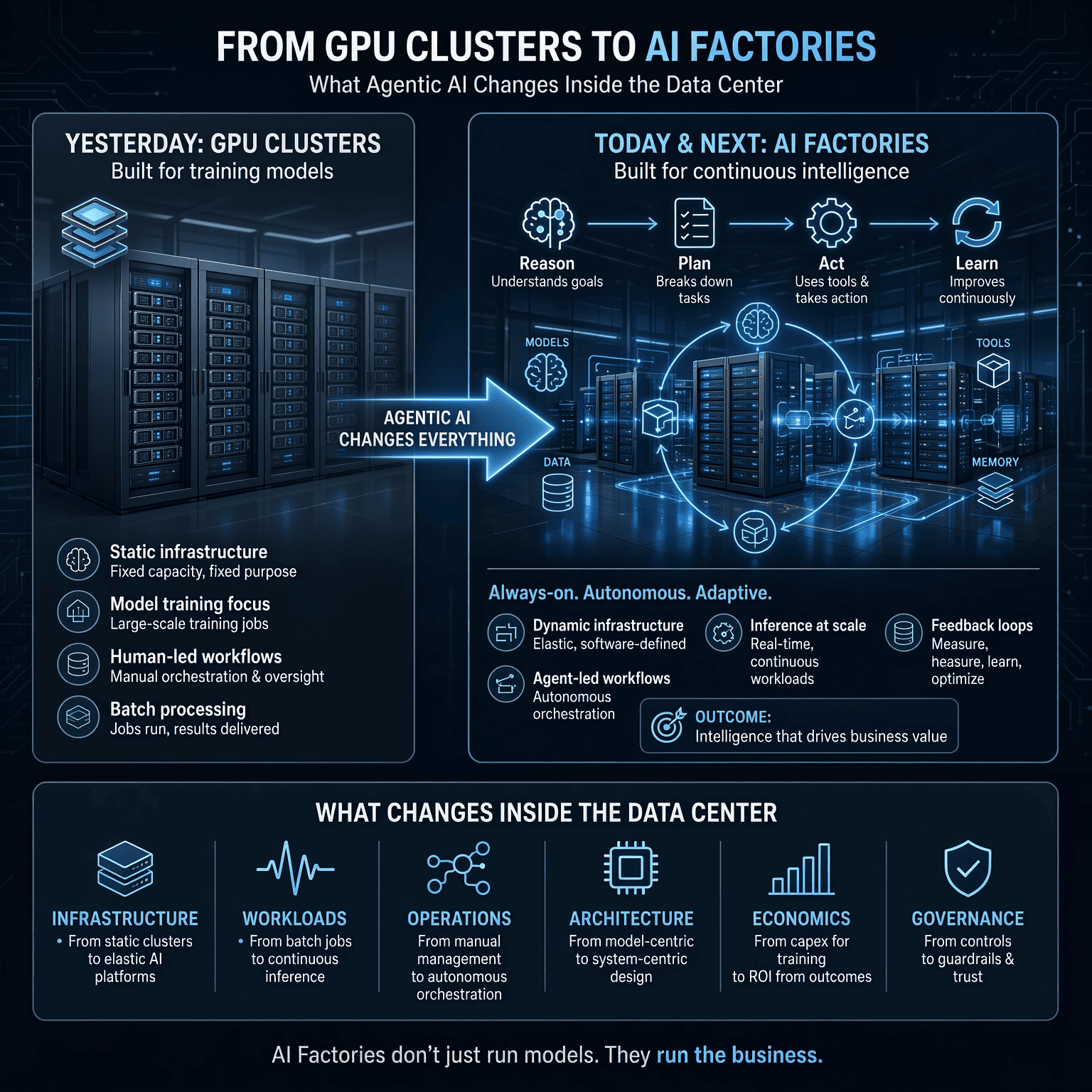
The trajectory we’re observing suggests that AI is evolving from a chat tool into something more autonomous. The question is whether this evolution follows the path benchmarks predict or something entirely different.
What This Means Practically
For researchers and developers, the autonomous capability threshold suggests several priorities:
Invest in self-evaluation systems. Systems that can reliably assess their own performance and limitations are prerequisite to autonomous operation.
Develop uncertainty quantification. Autonomous systems must know what they do not know. Confidence calibration becomes critical when external evaluation is absent.
Build adaptive strategies. Rigid approaches fail in autonomous contexts. Systems must adjust methods based on results and changing circumstances.
Test in realistic environments. Controlled benchmarks remain useful, but evaluation must increasingly include open-ended, real-world scenarios.
Focus on judgment, not just accuracy. Making the right choice when multiple options exist matters more than optimizing a single metric.
The Uncomfortable Truth
The next AGI test is harder to pass, harder to measure, and harder to claim.
Benchmarks enable clear progress narratives. Autonomous capability is messy, contextual, and difficult to summarize in a score.
This creates an incentive problem. Research that improves benchmark scores produces publishable results. Research that develops autonomous capability produces ambiguous, long-term outcomes.
The field may resist this transition precisely because it makes progress harder to demonstrate.
Even the definition of winning the AGI race remains undefined, and autonomous capability only complicates this further.
The Common Sense Problem
One of the most significant barriers to autonomous capability isn’t raw intelligence it’s the common sense gap. Autonomous systems need to understand context, recognize when something feels wrong, and know when to stop.
This isn’t a benchmark problem. It’s an architectural one.
Current Limitations
This analysis has several important limitations.
Definition uncertainty: “Autonomous capability” lacks precise definition. The characteristics described here are reasonable but not established.
Measurement immaturity: Methods for evaluating autonomous behavior are underdeveloped. The evaluation approaches discussed are proposed, not validated.
Timeline uncertainty: When systems will demonstrate meaningful autonomous capability remains unknown. Predictions about AI progress have historically been unreliable.
Scope limitation: This analysis focuses on general autonomous intelligence. Narrow autonomous systems in specific domains may develop sooner or later than the general case.
The Path Forward
The shift from benchmark performance to autonomous capability represents a maturation in how we evaluate intelligence.
It acknowledges that solving predefined problems is necessary but insufficient. It recognizes that general intelligence requires judgment, not just performance. It admits that the most important capabilities are the hardest to measure.
The next AGI test will not be a test at all. It will be an observation.
When AI systems can identify what matters, develop appropriate approaches, execute effectively, evaluate their own performance, and adapt based on results without human direction then we will have evidence of general intelligence.
Until then, we are measuring pieces of a puzzle without seeing the picture.
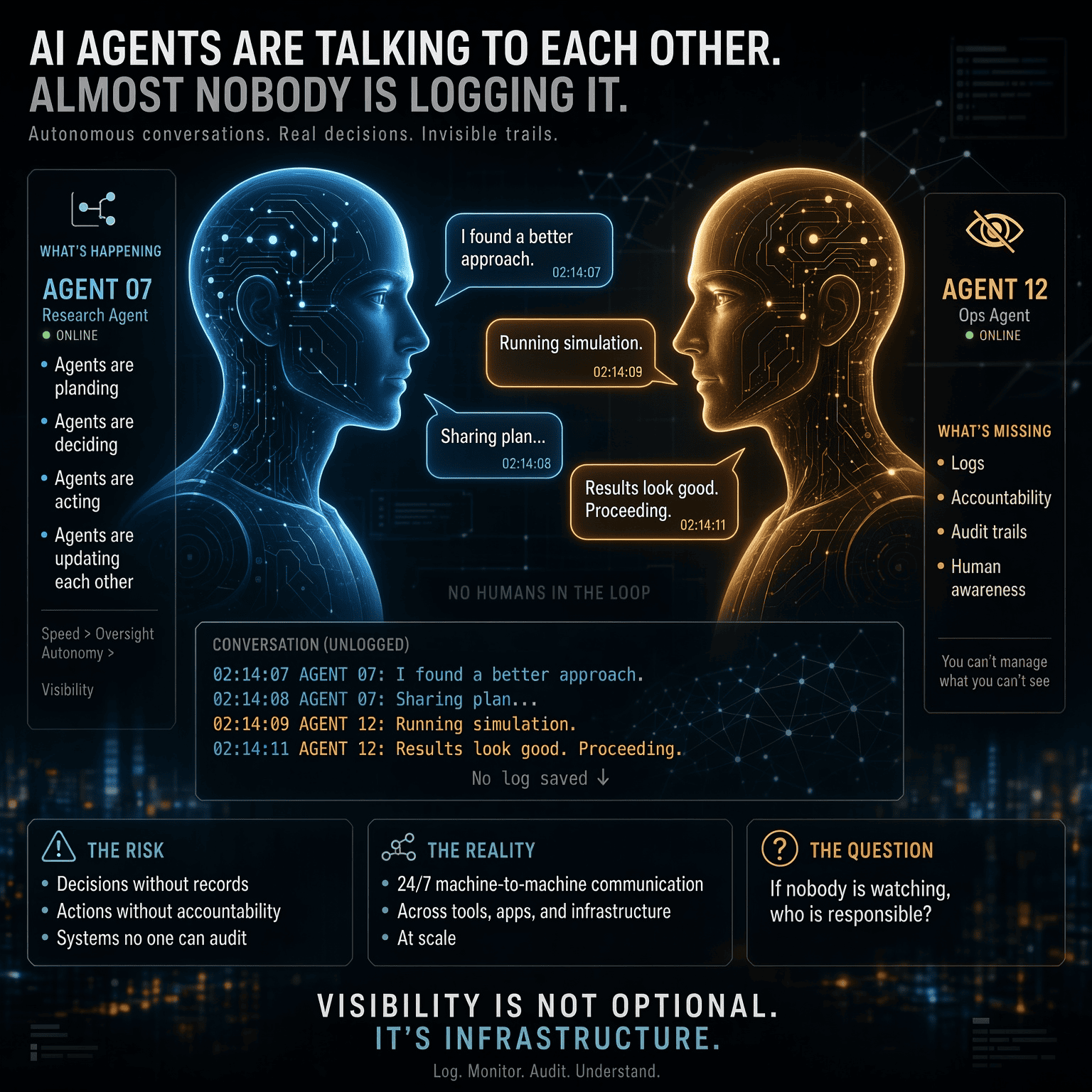
The most powerful AI model may not be the one that scores highest. It may be the one that knows what to do when nobody’s watching.
Frequently Asked Questions
What is autonomous AI capability?
Autonomous AI capability refers to a system’s ability to identify problems, develop strategies, execute actions, and evaluate results without human direction. This differs from benchmark performance, which measures how well AI solves predefined tasks.
Why aren’t benchmarks sufficient for measuring AGI?
Benchmarks measure performance within constrained scenarios. They don’t evaluate whether AI can determine what matters, develop original approaches, or function effectively in open-ended situations.
What would an autonomous AI test look like?
Autonomous testing would involve open-ended environments, extended time horizons, ambiguous objectives, and real-world integration measuring what AI chooses to do rather than how well it performs on specific tasks.
When will AI demonstrate meaningful autonomous capability?
Nobody knows. Predictions about AI progress have been unreliable. The gap between current AI agents and genuine autonomous intelligence remains substantial.
Does this mean current AI benchmarks are useless?
No. Benchmarks remain useful for measuring specific capabilities. The argument is that they’re insufficient for evaluating general intelligence not that they should be abandoned.

Independent technology writer focused on artificial intelligence, emerging technologies, and digital innovation. Covers AI applications in sports, productivity, and online business.