
































What Is the Audi Nuvolari?
The Origins of the Audi Nuvolari Concept
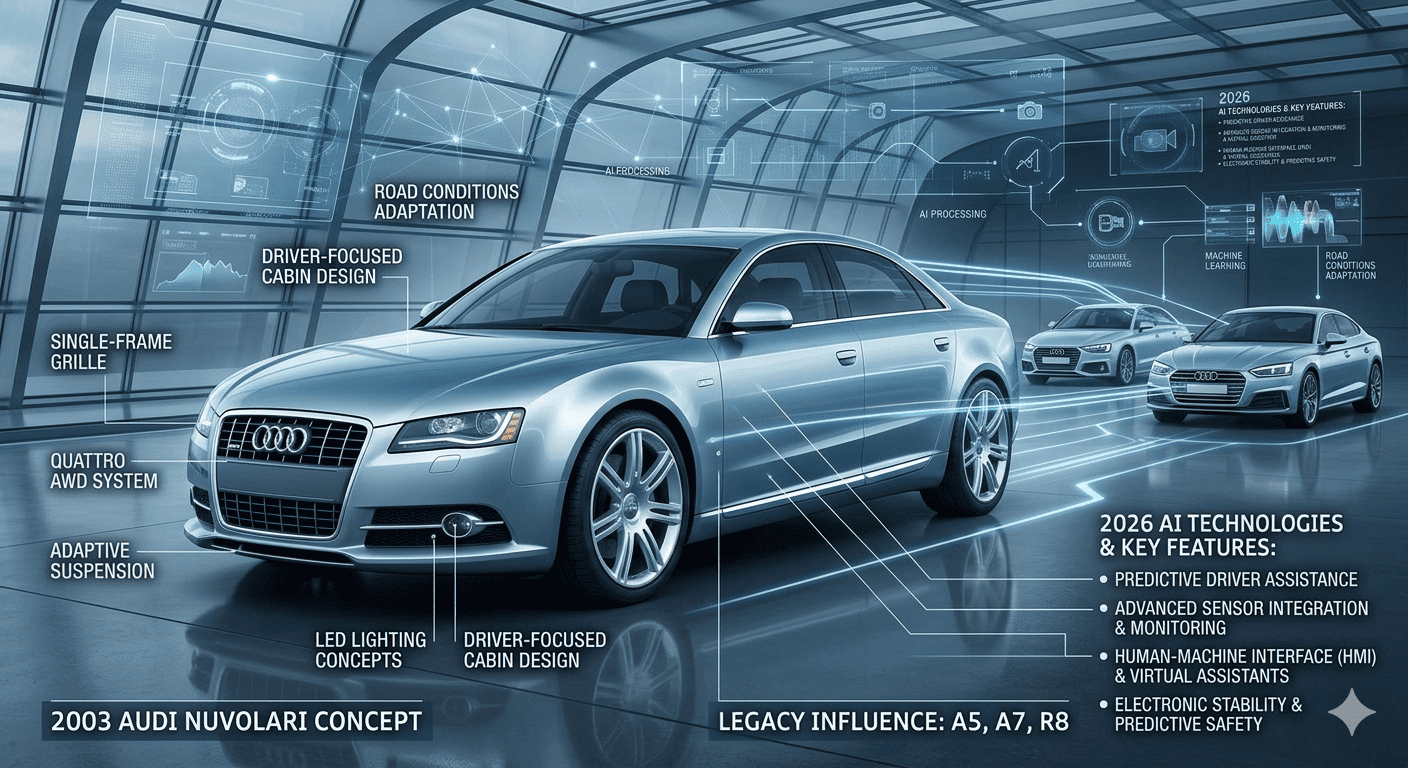
The Audi Nuvolari is a concept car revealed in 2003 at the Geneva Motor Show.
It was named after Tazio Nuvolari, a well-known Italian racing driver.
Audi did not build this car for production.
It was created to test ideas for future models.
The design mixes sporty performance with luxury styling.
It also hints at early ideas of AI technologies in cars, even if they were very simple at the time.
I still remember the first time I saw concept cars like this in magazines.
They always felt like a preview of what roads might look like years later.
Why Audi Developed the Vehicle
Audi built the Nuvolari to explore what luxury performance cars could become.
The main goals were clear:
- Better driving comfort
- Stronger performance
- Smarter driving support systems
At that time, car AI technologies were still basic.
But Audi was already testing ideas that could help drivers in the future.
The Nuvolari helped engineers think about early driver assistance and smarter control systems.
It was more of a “test platform” than a finished product.
How the Nuvolari Influenced Future Audi Models
The Audi Nuvolari never reached production.
Still, its influence is easy to see today.
Its design ideas appeared later in:
- Audi A5
- Audi A7
- Audi TT
- Audi R8
The single-frame grille is one of the most visible examples.
It became a signature part of Audi’s design language.
The interior layout also inspired future Audi cabins.
It focused more on the driver, which is still true in many Audi models today.
Design and Performance Overview
Exterior Styling and Aerodynamics
The Nuvolari has a long, clean body shape.
It was built to cut air resistance and improve stability.
Key design elements include:
- Wide front grille
- Low roofline
- Smooth side panels
- Sporty proportions
The design was not only for looks.
It also helped the car stay stable at higher speeds.
Engine Specifications and Performance
The Nuvolari concept focused strongly on performance.
It used a powerful engine designed for fast acceleration and smooth power delivery.
Audi wanted to show that luxury and speed can work together.
At that time, most performance systems were mechanical.
Electronic systems were starting to support driving behavior, but AI was still very limited.
Luxury-Oriented Interior Design
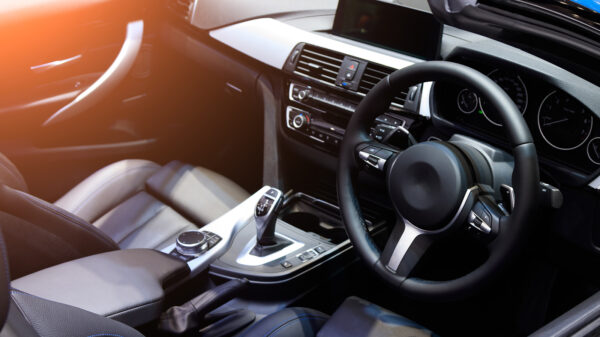
Inside, the focus was on simplicity and comfort.
The cabin included:
- High-quality materials
- A driver-focused layout
- Clear digital displays
- Easy-to-use controls
Everything was arranged to reduce distraction.
The goal was simple: keep the driver focused and comfortable.
Understanding AI Technologies in Modern Cars
What Are Car AI Technologies?
Car AI technologies are systems that help the car react intelligently to road conditions.
They support the driver in real time.
These systems can:
- Detect obstacles
- Adjust speed
- Improve safety
- Support navigation
They do not replace the driver.
They assist the driver.
How Artificial Intelligence Enhances Driving
Artificial intelligence in cars processes information from sensors.
It reacts faster than humans in certain situations.
For example:
- Warning about sudden braking ahead
- Adjusting headlights automatically
- Detecting blind spots
These features make driving safer and more comfortable.
The Difference Between Automation and AI
Automation follows fixed rules.
AI can adjust based on conditions.
For example:
- Automation: wipers turn on when rain is detected
- AI: adjusts driving support based on traffic and road behavior
Both are useful, but AI is more flexible in changing conditions.
What AI Technologies Does the Audi Nuvolari Have?
Intelligent Driver Assistance Systems
The Audi Nuvolari included early driver support systems.
They were not full AI systems like today, but they offered:
- Stability support
- Basic driving feedback
- Early safety assistance ideas
These systems helped the driver keep better control in different situations.
Adaptive Vehicle Monitoring
The concept also monitored how the car behaved on the road.
It could:
- Track speed changes
- Adjust responses
- Improve handling smoothness
It feels simple today, but it was an important step forward at the time.
Smart Sensor Integration
Sensors played a key role in the Nuvolari.
They helped the car:
- Collect driving data
- Improve stability
- Support safety systems
You’ve probably noticed that modern cars rely heavily on sensors.
This concept helped move in that direction early on.
Electronic Stability and Predictive Safety Features
The car included stability systems that reacted quickly to road conditions.
They helped:
- Reduce slipping
- Improve grip
- Support braking control
These ideas are now standard in many modern Audi vehicles.
Human-Machine Interface and Driver Information Systems
The interface was designed to be clean and easy to read.
It included:
- Digital screens
- Clear driving data
- Simple layouts
The idea was to reduce confusion while driving and keep attention on the road.
Advanced Features That Made the Audi Nuvolari Ahead of Its Time
Quattro All-Wheel Drive System
The Nuvolari used Audi’s Quattro system.
This improved grip and control on different roads.
It helped the car stay stable even during fast driving.
Adaptive Suspension Technology
The suspension adjusted based on road conditions.
This improved comfort on rough roads.
It also helped stability at higher speeds.
Advanced Lighting Systems
The lighting system adapted to driving conditions.
It improved visibility at night.
This idea later became common in modern cars.
Performance-Oriented Engineering
Everything in the Nuvolari focused on balanced performance.
It combined:
- Speed
- Control
- Stability
The goal was to create a smooth driving experience in real conditions.
Luxury and Comfort Features
Comfort was also an important part of the design.
The cabin offered:
- Spacious seating
- Premium materials
- Quiet driving experience
It was designed for long drives without fatigue.
How the Audi Nuvolari Compares with Today’s AI-Powered Vehicles
Audi Nuvolari vs Modern Audi Models
Modern Audi vehicles are far more advanced.
Compared to the Nuvolari:
- They use more sensors
- They process data faster
- They offer semi-autonomous functions
The Nuvolari feels like an early foundation rather than a complete system.
AI Capabilities Then and Now
Back in 2003, AI in cars was very limited.
Today, cars can:
- Learn driving patterns
- Predict traffic behavior
- Assist with driving decisions
The difference between then and now is very clear.
Which Technologies Became Industry Standards?
Some ideas from the Nuvolari are now standard in cars:
- Stability control systems
- Driver assistance features
- Adaptive lighting
- Digital dashboards
These features are now part of everyday driving.
How Audi Uses AI Technologies in Current Vehicles
Predictive Driver Assistance
Modern Audi systems can anticipate driving situations.
They help:
- Maintain safe distance
- Detect risks early
- Adjust speed automatically
Voice Recognition and Virtual Assistants
Audi vehicles now include voice control.
Drivers can:
- Change navigation
- Control music
- Adjust settings
This helps keep attention on the road.
Connected Vehicle Intelligence
Modern Audi cars are connected to online services.
They can:
- Receive updates
- Improve navigation
- Share traffic data
Semi-Autonomous Driving Functions
Some Audi models offer assisted driving features.
These include:
- Lane keeping
- Traffic jam support
- Adaptive cruise control
Did the Audi Nuvolari Predict the Future of Smart Cars?
Technologies That Became Reality
Many ideas from the Nuvolari are now real:
- Driver assistance systems
- Stability control
- Smart lighting
- Digital dashboards
Concepts That Remained Experimental
Some ideas stayed in the concept stage:
- Early predictive systems
- Limited AI integration
- Experimental control designs
The Legacy of the Nuvolari in Automotive Innovation
The Audi Nuvolari helped shape Audi’s design and technology direction.
It showed that cars could become more intelligent over time.
Many modern car AI technologies trace part of their development back to ideas like this concept.
Frequently Asked Questions
Was the Audi Nuvolari a production car?
No. It was only a concept car shown in 2003.
Did the Audi Nuvolari have artificial intelligence?
Not like today’s systems. It had early electronic and smart support systems.
What technologies from the Nuvolari are used in modern Audi vehicles?
Driver assistance systems, stability control, and digital displays influenced modern Audi models.
Are AI technologies becoming standard in luxury cars?
Yes. Most modern luxury cars now include smart driving systems.
Which Audi models currently offer advanced AI features?
Models like the Audi A6, A7, and Q8 include advanced driver assistance systems.
Final Thoughts
The Audi Nuvolari was not just a concept car.
It was a glimpse into how driving technology would evolve.
Many of its ideas later became part of real vehicles.
Today’s driving systems feel familiar, but they started with early concepts like this.
It’s interesting to see how far car AI technologies have come, step by step, from ideas like the Nuvolari.

Independent technology writer focused on artificial intelligence, emerging technologies, and digital innovation. Covers AI applications in sports, productivity, and online business.