























Why am I so invested in this specific space?
Over the past eighteen months, I’ve stress-tested upwards of 40 different AI products. Through that process, I’ve come to realize that “no-code app builder” is the single most deceptive marketing category in tech. Every new tool landing on Product Hunt claims it will let you manifest software through pure, unadulterated natural language. Yet, within ten minutes of signing up, ninety percent of them leave you stranded, staring blankly at a complex database schema.
So, when Google Labs quietly pulled the curtain back on Opal, I was desperate to see if their contrarian approach—zero code generation, relying entirely on visual, prompt-driven workflows—actually bridges that historic gap, or if it just builds a brand new one.
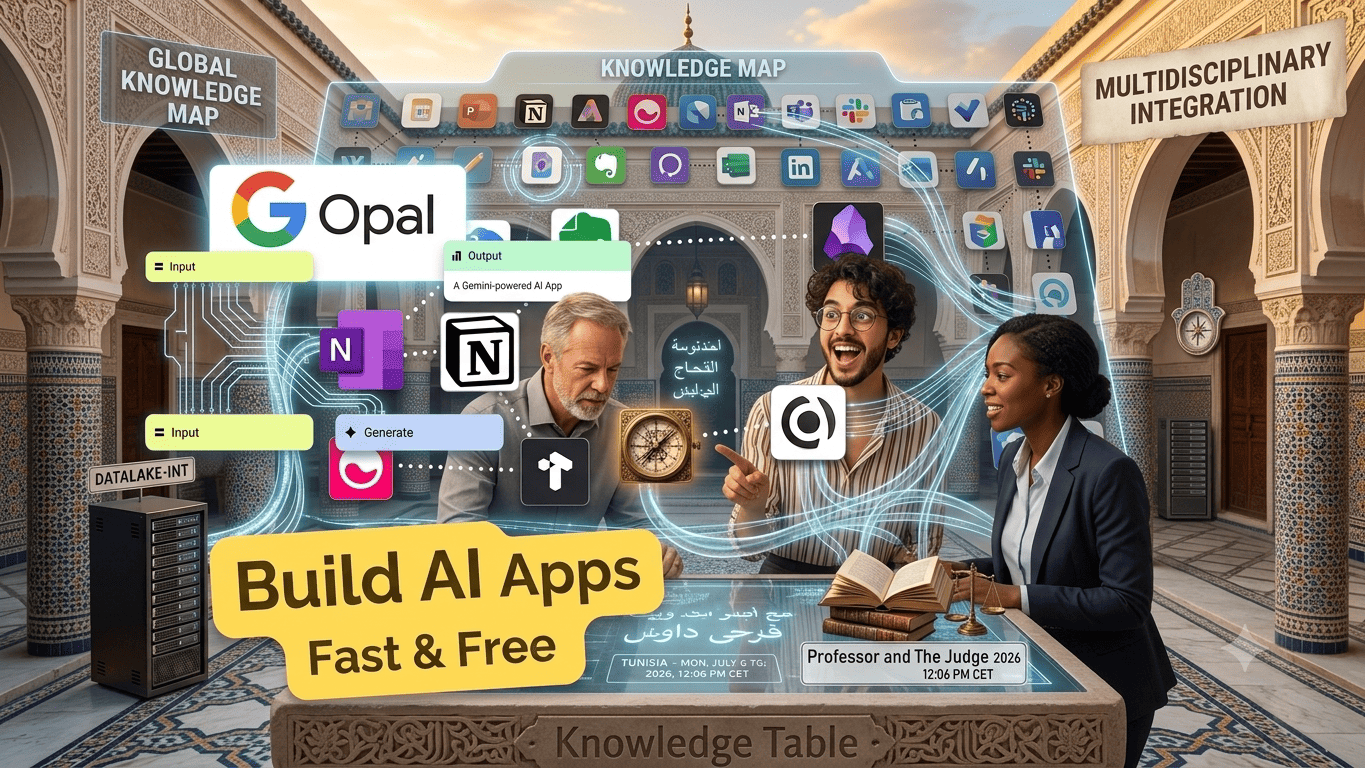
Here is the premise: Google Opal lets you describe an app concept in plain English and automatically spins up a visual workflow to run it. After spending two full weeks building and breaking actual mini-apps on the platform, my verdict is clear: Opal completely delivers on its promise for a razor-thin slice of what “building an app” actually means—and it fails spectacularly at everything else. Whether it is worth a slot in your workflow depends entirely on what you are trying to ship.
The Short Answer
Yes, you can absolutely build apps without touching a line of code in Google Opal. However, the word “app” is doing an immense amount of heavy lifting here.
To be blunt: Opal is not the tool you use to build a customer dashboard, a modern SaaS product, or anything that requires a database. Instead, it is designed for single-session utilities—micro-tools that capture a single input, pass it through an LLM, and spit out a result. Think less “robust inventory management system” and more “YouTube video summarizer” or “classroom quiz generator.”
If that sounds incredibly limited, that’s because it is. But within that specific sandbox, Opal is easily the smoothest, most friction-free AI builder I have tested. The systemic issue is that when the average person hears the phrase “build apps without coding,” they picture something exponentially more capable than what Opal is engineered to deliver.
What Google Opal Actually Gets Right
A True Natural Language Interface
Most traditional “no-code” platforms are a bit of a bait-and-switch. They simply swap out textual syntax for visual syntax—forcing you to manage drag-and-drop logic blocks, conditional statements, and manual data mappings. That isn’t “no-code.” That is just programming with a different coat of paint.
Opal flips this script. You literally just talk to it. If you type: “I want an app that takes a YouTube URL, transcribes the audio, and extracts a clean, bulleted summary,” Opal constructs the backend workflow for you instantly. While you can dive in to inspect individual steps, tweak prompts, or inject new blocks, you are never forced to think like a software engineer.
This drastically lowers the cognitive barrier to entry. On platforms like Bubble or Adalo, you still have to understand data types, relational logic, and event handlers. With Opal, you simply think like a user delegating a task to a competent assistant.
Templates Built for Learning
The template gallery is where Opal truly shines. Rather than offering static, uninspired layouts, each template is a fully functional mini-app ready to be remixed. Opening one exposes the entire anatomical structure of the application—making every single prompt and API call completely transparent.
I spent my first afternoon just dissecting these templates to see how they ticked. The book recommendation tool taught me how to chain sequential AI calls together. The business profiler showed me how to naturally bake web search results into a prompt, and the quiz generator demonstrated multi-step logic with conditional outputs.
If you’ve never designed an algorithmic workflow, this hands-on reverse engineering is incredibly valuable. It turns out that breaking a working example teaches you the foundations of AI logic faster than any generic video tutorial ever could.
Genuinely Seamless Sharing
The deployment loop on Opal is brilliantly simple. The moment your app works the way you want it to, you click “Publish” and instantly get a live URL. No web hosting configurations, no deployment pipelines, and zero domain management headaches.
To test this, I shipped a quick YouTube summarizer to three of my least technical friends. All three were using it within seconds without a single word of instruction from me. For an experimental prototype tool, that level of user-experience polish is incredibly rare.
Where Opal Falls Short
The “App” Identity Crisis
This is the fatal flaw. Opal applications are completely ephemeral; they live and die within a single browser session. Because there is no persistent storage backend, the moment a user inputs data, gets a result, and closes the tab, that data is wiped from existence. You cannot track users, store states between logins, or build anything that aggregates information over time.
While that is perfectly fine for a disposable tool like a video summarizer, it is an absolute dealbreaker for anything resembling a real production app—like a basic task tracker, a content management system, or a client feedback collector.
No Escape Hatch
Opal completely locks down its underlying logic. You cannot export your prompt workflows as Python, JavaScript, or any readable codebase. You cannot host the application on your own servers, and you are strictly forbidden from connecting to external APIs outside of Google’s walled garden.
This structural limitation creates an incredibly low ceiling. The second your application outgrows Opal’s native features—which will happen quickly—you will hit a brick wall. There is no way to scale up or extend it; your only option is to abandon the platform entirely and rebuild from scratch elsewhere.
Whenever I evaluate an emerging tech tool, I ask myself one primary question: Can this software do exactly what I need it to do today, without relying on a theoretical roadmap of future features? With Opal, the answer to that question is almost always a resounding no.
Performance Jitter
Opal is explicitly labeled as experimental software, and its performance reflects that reality. Apps occasionally hang indefinitely during complex prompts, the visual editor tends to stutter when workflows get crowded, and output qualities can fluctuate wildly even when fed the exact same inputs.
While these quirks are par for the course for a beta product, they are worth keeping top-of-mind if you are attempting to build something time-sensitive or mission-critical.
Putting It to the Test: What I Actually Built
The YouTube Summarizer
I tackled this first because it is the ultimate baseline test for modern AI workflows. Opal automatically mapped out a clean, three-block architecture: Input URL → Transcribe → Summarize. It worked perfectly on the very first run.
The output was remarkably sharp—yielding a concise, seven-point summary of a dense tech presentation. I went back into the middle block to tweak the prompt slightly to eliminate redundant bullet points, and the output instantly cleared up. From creating my account to sending a working, shareable web app to a colleague took roughly 12 minutes. This represents Opal operating at its absolute peak.
The Business Profiler Template
Next, I loaded up the native business profiler template, which is designed to crawl the web based on a company name and deliver an executive summary. I threw our own site, “NEXTAPP ZONE,” into the input field. Opal initiated a web search and spat back a description based on public indexing.
The result was incredibly generic. It correctly identified the domain as a tech blog reviewing AI tools, but completely missed our underlying editorial voice and niche focuses. The systemic problem here is that the template’s internal prompts are simply too broad. Even after I manually edited the backend blocks to command a tighter focus on specific AI review frameworks, the improvements were marginal at best.
This test quickly exposed Opal’s functional ceiling. While the visual logic holds up, the quality of your app is entirely dependent on your ability to engineer highly specific prompts. If you are already an expert prompt engineer, Opal gives you a remarkably fast way to package those prompts into sleek, shareable UIs. If you aren’t, your apps will spit out mediocrity.
Who is Google Opal For?
You should use it if you are:
- A non-technical professional looking to build highly specific internal AI utilities for personal use.
- An educator looking to quickly spin up interactive, prompt-driven learning tools for students.
- A marketer wanting to rapidly prototype content-generation logic before handing it off to a development team.
- Anyone trying to learn the mechanics of LLM chaining and multi-step AI reasoning through visual architecture.
You should avoid it if you are:
- Attempting to build a software product designed for external clients or paying customers.
- Building a project that fundamentally relies on databases, user registration, or secure authentication.
- Operating in an enterprise team that requires guaranteed uptime, SLAs, or highly predictable outputs.
- A developer looking to manipulate the underlying source code or write custom integrations.
How It Stacks Up Against the Competition
Opal vs. Lovable
Lovable takes a completely opposite approach: it generates legitimate, production-ready code (React, Tailwind, Supabase) that you can freely export, host, and structurally modify. It is exponentially more powerful than Opal, but it demands that you actually understand the structural code it is writing for you.
- The Verdict: Use Lovable if you want to launch a real digital product. Use Opal if you want to test an abstract logic flow in under an hour.
Opal vs. Bolt
Much like Lovable, Bolt creates full-stack applications straight from text prompts—complete with API integrations, working databases, and user authentication. Opal does none of this.
- The Verdict: Bolt is the superior choice for building functional prototypes destined to scale into actual commercial products. Opal is reserved for quick, single-use tools meant to solve immediate problems.
Opal vs. ChatGPT Custom GPTs
This is the truest head-to-head matchup. Both allow you to configure an LLM with custom instructions and share it via a unique URL. Custom GPTs are undeniably more mature, boast deeper knowledge-file retrieval, and sit on top of a massive built-in ecosystem.
- The Verdict: Opal wins on educational value because its visual workflow editor lets you map out the explicit routing logic instead of relying on a conversational black box. For day-to-day production reliability, however, ChatGPT’s ecosystem still holds the crown.
Frequently Asked Questions
Is Google Opal actually free?
Yes. Because it is currently sitting in a public beta phase, there are no paywalls or token caps, and Google has not yet announced a definitive timeline for future pricing tiers.
Can I launch a legitimate business app with Opal?
Almost certainly not. The total absence of data storage, user profiles, and third-party API hookups makes it fundamentally useless for running a customer-facing business or managing proprietary data.
Do I need a background in coding to use it?
Not at all. The interface relies entirely on conversational English and clean visual blocks. I built several functional micro-apps without looking at a single line of syntax.
What happens if Google decides to sunset Opal?
Your applications will instantly stop working. Opal is an experimental project coming out of Google Labs; do not anchor any critical business infrastructure to it that you cannot afford to lose overnight.
Can I export my workflow code out of Opal?
No. Opal operates entirely as a closed ecosystem. It does not generate accessible code repositories, and your applications are locked to Google’s cloud environment.
The Verdict
Google Opal completely delivers on its core promise, provided you check your expectations at the door. It makes the act of building AI-powered mini-utilities genuinely fun and remarkably frictionless. The visual templates are a masterclass in UX design, sharing is seamless, and the natural language interface is easily the most intuitive iteration currently on the market.
However, despite what some hyperbolic tech reviews might claim, Opal is not a no-code revolution. It is an incredibly polished prototyping sandbox for throwaway AI tooling. That is a highly valuable asset to have in your browser, but it isn’t “software engineering” in any traditional sense of the phrase.
Use Opal to learn, to experiment, and to rapidly map out ideas. Just don’t try to build an empire inside a sandbox that resets every time you close the tab.

Independent technology writer focused on artificial intelligence, emerging technologies, and digital innovation. Covers AI applications in sports, productivity, and online business.