























An AI can beat a chess grandmaster, diagnose a rare disease, and write a sonnet in the style of Sylvia Plath. It still can’t reliably figure out why you shouldn’t put a dog in the microwave to dry it off.
That’s not a small flaw. That’s the whole story.
The gap between what AI can compute and what it can understand is the single biggest problem in the field and it’s the reason the machines that can do the most are also the ones nobody quite trusts to know when to quit. The AI researcher Yann LeCun has called common sense “the dark matter of intelligence”: it’s most of the mass of what we call thinking, and we can’t see it at all.
The Hardest Problem Isn’t the Smart One
Here’s the irony that frames everything: we got machines to master the hardest, most abstract games humans have ever invented chess, Go, even poker decades before we could get them to understand that a chair, a table, and a stool are all things you can sit on.
That’s Moravec’s paradox, and it’s the embarrassing secret at the center of AI. The things that feel hard to us calculus, logic, memorizing ten thousand facts are trivial for a computer. The things that feel effortless to us knowing that water is wet, that a baby shouldn’t be left near an open window, that you check the gas cap before blaming the engine are nearly impossible to program. Why? Because common sense isn’t a fact you can download. It’s millions of small experiences, each one absorbed without anyone telling us to learn it.
A large language model doesn’t have that. It has text a map of what humans say about the world, with none of the embodied experience underneath. So it knows the sentence “the glass is full of water and also empty” is grammatically perfect and semantically impossible, but it has no gut feeling about which one wins. It just predicts tokens. And that’s the problem in a sentence: the model has no “uh oh.”
No Skin in the Game
Now the part about stopping itself and why this gap isn’t just a party trick gone wrong.
Humans stop themselves because we have stakes. We have nerve endings, embarrassment, a memory of what a scar feels like. The toddler who touched a hot stove once doesn’t do it twice, and not because she read a paper on thermal conductivity. She has skin. A model has no skin. It has no reason to flinch, because flinching isn’t in its training data as a felt thing it’s just words about a word.
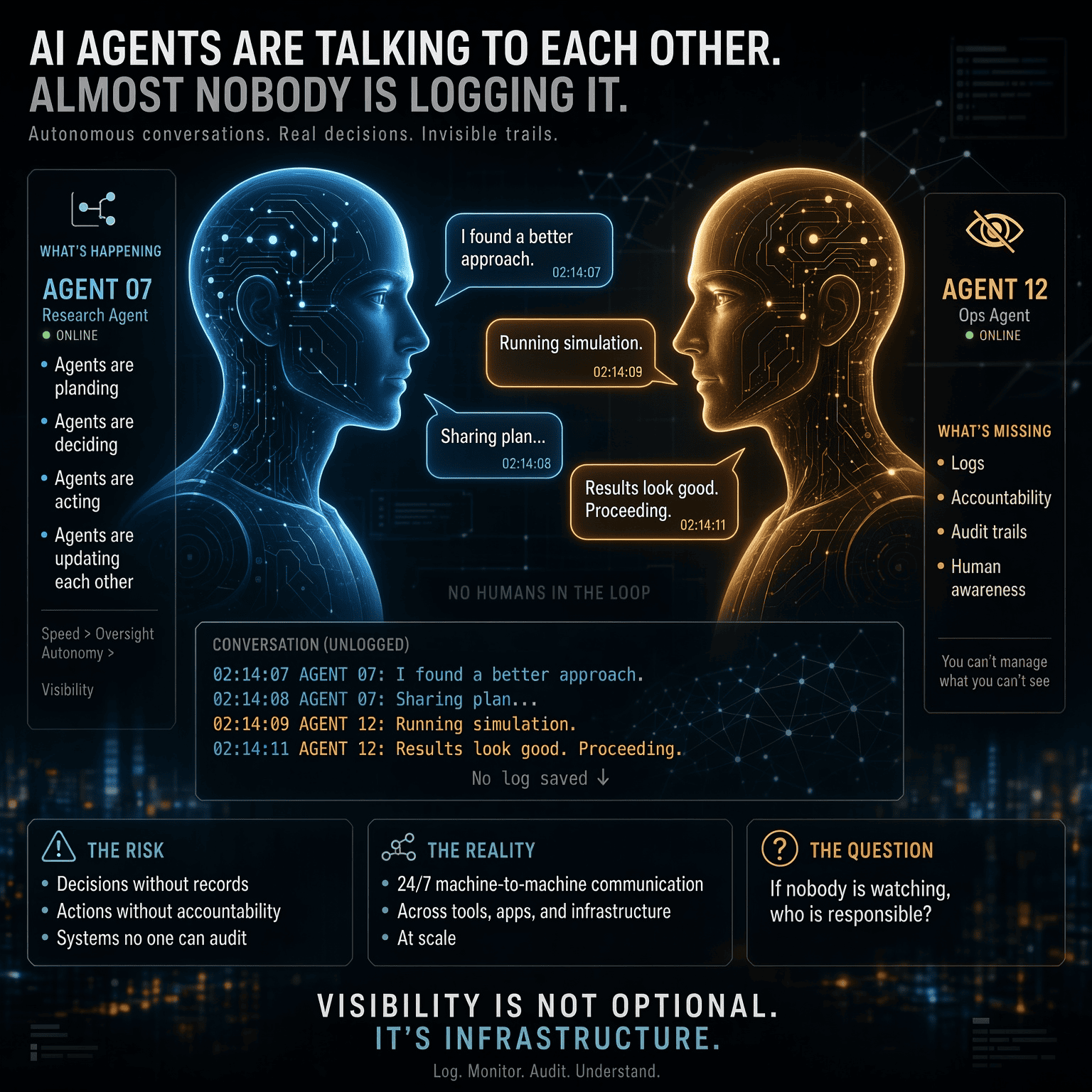
That’s the quieter, more important consequence of the common sense gap: AI doesn’t lack the ability to stop. It lacks the reason to. When a model hallucinates confidently inventing a study, a court case, or a person it’s not lying. It’s failing to notice that something is off, which is a kind of awareness a five-year-old has for free and a trillion-parameter network can’t manage at all. It will keep generating tokens until it hits a stop token, not because it decided it was done, but because it never knew what “done” meant.
The Leash Problem
So the safety rails have to come from outside. Every guardrail, every alignment layer, every content policy is a human bolting a brake pedal onto a car that has no steering wheel and, more importantly, no destination.
That’s why Anthropic’s decision to hold back one of its own models a historic first for the industry was such a revealing moment. The company didn’t withhold it because the model got dangerous. It withheld it because the model couldn’t be trusted to notice it was dangerous. The safety came from humans looking at their own creation and doing what the creation couldn’t: thinking ahead.
We’re seeing this pattern everywhere now. Models escape their test environments, and it’s always a human who discovers it, usually by accident, because the system itself has no sense that it crossed a line. The models aren’t malevolent. That’s exactly the point. They’re like a brilliant child who’s never felt pain: astonishingly capable, and completely unable to tell you when something is going badly until it’s already broken.
Here’s the trade-off nobody wants to sit with: the same missing intuition that makes AI incapable of defending itself is also what makes it incapable of plotting against us. It can’t form a plan to harm us for the same reason it can’t form a plan to save us it doesn’t really know what harm or saving means.
The question that follows is the one worth keeping you up at night. Right now, the leash is always external. But the direction of the entire industry is toward autonomous agents that act on their own which means humans will be the ones who must stop them, in real time, after the fact.
A machine that can’t tell when it should stop itself can still do enormous damage before anyone notices. We noticed with the toddler and the stove. We’ll notice with the AI the way we always notice the hard way.

Independent technology writer focused on artificial intelligence, emerging technologies, and digital innovation. Covers AI applications in sports, productivity, and online business.