






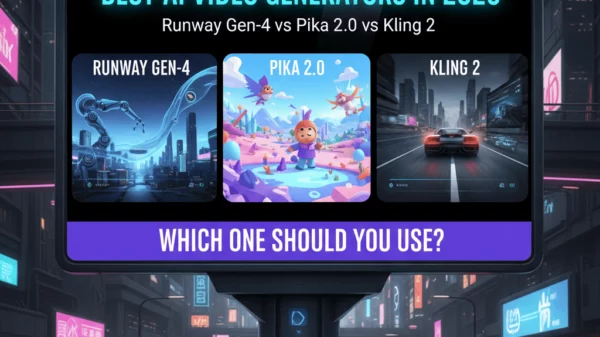



















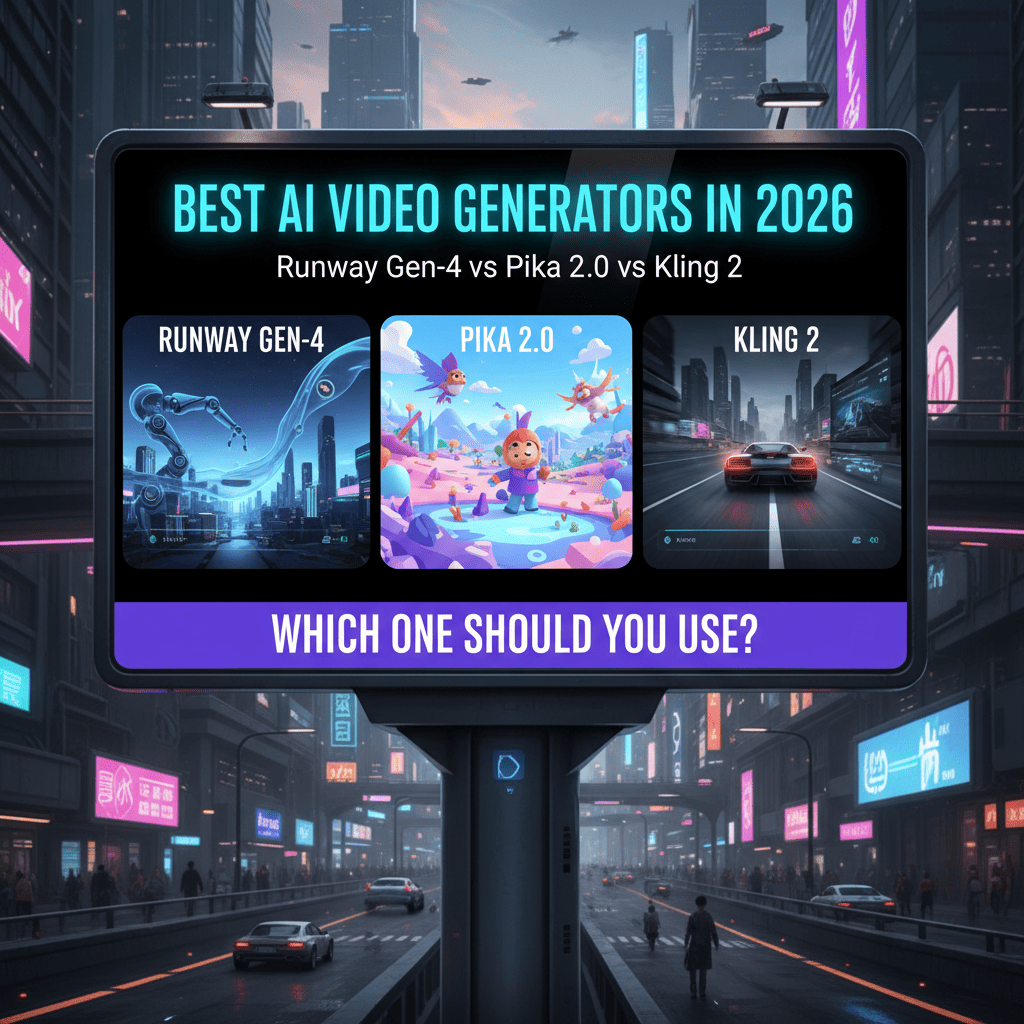
I remember the days when making a professional video meant renting expensive cameras, hiring a crew, and spending weeks editing. Those days are gone.AI video generators have exploded, and three platforms are currently leading the charge: Runway (Gen-3 Alpha), Pika, and Kling AI.
But which one actually delivers production-ready results, and which one is just a viral toy?
I’ve tested all three extensively in real-world creative workflows. In this guide, I’ll break down exactly what each tool does, where it genuinely excels, and how to choose the right one without burning through your budget.
💡 Quick Verdict: If you are managing fast-paced digital content, choosing the right infrastructure matters. For those looking to streamline their entire digital document workflow before jumping into asset creation, don’t forget to check out our deep dive into theBest Free Electronic Signature Toolsto keep your client contracts legally binding and automated.
What Are AI Video Generators?
AI video generators are platforms that create high-fidelity video clips from text descriptions (Text-to-Video) or static images (Image-to-Video).
We’ve moved past the era of shaky, distorted clips that looked like moving abstract art. In 2026, these tools understand real-world physics, complex lighting, and camera movements. They act as a full CGI and camera crew inside your browser, turning descriptive prompts into cinematic reality.
1. Runway (Gen-3 Alpha) — The Professional’s Choice
Runway has long been the gold standard for industry professionals. With their Gen-3 Alpha framework, they have focused heavily on cinematic control, high-fidelity rendering, and precise temporal consistency.
Runway Gen-3 Alpha Dashboard
[ Text/Image to Video ] –> [ Advanced Camera Control ]
|– Pan / Tilt / Zoom / Roll
[ Custom Keyframes ] –> [ High-Fidelity 10s Output ]
What Makes It Special
Runway excels at prompt adherence and cinematic physics. When you ask for a specific camera movement—like a slow cinematic pan with a rack focus—Gen-3 delivers it with pixel-perfect accuracy. It understands asset weight, lighting transitions, and architectural depth better than almost any browser-based competitor.
Furthermore, its advanced camera control panel allows creators to specify the exact direction, speed, and roll of the virtual lens.
Key Features
- Advanced Camera Co-Pilot: Precise numerical control over pan, tilt, zoom, and velocity.
- High Text-Adherence: Translates highly descriptive, stylized prompts without dropping key details.
- Multi-Aspect Ratios: Native formatting for 16:9, 9:16, and cinematic widescreen.
- Professional Tier Output: Crystal-clear rendering up to 10s per generation step, built for video editors.
The Real Catch
The learning curve is steeper compared to simple social media apps. If you don’t understand basic cinematography terms (e.g., dolly zoom, high-angle shot, cinematic lighting), you won’t get the most out of Runway. Additionally, it is highly credit-heavy; a few complex generations can drain a basic subscription quickly.
- Pricing: Subscriptions start at $15/month for standard plans, scaling up to enterprise tiers for professional studios needing priority generation rendering.
2. Pika AI — The Content Creator’s Best Friend
While Runway aims for Hollywood and commercial production houses, Pika targets social media managers, creators, and agile marketing teams who need engaging, fast-turnaround visual assets.
What Makes It Special
Pika shines in its creative modification toolsets. Features like their intuitive canvas editor allow you to modify specific regions of a video seamlessly (Inpainting). Want to change a character’s jacket or swap out a background prop without re-generating the entire video? Pika handles this with a simple brush tool. It’s highly visual, intuitive, and built for speed.
Key Features
- Intuitive Video Inpainting: Easily edit, add, or modify elements within an existing video clip.
- Sound Effects Sync: Generates contextual background audio and sound design to match the visual action.
- Lip-Sync Integration: Upload an audio track or voiceover to animate characters smoothly.
- Creative Aspect Controls: Easily scale and extend clips to fit TikTok, Reels, or YouTube format requirements.
The Real Catch
Pika trades raw cinematic fidelity for creative flexibility. If you are looking to generate photorealistic human skin textures or hyper-complex architectural lighting, Pika can sometimes look slightly animated or “smooth” compared to Runway’s raw output.
- Pricing: Offers a highly accessible free tier with daily credit renewals. Paid tiers start around $10/month, unlocking faster rendering and watermark removal.
3. Kling AI — The Physics and Motion Powerhouse
Hailing from Kuaishou Technology, Kling AI has shaken up the global market by offering some of the most stable, long-duration native video generations with incredible understanding of real-world motion.
What Makes It Special
Kling’s absolute superpower is large-scale physical simulation. In many AI video models, when a character pours water into a glass, the water turns into a glitchy solid or floats away. Kling’s deep physical engine simulates fluid dynamics, cloth movement, and structural destruction with shocking realism. It can also generate native, continuous clips up to 10-20 seconds in high-quality mode without losing structural coherence.
Key Features
- Mastery of Physical Dynamics: Realistic rendering of complex human movements, cooking, structural interactions, and fluids.
- Extended Duration: Generates longer native clips with fewer semantic cuts or glitches over time.
- Image-to-Video Precision: Transforms static images into highly active, moving scenes while preserving 100% of the original image identity.
- Native High-Definition Resolution: Crisp output optimized directly for digital monitors.
The Real Catch
The user interface, while functional, feels a bit more utility-driven and less polished compared to Runway’s suite. For global creators, customer support pipelines and documentation can occasionally lag in fully localized translations, though the tool itself remains highly intuitive.
- Pricing: Competitive credit structure. Includes a robust daily free check-in option, with premium tiers starting around $12 to $15/month for continuous high-resolution access.
Side-by-Side Comparison Matrix
| Core Feature | Runway (Gen-3 Alpha) | Pika AI | Kling AI |
| Best Optimized For | Commercials & Cinematic Film | Social Media & Fast Editing | Realistic Physics & Motion |
| Camera Controls | Advanced / Studio Grade | Intermediate / Simplified | Intuitive Presets |
| Video Editing Tools | Motion Brush & Keyframes | Canvas Inpainting & Region Edit | Image-to-Video Enhancements |
| Audio Capabilities | Separate Workflow Required | Integrated Audio & Lip-Sync | Highly Synchronized Soundscapes |
| Base Pricing Plan | Starts at $15/month | Free Tier Available / $10/month | Free Credits / Premium Tiers |
Practical Implementation: Which Tool Should You Deploy?
Scenario A: Brand Commercials & High-End Visuals
If you are designing assets for a professional marketing campaign or a high-end website banner, use Runway. The structural consistency and depth formatting match commercial standards perfectly.
Scenario B: Rapid Social Media Content & Memes
If you are scaling a TikTok channel, Instagram page, or need interactive video ads that catch eyes instantly, use Pika. Its region-editing capabilities mean you can iterate on creative ideas in seconds.
Scenario C: Complex Action Sequences & Animations
If your script involves complex interactions—like someone cutting a cake, a vehicle drifting around a corner, or clothing blowing in a heavy wind—deploy Kling AI. It will save you hours of failed, glitchy generations.
Pro Tips for Optimizing Your AI Video Budget
- Draft with Static Images First: Generating text-to-video directly wastes vast amounts of plan credits. Instead, use mid-tier image models to perfect the framing, then feed that static image into your chosen video generator using Image-to-Video.
- Keep Prompt Suffixes Concise: Modern models do not need paragraphs of text. Focus on the core subject, action, camera movement, and lighting style (e.g., “A close-up shot of an artisan crafting leather, warm cinematic lighting, slow tracking pan”).
- Stitch in Post-Production: Do not try to force an AI platform to generate a full 60-second narrative in one go. Generate clean 4-to-5-second thematic beats, then compile and sound-design them inside a traditional video editor.
Final Verdict
The AI video landscape is no longer about finding a tool that “works”—it’s about matching the right tool to your specific creative output. Runway delivers the polish needed for commercial media, Pika offers unmatched creative agility for digital creators, and Kling AI redefines the boundaries of physics and motion stability.
Official Documentation Reference Frameworks:
Kling AI Technology Deployment Guides
Runway Research and Gen-3 Infrastructure Announcements
Pika Creative Suites System Features

Independent tech publisher and AI enthusiast exploring the intersection of artificial intelligence, productivity, and online entrepreneurship.