







































Here’s a sentence you’ll want to sit down for: if your code runs on AWS, you’re about to pay for Amazon’s decision to spend $220 billion this year.
That’s not a metaphor. It’s bookkeeping. Every GPU, every megawatt of nuclear power, every rack of memory that Amazon buys shows up on its balance sheet as depreciation — and depreciation shows up in what you pay per API call. So when Amazon raised its 2026 capex to roughly $220 billion on Thursday’s earnings call, up from $200 billion, and said even that won’t meet demand through 2027, it wasn’t just telling Wall Street. It was telling you what your cloud bill will look like for the next few years.
Let’s be blunt: this is a landlord raising the rent because the price of lumber went up. Only the lumber here is HBM memory, and the rent is your inference costs.
Where Your API Bill Actually Comes From
Most developers think they’re paying for “compute.” They’re not. They’re paying for a stack of things underneath it, and every layer just got more expensive.
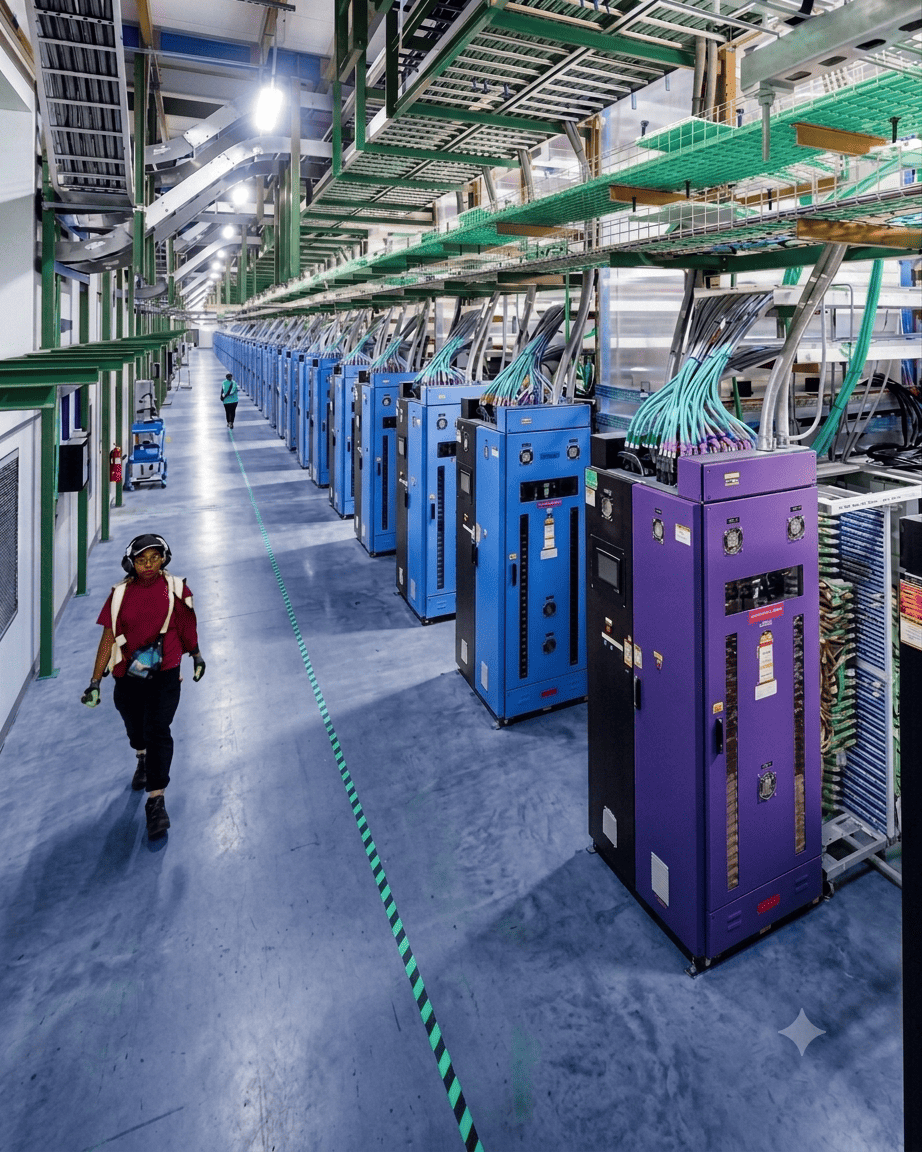
Start with the hardware. AWS already raised prices on EC2 instances this year, and its operating income jumped to $16.6 billion in Q2 — proof that those increases are sticking. Now add the memory squeeze. High-bandwidth memory consumes something like 22% of the world’s DRAM wafer capacity while producing a fraction of the bits, and conventional DRAM prices shot up 58-63% quarter over quarter. Amazon said the extra $20 billion this year is mostly memory costs, not new construction. Translation: the components under your API are getting pricier, and someone has to eat that. It won’t be Amazon.
Then there’s the supply-demand math, which is the real kicker. AWS has $496 billion in contracted backlog, with demand already booked into 2028. That’s a waiting list, not a marketplace. When customers are lining up and capacity is scarce, providers don’t discount — they raise prices and sell reserved capacity further out. You can see the logic from here: Amazon doesn’t need to win your business with cheap inference. It needs to allocate scarce GPUs to whoever will commit the most.
The uncomfortable question — the one nobody at the earnings call wanted to answer — is whether the whole model holds together. AI services generated roughly $25 billion in revenue last year against more than $250 billion in infrastructure spend. That’s ten cents back for every dollar out. Prices don’t come down in that world; they go up, or the buildout stops being fundable.
The Trainium Discount That Isn’t
The one genuine ray of light for cost-conscious developers is Amazon’s homegrown silicon. Trainium and Graviton chips now generate over $10 billion in annual run-rate revenue, and they’re the closest thing AWS has to a cost advantage. Run a workload on Trainium and you can undercut what a comparable Nvidia-backed stack costs — in theory.
The catch is the handcuffs. To get that discount, you design your pipeline around AWS’s custom accelerator, which is a way of moving into an apartment where the landlord also owns the furniture. It’s cheaper per square foot, but you can’t take it with you. And as the surging prices of Nvidia’s B300 prove, the hardware everyone actually wants keeps getting more expensive regardless of your best intentions. Amazon isn’t discounting its way to a cheaper future; it’s building a moat around whatever compute it can actually source.
What You Should Actually Do About It
Here’s the honest answer: you can’t outrun this, but you can stop overpaying.
First, lock in reserved or committed capacity now, while prices are still rational. The backlog math guarantees spot pricing gets uglier, not friendlier, through 2027. Second, don’t marry a single provider. The neoclouds — CoreWeave, Oracle, Nebius, even the model labs themselves — are desperate to grab market share from the big three, and desperation still occasionally shows up as a good deal. Multi-cloud arbitrage is tedious, but it’s the only real hedge when one company controls both the supply and the price.
Third, and this is the part nobody wants to hear: the bill is going up for a while, and there’s no political will to stop it. Every decision Amazon makes is rational for Amazon. The question is whether you, the developer, can afford to keep paying rent in a building where the landlord keeps buying more buildings, faster, and telling you the rates are justified because the neighborhood is booming.
You are not the customer for that $220 billion. You are the revenue that pays for it. Plan accordingly.

Independent technology writer focused on artificial intelligence, emerging technologies, and digital innovation. Covers AI applications in sports, productivity, and online business.