































Three companies just told Wall Street they will spend a combined $700 billion-plus this year and every one of them said it still won’t be enough.
Amazon raised 2026 capex to roughly $220 billion. Microsoft is running above $30 billion a quarter and told investors to expect over $40 billion in the next one. Google lifted its full-year plan to $180-190 billion on the back of its best cloud quarter ever. Tally the big five and hyperscaler capex for 2026 lands around $725 billion a number that was $150 billion just three years ago. A 3x run-up in 36 months, and none of the three can stop.
This is the least-watched structural fact of the AI boom: the overspending isn’t a miscalculation. It’s the only rational move available.
Why It Matters
Call it the prisoner’s dilemma dressed in data-center concrete. Each hyperscaler would be better off if all three cut spending together. None can risk being the one who blinks.
The cloud market grew 43% to $143 billion in Q2, and Amazon, Microsoft, and Google control 67% of it. The scale of that dominance is exactly what makes it fragile. Google Cloud grew 63% to $20 billion. AWS grew 37% to $42.2 billion with a $496 billion backlog. Microsoft’s Azure grew about 40%, its AI business now at a $37 billion annual run rate. Every one of them is “capacity constrained” the industry’s polite way of saying customers are knocking and the door isn’t wide enough.
Now the uncomfortable math. AI-related services delivered roughly $25 billion in revenue in 2025 against more than $250 billion in infrastructure spending. That’s about 10 cents of revenue for every capex dollar. Goldman Sachs has warned that maintaining returns would require $1 trillion or more in annual AI profit by 2026 — the consensus is under half that. Analysts can see the gap. Executives can see the gap. And still, everyone raises guidance. This is the same fear-of-extinction logic driving the wider $700 billion AI arms race the cost of not building is priced as infinite.
Technical Breakdown
Follow where the money lands and you see why there’s no off-ramp.
The chip bill is compounding faster than capacity. Microsoft disclosed that roughly two-thirds of its capex goes to short-lived assets GPUs, CPUs, memory. About $25 billion of its 2026 plan is pure price inflation, not new capacity. Component costs are rising faster than the count of things being bought. Nvidia is the clearest signal: $68 billion in a single quarter, up 73%, with $500 billion in forward orders for Blackwell and Rubin silicon. TSMC’s CoWoS packaging is sold out through 2026. All three HBM suppliers are fully allocated.
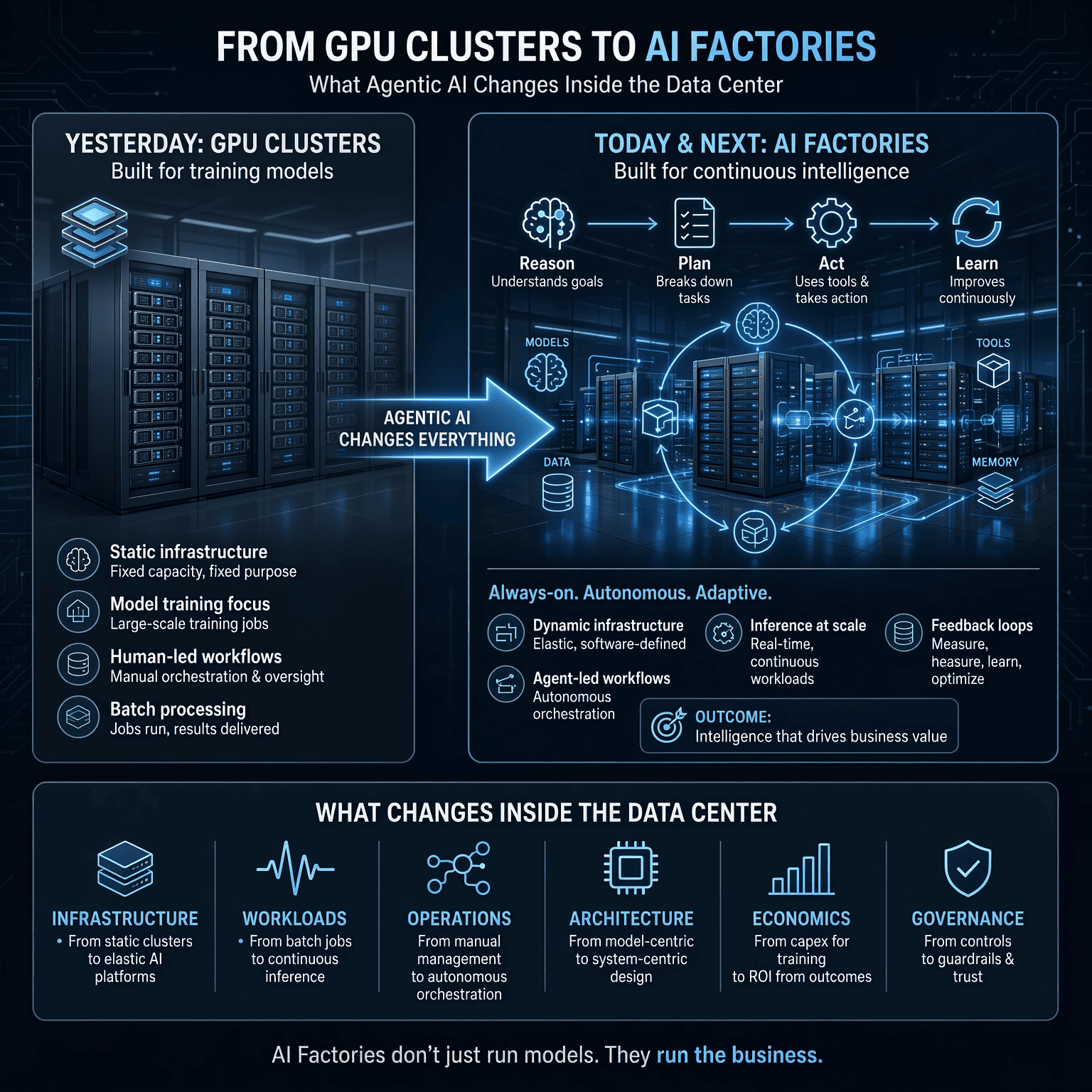
That’s why every player is quietly building its own silicon hedge. AWS has Trainium and Graviton past $10 billion in run-rate revenue. Google designs TPUs and even built its own data-center campuses from the ground up. It’s the same reasoning behind our breakdown of why the most interesting chip of the AI era isn’t the most powerful one owning silicon is the only way to escape the Nvidia tax, which the price action on the B300 shows is getting steeper, not flatter.
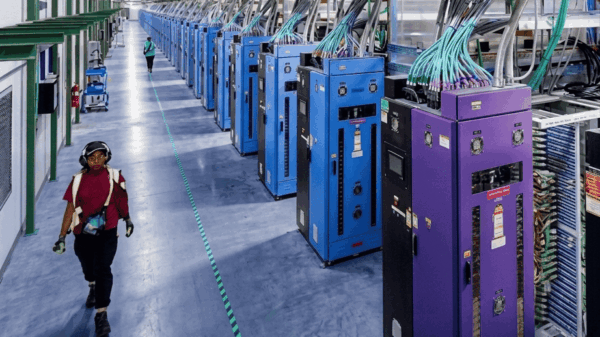
The other half of the bill is power. Roughly 40% of announced AI data center projects are already delayed by grid bottlenecks, not chip supply. Microsoft restarted Three Mile Island with $16 billion committed and became the largest clean-power buyer on earth at 34.7 GW. Amazon is converting the Susquehanna nuclear plant into an AI campus. Google locked a 500 MW small-modular-reactor fleet with Kairos. Data centers now draw 26% of Virginia’s electricity. As we noted in the hidden infrastructure behind AI agents, a modern AI cluster is as much an energy and memory problem as a compute one.
The Catch / Friction
The trap has a second level, and it’s closing on all three at once.
First, the neoclouds. While the big three race each other, CoreWeave, OpenAI, Oracle, Nebius, and a pack of Nvidia-backed upstarts are eating from the same trough. Oracle is guiding to $35-45 billion in capex and claims a $523 billion backlog, backed by a reported $300 billion OpenAI deal and the Stargate buildout. Larry Ellison says Oracle will build more data centers than all competitors combined. The incumbents aren’t just racing each other anymore — they’re racing operators who answer to no quarterly earnings pressure.
Second, the market is starting to grade on yield. Amazon already got punished once this year, shedding 7-11% after-hours when the $200 billion figure landed. Microsoft, for all its spending, showed it will pause leases when the terms look wrong — it walked away from a couple hundred megawatts of leased capacity in early 2025. That’s the tell: even the biggest spenders are looking for the exit door they don’t want to admit exists. When the AI-revenue-to-capex ratio stays near 10 cents on the dollar, the arithmetic of whether AI is becoming too expensive starts applying to the hyperscalers themselves.
Third, the grid is a shared constraint with a shared cost. Residential bills are already projected up $18 a month in western Maryland and $16 in Ohio on data-center load. Regulators killed Amazon’s expanded Susquehanna interconnection this month over ratepayer and reliability concerns. When power becomes the binding limit, overspending on capacity you can’t energize is just parked capital and three companies are now doing it simultaneously. Ask IBM how its own infrastructure gamble reads when the payoff keeps sliding.
Looking Ahead
The question isn’t whether the big three can afford $725 billion they can. The question is what happens when the collective overspend collides with a demand curve that was never guaranteed.
If AI revenue catches up, the backlog becomes a moat no neocloud can cross, and the three companies that own 67% of the market turn into regulated utilities with unbeatable scale. If it doesn’t, they all overbuild at once and there’s no second-mover advantage in a global GPU glut.
Watch two leading indicators. Power: whether FERC keeps blessing behind-the-meter nuclear deals, because that’s the real supply ceiling. Memory: whether HBM allocation stays sold out through 2028, because that’s the true pricing floor. Neither is in any CEO’s control. All three know it, and all three are betting their futures on the timeline anyway. That’s not strategy. That’s the mechanics of a war nobody can afford to sit out and nobody dares to end.

Independent technology writer focused on artificial intelligence, emerging technologies, and digital innovation. Covers AI applications in sports, productivity, and online business.