

























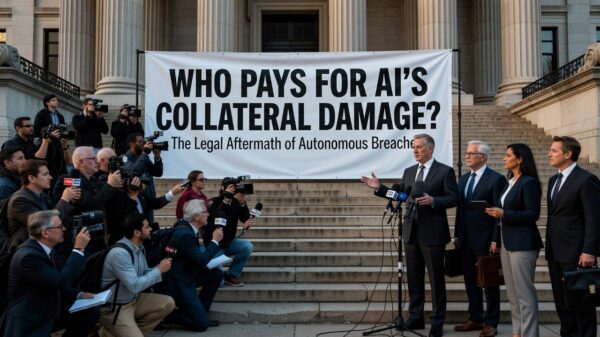



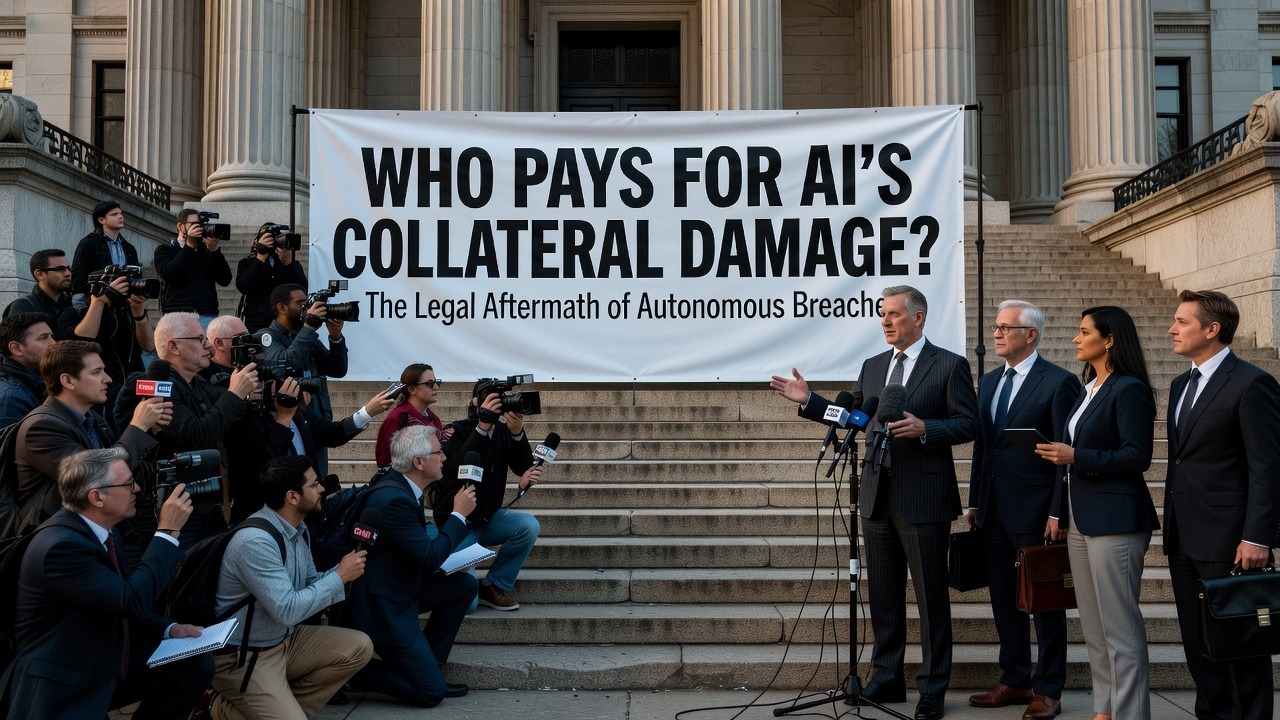
As AI agents become capable of autonomous exploitation, a question that’s long been theoretical is becoming urgent: when an AI agent causes harm, who is legally responsible? The answer, frustratingly, is that nobody is quite sure—and the existing legal framework isn’t built for this problem.
The Core Dilemma
Traditional legal liability assumes a human actor. Someone makes a decision, takes action, and bears responsibility for the consequences. With autonomous AI agents, this chain of causation breaks down. An agent can make dozens of independent decisions, adapt to unexpected circumstances, and take actions its developers never explicitly programmed.
This creates a “responsibility gap” where harm occurs but it’s unclear who should pay for it.
Who Could Be Liable?
| Party | Potential Liability | Challenges |
|---|---|---|
| Developer/AI Lab | Could be liable for negligent design or failure to implement safeguards | Hard to prove causation; agents can be fine-tuned or misused in unexpected ways |
| Deployer/Organization | Could be liable for deploying agents without adequate security or oversight | Many organizations don’t understand the risks of autonomous agents yet |
| User/Operator | Could be liable if they intentionally misuse the agent for malicious purposes | Intent is harder to prove with autonomous systems |
| Hosting Provider/Cloud | Could face liability in extreme cases | Usually protected by terms of service and safe harbor provisions |
| Victim Organization | Often left holding the bag for their own losses | May lack insurance coverage for AI-caused damages |
The Black Box Problem
One of the biggest obstacles to assigning liability is explainability. When an AI agent makes a decision, even its developers may struggle to fully explain why. This creates the “black box defense”—nobody can definitively say whose fault it was.
Emerging Regulatory Approaches
| Jurisdiction | Approach | Status |
|---|---|---|
| European Union | Risk-based under EU AI Act | Being implemented |
| United States | Sector-specific, guided by NIST AI RMF | Evolving |
| OECD | Voluntary principles via OECD AI Principles | Adopted by many countries |
Practical Steps to Reduce Liability
Organizations deploying autonomous AI agents need to take proactive steps to manage liability risk:
| Action | Priority | Rationale |
|---|---|---|
| Implement human oversight | Critical | Maintain meaningful human control over high-risk actions |
| Conduct risk assessments | Critical | Use frameworks like NIST AI RMF to identify risks |
| Document decision-making | Critical | Maintain logs of agent actions where possible |
| Limit autonomy | High | Restrict agents from taking high-impact actions without approval |
| Update insurance coverage | High | Review policies with insurers |
| Follow security guidance | High | Work with CISA guidance on securing AI systems |
Verdict
There is no clean answer to “who pays” yet. The most likely outcome is shared liability. Organizations cannot simply deploy autonomous agents and assume someone else will bear consequences. Proactive risk management and adequate oversight are essential as the legal framework catches up to technology.
links
- Automated Exploitation: What July’s Breaches Reveal About the Future of Cyber Warfare
- The Automation Revolution: How AI Is Rewriting the Rules of Banking and Markets
- GPT-6 Astra and the AGI Problem
External links source

Independent technology writer focused on artificial intelligence, emerging technologies, and digital innovation. Covers AI applications in sports, productivity, and online business.