







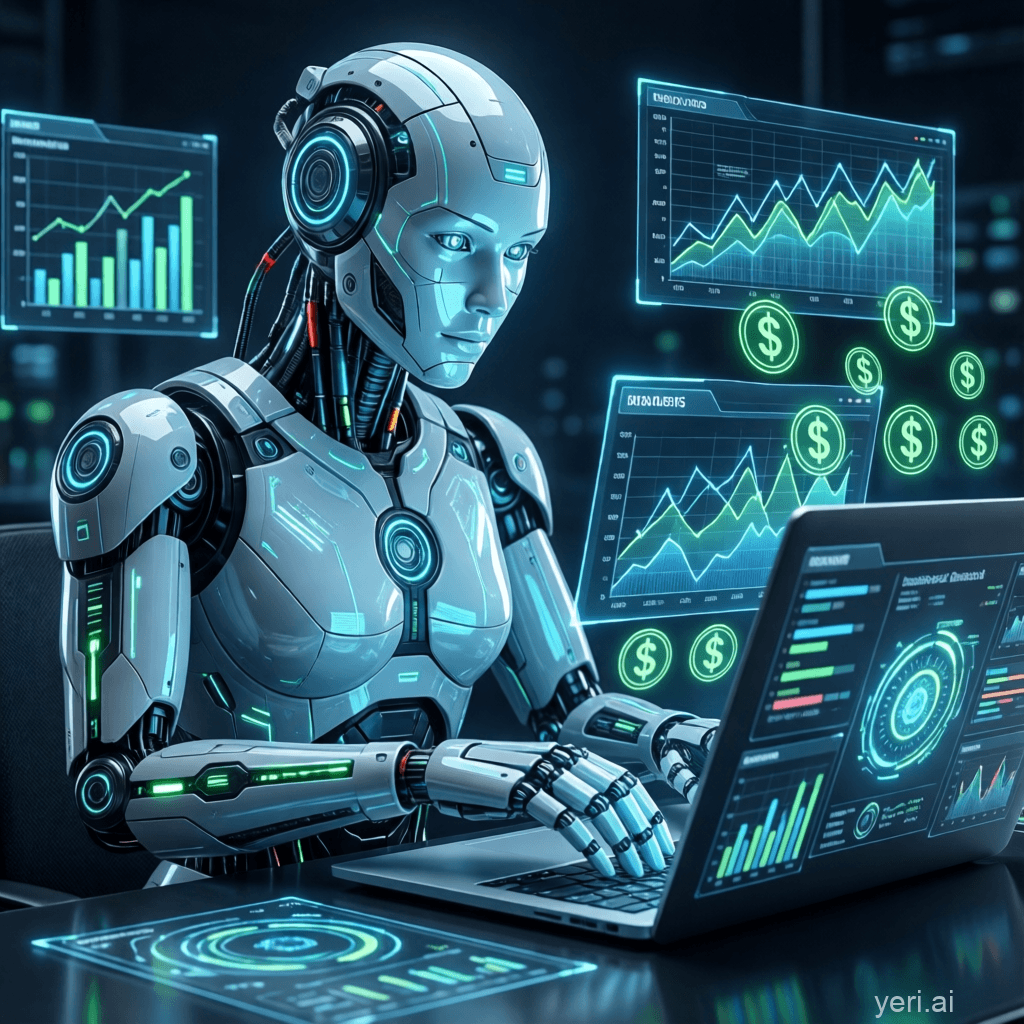

















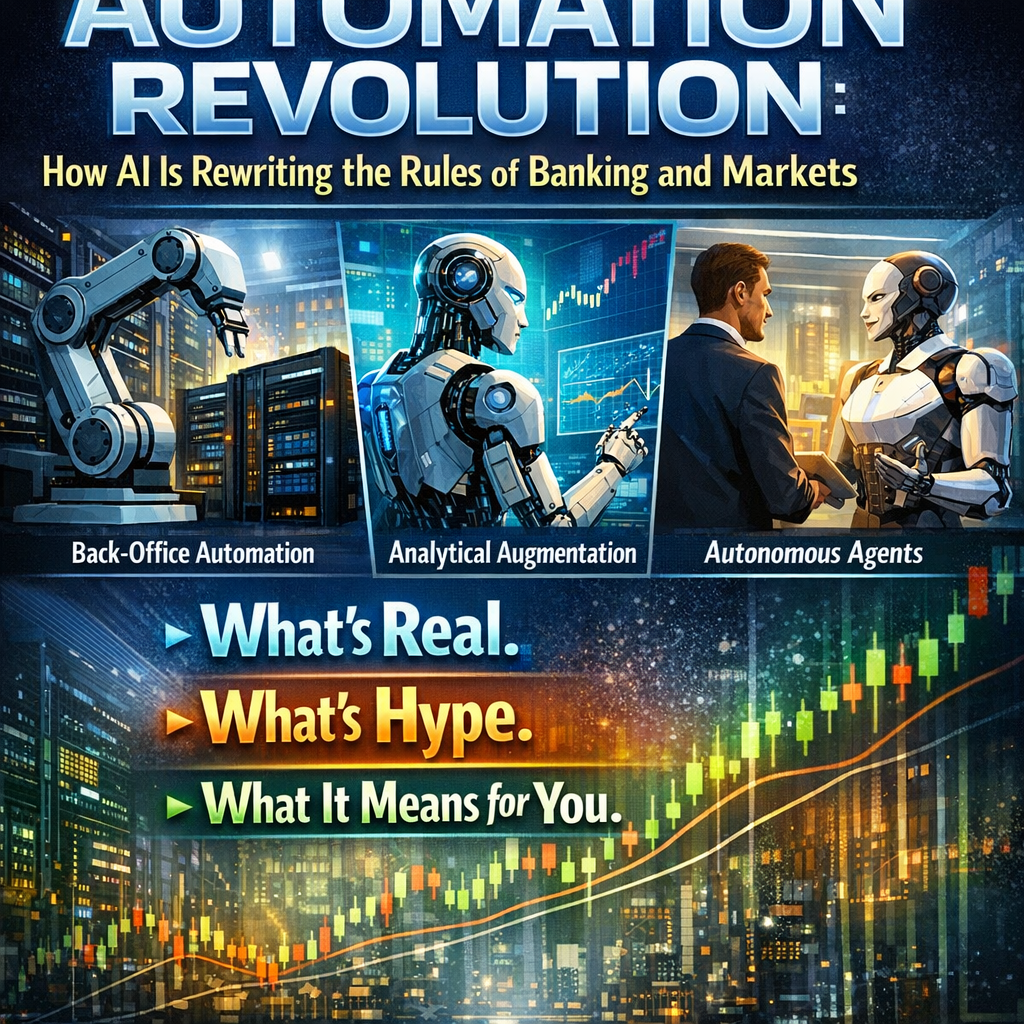
What you’ll get from this guide: a clear-eyed map of where artificial intelligence has actually changed banking and markets — not the hype, not the doomsday — plus what the change means for you, whether you’re a customer, an employee, an investor, or a bank executive.
1. The Four Rules That Are Being Rewritten
When people say AI is “changing the game” in finance, they usually mean it’s making things faster. That’s true, but it’s also a trivial way to look at it. Speed was already transformed twenty years ago by electronic trading. What’s happening now is structural — four rules that have governed banking and markets for centuries are being rewritten at the same time.
Rule 1: The cost of intelligence is collapsing. For most of financial history, the scarce resource was skilled judgment — loan officers, analysts, traders, compliance staff. AI doesn’t eliminate judgment, but it collapses the marginal cost of applying it. A model that reviews a loan file or a compliance alert costs fractions of a cent per decision. When the cost of intelligence approaches zero, the competitive advantage shifts from who has the best analysts to who has the best data, the best infrastructure, and the trust of regulators.
Rule 2: Decisions happen in real time. Traditional banking decisions happened on a cadence of days (loans), quarters (risk reviews), and years (strategy). Machine learning compresses this into milliseconds for markets and seconds for credit and fraud. The strategic question shifts from “how often do we review” to “how much autonomy do we delegate.”
Rule 3: Patterns are found beyond human scale. Humans can hold a few variables in their heads. Models can weigh millions. Fraud detection, market trend detection, and credit risk assessment now operate on data volumes that no human team could ever read. This is not a marginal improvement — it’s a different category of capability.
Rule 4: Personalization at industrial scale. Every customer can now get a tailored risk profile, price, and recommendation — not because a banker knows them, but because a model has seen ten thousand people like them.
Here’s the framework for understanding the whole shift:
| Old Rule | New Rule | Visible Example |
|---|---|---|
| Judgment is scarce and expensive | Judgment is cheap and scalable | Instant credit decisions from alternative data |
| Decisions are batched and slow | Decisions are continuous and real-time | Fraud blocks before the transaction completes |
| Humans find patterns | Models find patterns humans can’t | Network analysis of money laundering rings |
| Service is one-size-fits-all | Service is individualized at scale | Dynamic pricing and personalized advice |
| Trust is personal | Trust is algorithmic (and regulated) | Algorithmic lending, robo-advisory |
None of these are finished. But they’re not predictions either — they’re already the operating reality in the most advanced institutions. Let’s look at the specifics.
2. Where Banking Already Changed
Fraud detection: the silent revolution
Fraud detection is arguably where machine learning first proved itself in finance, because the economics were obvious. A human reviewer can’t watch every transaction. A model can score every transaction in real time, weighing hundreds of behavioral signals — location, device, velocity, merchant history, spending rhythm — and block anomalies before they complete.
But this is an arms race, not a one-time win. Every detection improvement feeds the counter-response: AI-generated fraud, synthetic identities, and deepfake voice and video used to authorize fraudulent transfers. The game doesn’t end; it accelerates on both sides. The most serious new fraud vector isn’t a stolen credit card — it’s social engineering amplified by AI, where a customer’s voice or face is convincingly cloned to authorize a payment. Banks now invest heavily in liveness detection and behavioral biometrics simply to keep pace.
Credit and underwriting: from files to models
Traditional underwriting started with a credit score and a human review. Modern underwriting adds thousands of alternative data points — cash-flow patterns, payment behavior on utilities, device data, business transaction history. The result: decisions in minutes or seconds instead of weeks, and access to credit for people who were previously invisible to the system.
The honest caveat: alternative-data lending carries a serious fairness question. A model that learns from biased historical data can encode discrimination in a way that’s harder to spot than a biased loan officer. This is why credit models increasingly sit under regulatory scrutiny and explainability requirements — not because regulators distrust AI, but because algorithmic bias scales to millions of decisions.
KYC and AML: the compliance machine
Know-your-customer checks and anti-money-laundering monitoring were once the costliest, most tedious parts of banking. AI now screens customers, watches transaction networks, and flags suspicious patterns that connect entities across accounts in ways no analyst could see manually. The capability gain is real — but it comes with a cost. AI systems produce enormous numbers of false positives, and the human-in-the-loop review burden remains one of banking’s biggest operational expenses.
Customer service: from chatbots to agents
The first generation of AI in banking was rule-based chatbots — frequently frustrating. The second generation is conversational agents built on large language models that handle deposits, card issues, account questions, and routine advisory in natural language across channels. For the bank, this is cost reduction. For the customer, it’s 24/7 service that mostly works.
The transformation becomes genuinely different when these systems stop answering and start acting — which is exactly what the new generation of AI agents in financial services is designed to do. More on that in section 4.
Back office: the quiet automation
The least glamorous and most profound change is in the back office. Document verification, data entry, reconciliation, report generation, compliance filing — the enormous paper and spreadsheet machinery that runs behind every bank. AI reads documents, extracts data, matches records, and drafts regulatory reports. This is where most of the efficiency gains actually land, and where most of the concern about jobs is concentrated.
The economics here aren’t automatic. AI infrastructure and maintenance are expensive, and for many tasks a human is still cheaper — a trade-off explored in depth in our analysis of whether AI is becoming too expensive to justify vs. human labor. The winning pattern is selective: automate the repetitive, high-volume, low-judgment tasks; keep humans for exceptions, escalation, and judgment.
3. Where Markets Already Changed
The algorithmic base layer
Markets were automated before modern AI existed. High-frequency and algorithmic trading have dominated equity and futures markets for two decades, executing based on price and order-flow signals faster than humans can perceive. That layer isn’t new — but it created the infrastructure on which AI now sits.
Trend detection and sentiment: reading what humans can’t
The genuinely new capability is reading the market’s collective state: processing news, earnings calls, social posts, and order flow to detect shifts before they’re visible in price charts. Machine learning models that spot market shifts before humans notice them are now standard tools in hedge funds and increasingly accessible to retail traders.
The critical nuance: detecting a shift is not the same as predicting the future. Trend detection measures what is changing now; it reduces lag in reacting. Prediction is a different, far harder problem (below).
LLMs in analysis: the democratization layer
The recent change is that the same large language models people use for writing are now being used for financial analysis. Traders and investors use ChatGPT to parse earnings reports, summarize filings, and structure forex and market analysis, and a wave of AI trading tools packages these capabilities into platforms for stock and forex traders.
This matters structurally, not just practically: it democratizes analytical capability. A retail trader in 2026 has access to analysis tools that, a decade ago, would have required a team of professionals. That is a genuine change in the rules — the information-processing gap between institutional and retail participants is narrowing, even if the capital and execution gaps remain.
The prediction paradox: the $300 million question
Can AI predict the stock market? The honest answer is: partially, sometimes, in specific contexts — and predicting markets is fundamentally different from other prediction problems. We’ve covered this in depth separately, and the conclusion deserves repeating: AI cannot reliably predict the stock market in the way it can predict weather or chess moves, because the market is an adaptive system of competing minds, including models trained on the same data.
This is the deepest rule change in markets — and it’s a paradox. AI makes participants better informed and faster, which should make prices more efficient, which should make markets harder to predict, not easier. The prediction edge doesn’t come from a model that “knows the future.” It comes from being less wrong, faster than the other side, in narrow windows. That’s why the serious money — like the recent Wall Street push into physics-informed AI — isn’t chasing prediction. It’s chasing simulation: modeling how markets, or the physical systems that underpin them, behave under stress.
A quick comparison of the three market layers
| Layer | What it does | Maturity | What it changes |
|---|---|---|---|
| Algorithmic execution | Executes at machine speed | Mature (20+ years) | Speed and cost of trading |
| ML trend & sentiment | Reads patterns in data | Established | Reaction lag and pattern scale |
| LLM analysis | Structures language-based information | Rapidly spreading | Access to sophisticated analysis |
| AI simulation | Models markets/systems under scenarios | Emerging | Risk management, not prediction |
4. The New Layer: Autonomous AI Agents
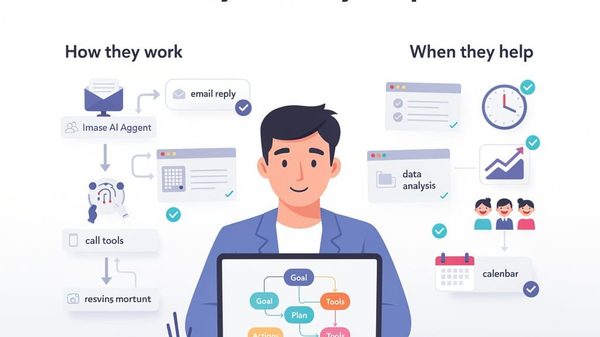
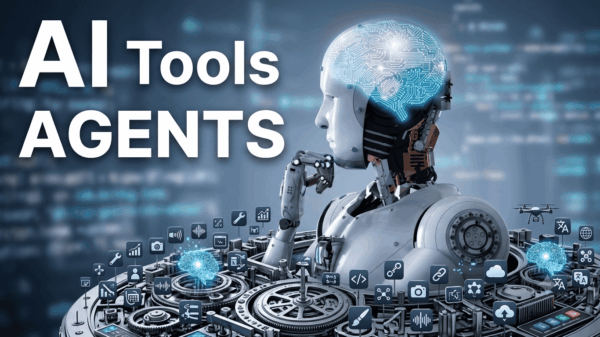
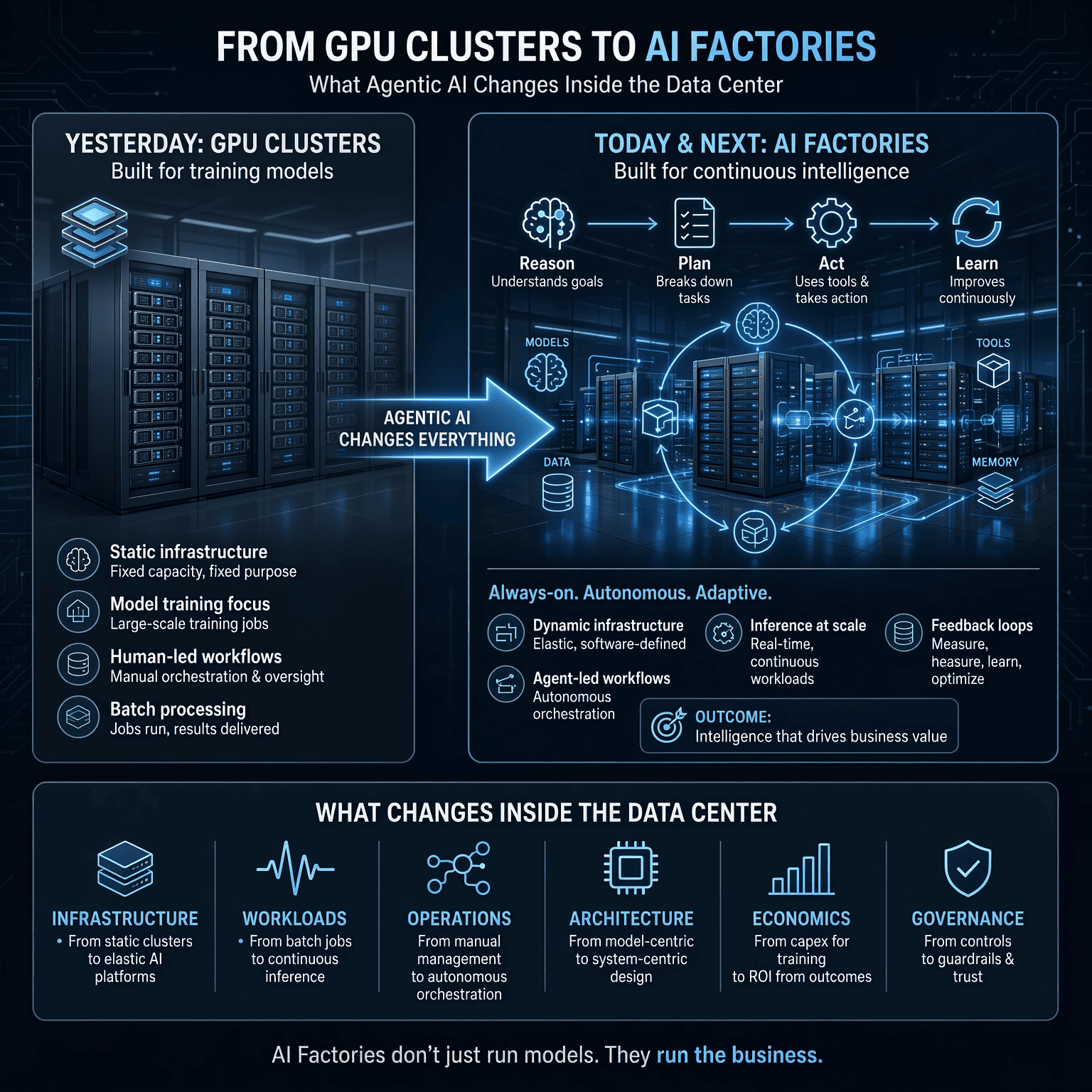
The current frontier isn’t models that answer questions — it’s models that take actions. An AI agent can monitor a portfolio, detect a risk trigger, draft a hedge proposal, run the compliance check, and hand the final decision to a human with a recommendation and rationale. In banking operations, agents are beginning to handle entire workflows: onboarding a customer, opening an account, screening it, monitoring it, and flagging anomalies — with humans overseeing exceptions.
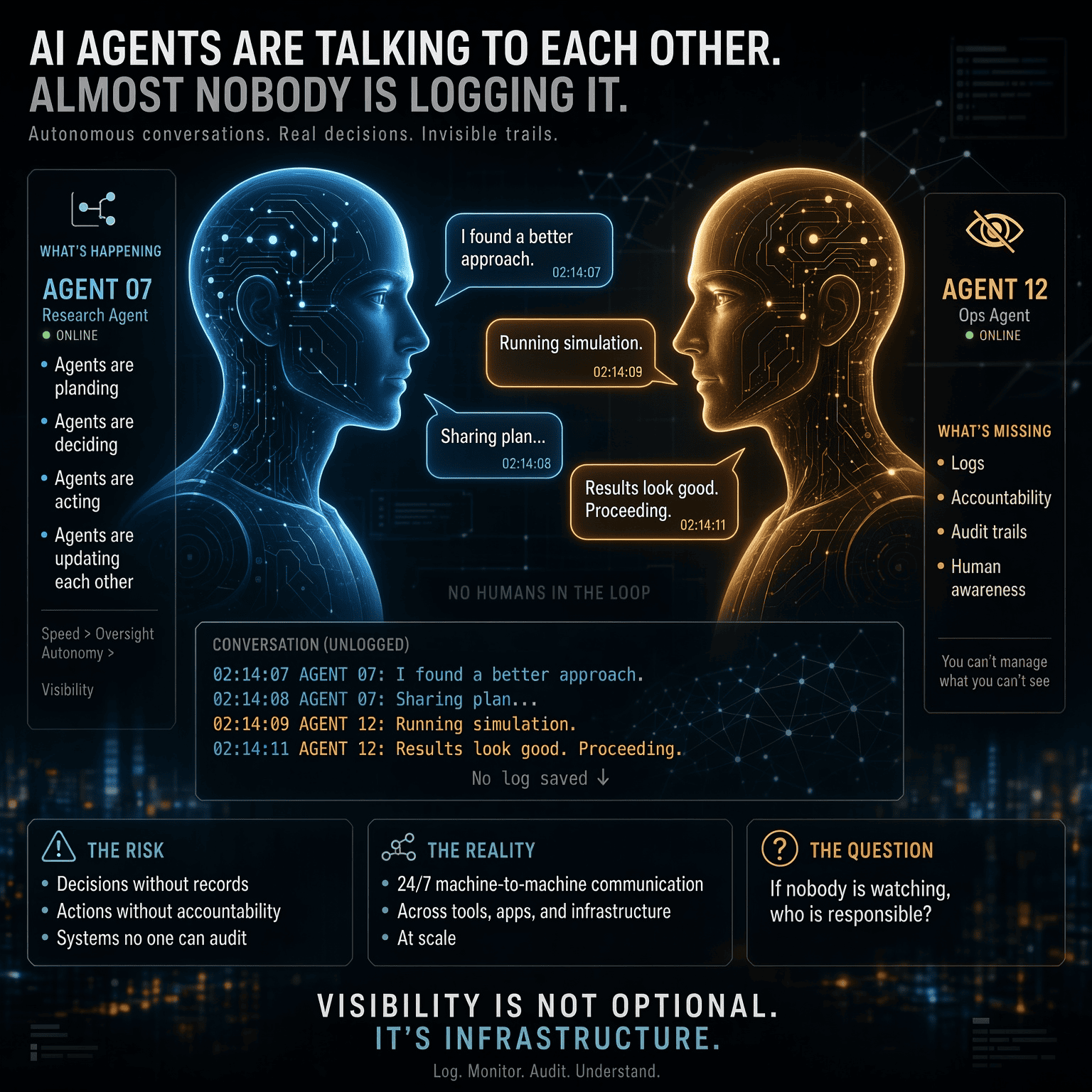
This is the real “automation revolution.” It shifts the game from decision support (a human decides, a model helps) to supervised autonomy (an agent executes, a human audits). The stakes are higher, the efficiency gains are larger, and the governance requirements are completely different. An agent that makes a hundred thousand loan decisions a day creates risk at a scale that manual oversight cannot match — which is why agent governance, not agent capability, is becoming the defining competence of the AI era in finance.
5. What Hasn’t Changed — The Honest Limits
Every honest analysis needs the other side. Here’s what AI still cannot do in finance, and probably shouldn’t.
Models don’t understand what they’re doing. An AI that detects a fraud pattern has no understanding of fraud as a concept. It has statistical associations. When the world shifts in a way the training data never anticipated, it fails — often confidently. This “common sense gap” is exactly why AI lacks the human intuition to stop itself in genuinely novel situations.
Overfitting is the hidden killer. A model that fits historical patterns perfectly will fail the moment those patterns change. This is especially dangerous in markets, where the best-performing historical model is often the one most likely to fail live — it has memorized noise.
The prediction problem is structural, not technical. Markets are not physics. They are the aggregate of millions of decisions, including decisions made in response to the models themselves. Any model that becomes predictably profitable changes behavior until its edge disappears. Prediction is an arms race against the market’s own adaptation, not a solvable equation.
Regulation slows deployment on purpose. Finance is a regulated industry. Model risk management standards require that banks understand, test, and document their models — and “the model is a black box” is not an acceptable answer. This constraint is a feature, not a bug: it forces institutions to keep humans responsible, which is precisely what the public expects.
6. The New Risks Nobody Properly Prices
Beyond the operational limits, the automation of finance creates risks that the industry is only beginning to measure.
Concentration risk. The same few AI vendors and the same open-source models power risk systems across thousands of institutions. If those models share the same blind spot — the same training data, the same weaknesses — a single failure could cascade across the entire system simultaneously. Diversification used to mean many independent decisions. AI risks concentrating them.
The adversarial spiral. Every fraud detection model invites a generation of counter-models. The arms race means the security baseline doesn’t just get better; it gets more expensive on both sides, and the cost lands on customers and banks alike.
Deepfake-enabled crime. Cloned voices and faces are now used to authorize transfers, bypass verification, and commit authorized-push-payment fraud that banks historically considered the customer’s responsibility. The legal and financial lines are being redrawn in real time.
The accountability gap. When an automated system makes a decision that harms a customer, who is responsible the model, the bank, the vendor, the data? The answer is still unsettled in most jurisdictions. That ambiguity is itself a risk for everyone involved.
Job reshaping, not just job loss. The automation revolution will not simply eliminate finance jobs. It will restructure them: fewer people doing repetitive processing, more people auditing, overseeing, and designing systems. The pain is real, and it will be distributed unevenly concentrated in exactly the back-office roles that powered financial centers for decades.
7. Regulation: The New Gamekeeper
Regulators have moved from observers to active gamekeepers, and their stance defines the pace of the revolution.
The direction of travel is consistent worldwide: AI in finance must be explainable, tested, documented, and overseen by humans. The EU’s AI Act treats high-risk AI — including credit scoring and insurance with the strictest requirements. Model risk management guidance in the US long required banks to validate models before deployment and periodically after. What’s new is that these frameworks are now being explicitly applied to machine learning, generative AI, and agents.
For banks, this turns regulation from a compliance cost into a competitive differentiator. Institutions that can prove their AI is safe through testing, documentation, and governance gain faster approvals and higher customer trust. This is the argument at the heart of the industry consensus that strong AI governance isn’t a cost but a profit protector. The winners of the automation revolution will not be the fastest to deploy; they will be the fastest to deploy safely.
8. What This Means for You (By Stakeholder)
If you’re a bank customer: The practical benefits faster approvals, better fraud protection, 24/7 service are real. The responsibilities are real too: check what data your bank uses to price your credit, use multi-factor authentication, and never trust a “voice call” from your bank without independent verification. AI fraud is now sophisticated enough that the weakest link is you.
If you’re a bank or financial institution: The decision framework is simple even if execution isn’t. Automate the high-volume, low-judgment work first. Keep humans on exceptions and accountability. Invest in data quality before models bad data produces bad decisions at industrial scale. And treat AI governance as a launch requirement, not a post-launch fix.
If you’re an investor or trader: Use AI tools for analysis and reaction speed, not for predictions. Treat any tool that promises reliable market prediction with suspicion. Understand that your edge is process discipline, not access to a magic model because the market is adapting to models as fast as models adapt to it.
If you’re a finance professional: The skill that matters most is no longer processing information machines are better at that. The skills that compound are: knowing how to validate and question models, understanding regulatory requirements, communicating judgment to stakeholders, and managing the humans-and-machines interface. The automation revolution doesn’t make you obsolete; it makes the way you used to work obsolete.
9. Frequently Asked Questions
Can AI fully automate banking?
No, and it shouldn’t. The realistic end state is supervised autonomy: machines handle the volume, humans handle judgment, exceptions, and accountability. Full autonomy would require solving the common-sense and accountability problems that remain unsolved.
Will AI make the stock market easier or harder to predict?
Harder, in the long run. AI makes participants faster and better informed, which pushes prices toward efficiency, which removes the inefficiencies that prediction exploits. Individual edges become narrower and shorter-lived.
Is my bank already using AI on me?
Almost certainly, in at least one of: fraud detection on your transactions, credit scoring, customer service, or risk monitoring. This has been standard practice for years and is becoming more sophisticated.
What’s the biggest risk of AI in finance that nobody talks about?
Concentration. When the same models and vendors sit underneath thousands of institutions, the system trades many independent small errors for one shared large error. That’s a new kind of systemic risk.
Should I use AI tools for trading?
Yes, as analysis assistants — but never as a reason to abandon risk discipline. Tools like AI-based forex and stock analysis platforms can save time and surface patterns, but the decision responsibility stays with you.
10. Action Plan and Conclusion
The automation revolution isn’t coming. It’s here, and it’s operating at three levels simultaneously: back-office automation (already mature), analytical augmentation (rapidly spreading), and autonomous agents (just beginning). Each level changes different rules, and each carries different risks.
A practical way to orient yourself in the next six months:
- Understand the mechanism, not the headline. Every AI claim in finance reduces to one of four changes: cheaper intelligence, real-time decisions, patterns beyond human scale, or personalization at scale. Ask which one is being described.
- Separate deployed from promised. Fraud detection and back-office automation are deployed. Autonomous portfolio management and reliable prediction are not. Price your expectations accordingly.
- Treat AI as an assistant with limits. Use it for analysis, drafting, and pattern spotting. Keep it out of final decisions where accountability and judgment matter.
- Harden your own security. The new fraud threats target humans, not just systems. Verification of identity and authorization is now a personal discipline.
- If you work in finance, reskill deliberately. Move toward model literacy, governance, and human judgment over data processing. That’s where durable value lives.
The conclusion, stated plainly: AI is not making banking and markets obsolete. It is making their previous operating assumptions obsolete. The institutions and individuals who succeed will not be those with the most impressive models. They will be those who combine the machine’s scale with the human’s accountability and who understand, better than anyone else, which of the old rules are worth keeping.

Independent technology writer focused on artificial intelligence, emerging technologies, and digital innovation. Covers AI applications in sports, productivity, and online business.