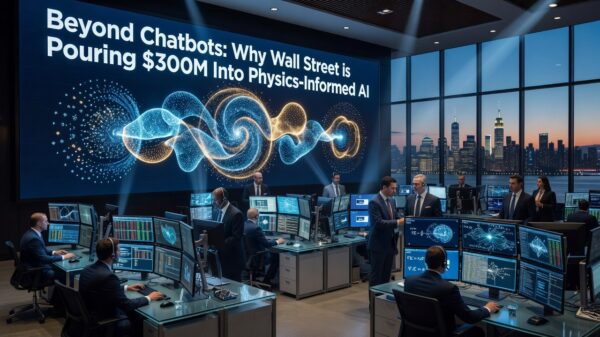






























A Formula 1 team has minutes between practice sessions to change a wing, simulate it, and decide. There’s no “tomorrow.” The tolerance for slow computation is zero. That’s the world PhysicsX was born in — and it’s now selling that speed to everyone else.
The London company just closed a $300 million Series C at a $2.4 billion valuation, led by Singapore’s Temasek with NVIDIA, Siemens, and Applied Materials in the room. But the money is beside the point. What matters is what it’s buying: a machine that compresses engineering simulations from weeks to seconds. Not by accelerating the old solvers. By replacing the bottleneck itself.
The Bottleneck Nobody Talked About
For decades, engineering has run on a brutal trade-off. Tools like ANSYS, COMSOL, and OpenFOAM are enormously accurate — and enormously slow. A single computational fluid dynamics run on a new wing design can eat hours or days. Test fifty variants, and you’ve burned a month before a single prototype exists. So engineers don’t test fifty. They test three, choose the least-bad, and hope.
That’s the quiet tax on every physical product you’ve ever used. The car’s aerodynamics, the turbine’s blade shape, the semiconductor’s heat management — all of them were designed within a compute budget that forced engineers to stop asking “what’s best?” and settle for “what’s fast enough?” PhysicsX co-founder Jacomo Corbo, who built McKinsey’s QuantumBlack AI unit, puts it bluntly: almost every hard problem in the physical economy comes down to how quickly engineers can work through the underlying physics. For decades, that’s been the binding constraint on hardware innovation.
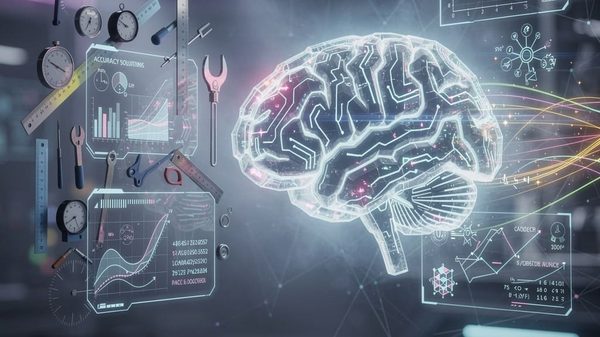
PhysicsX’s answer is what it calls Large Physics Models — neural networks trained on the outputs of those classical solvers, learning to predict aerodynamics, heat transfer, and structural stress without re-running the math. Once trained, the model answers in seconds what a solver took days to compute. The company claims verified speedups of 10x to 100x on benchmark cases. In motorsport terms, engineers go from three design iterations per session to thousands.
The F1 pedigree isn’t a branding choice; it’s the design brief. Founder Robin Tuluie was head of R&D at Renault’s Alpine F1 team, where simulation latency is the difference between a podium and a pit wall that made the wrong call. The pressure of that environment is what shaped the product — models reliable enough to make real-world design decisions, not just publish academic papers.
The Smart Part Is What It Doesn’t Replace
Here’s where PhysicsX is more interesting than the usual “AI does everything faster” pitch.
The models — Large Physics Models and Large Geometry Models, trained exclusively on each customer’s own data — don’t run in isolation. The platform orchestrates a hybrid: AI inference for speed, classical solvers for precision, with the system choosing the fastest path based on the required accuracy. For early design exploration, where you need directionally correct answers now, the AI handles it. For final sign-off simulations, where regulators want a certification-grade audit trail, the classical solver still runs.
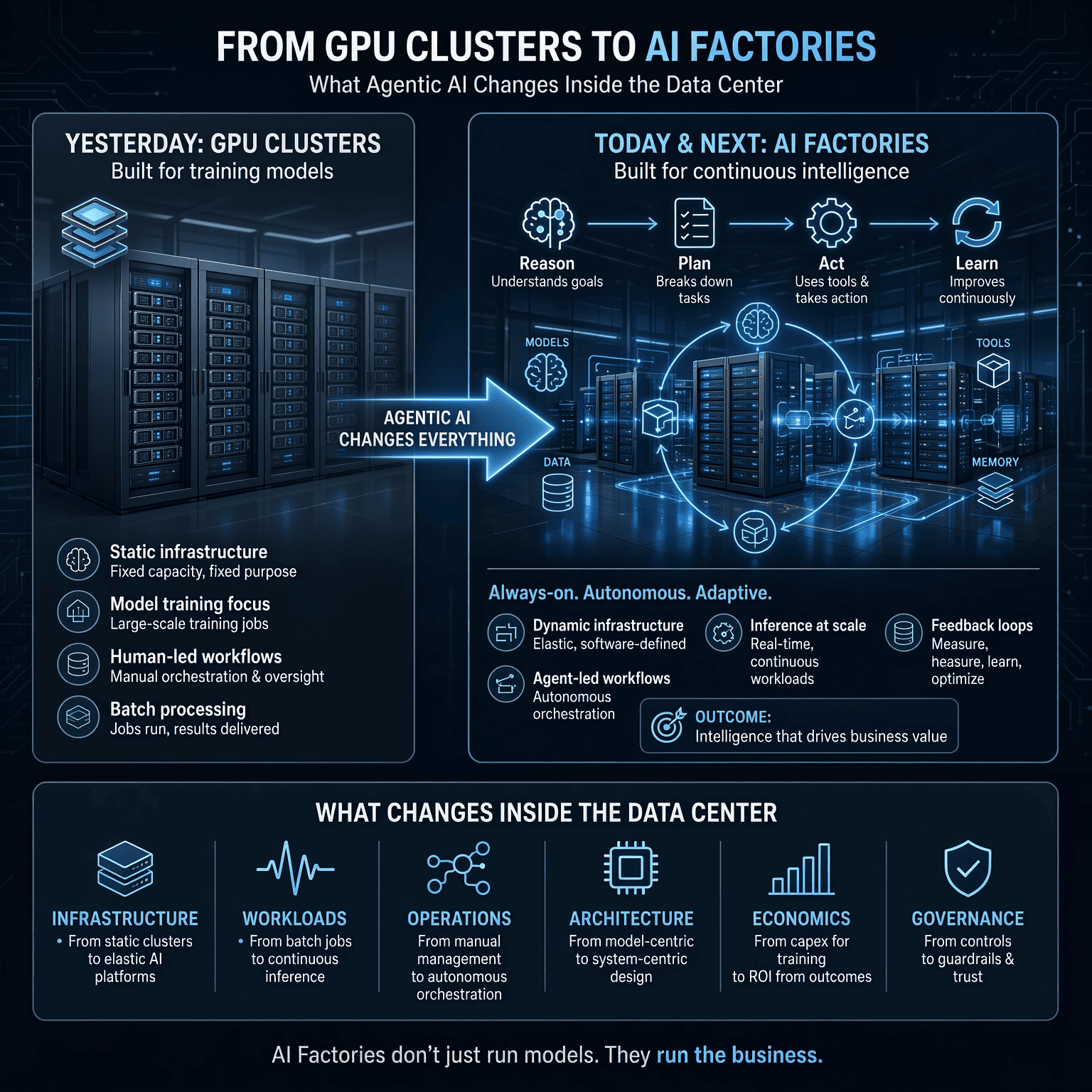
That distinction is the entire business model. PhysicsX integrates directly into ANSYS, Siemens NX, and OpenFOAM workflows rather than asking engineers to abandon them. Siemens embeds the models inside its own Simcenter suite. NVIDIA provides the GPU acceleration through its PhysicsNeMo framework. The compute muscle underneath is the same one powering the wider AI boom — the GB200-era hardware that most teams still don’t know how to use — and that shared infrastructure is exactly why physics AI is viable now and wasn’t three years ago.
The market math explains the valuation. Engineering simulation software is a $26.5 billion business growing toward $70 billion by 2033, and the physics-AI slice is expanding faster than the rest of it combined. This is the same “physical AI” wave Hyundai is betting its robotics strategy on — models that understand how the real world bends, heats, and flows, rather than how language works.
The Catch in the Fine Print
Now the part the press release leaves out, because it’s important and nobody wants to hear it.
These models learn from simulation data — which means they inherit every blind spot the classical tools ever had. A neural network can falter on extreme or novel boundary conditions, the exact cases where a design is most likely to break. In aerospace, medical devices, or nuclear plants, “the AI said it’s fine” is not a certification. That’s why the hybrid approach exists, and why PhysicsX ships uncertainty quantification as a first-class feature rather than an afterthought. The models tell you when they’re guessing. Whether engineers listen is another matter.
There’s also the data question. The training moat is customer-owned data, which is both the strength and the ceiling. Customers who don’t share data get weaker models; customers who do, hand over their most valuable engineering IP. The classic bargain of the cloud era, wearing an industrial coat. And the incumbents — ANSYS, Dassault, Siemens themselves — are watching. PhysicsX’s edge today is that it treats AI as the core primitive rather than an add-on, but the companies that survive the AI transition in production engineering are the ones that understand the gap between a demo and a certified workflow.
What Comes Next
For engineers, this is the biggest shift since CAD went digital: the ability to explore thousands of designs instead of a handful. For everyone else, it means products that are lighter, quieter, cheaper, and lower-emission — because the constraints that made them “good enough” are dissolving.
The honest timeline has a caveat. In safety-critical industries, physics AI will accelerate the exploration phase immediately and penetrate certification slowly, over years, as regulators build trust in the uncertainty estimates. In performance industries — motorsport, consumer products, renewable energy — it’s already here.
PhysicsX doubled its revenue, tripled its bookings, and more than doubled its customers in the last year. The Series C buys offices in the US and Singapore and bigger, pre-trained models. Whether $2.4 billion is the right number for a company that wants to compress the entire engineering process will be decided by the same market it’s trying to speed up.
One thing is already decided, though. The era where engineers waited weeks to learn if a design worked is ending. It was never a good use of their time. It was just all they had.

Independent technology writer focused on artificial intelligence, emerging technologies, and digital innovation. Covers AI applications in sports, productivity, and online business.