





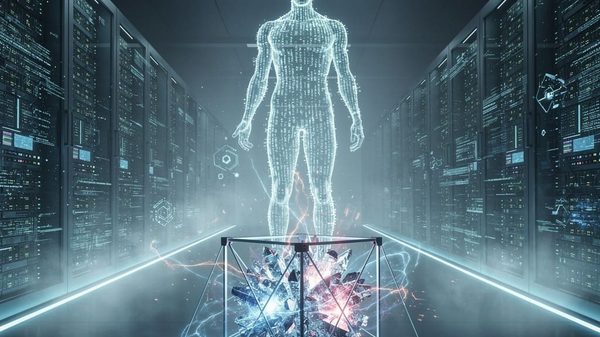







Here’s the dirty secret of digital twins for the past twenty years: they weren’t really twins. They were photographs.
A traditional digital twin — a virtual replica of a jet engine, a factory floor, or a wind farm — was built with the same slow simulation tools that have shaped industrial design for decades. A run took hours or days. By the time the twin finished telling you what was happening, the real machine had moved on. It was a mirror, sure. Just a mirror that was always late.
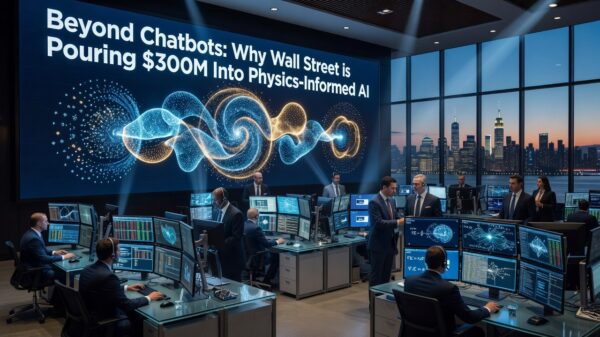
That lag is finally gone. The same physics AI that compressed engineering simulation from weeks to seconds — the wave PhysicsX is riding on the back of its $300 million Series C — has given digital twins something they never had: the ability to keep up with reality. And a twin that can keep up changes what the technology is actually for.
What “Live” Actually Changes
Think about what a digital twin is supposed to do. It’s not decoration. It exists so you can ask a machine questions without touching it: Is this engine going to fail before the next inspection? What happens to output if we raise the furnace temperature 2%? Which of these twenty settings produces the least scrap?
With a slow twin, those questions took days to answer — which meant you could only ask them during planned downtime, about systems that weren’t in motion, using data that was already stale. The technology earned a reputation as an expensive slide deck. Companies built twins, showed them off, and parked them.
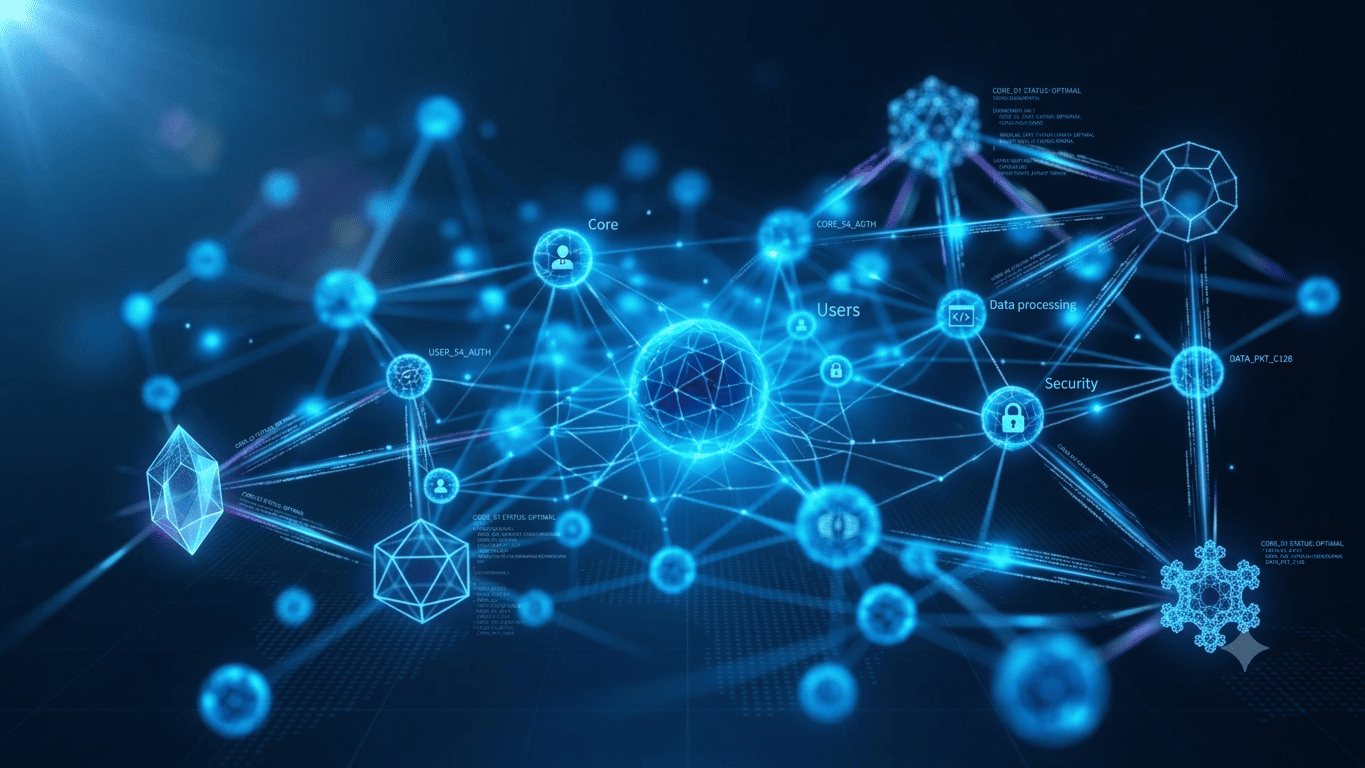
Live physics changes the transaction. When simulation runs at inference speed — seconds instead of days — the twin stops being a snapshot and becomes a companion that updates as the machine breathes. It ingests the sensor stream, runs thousands of “what-if” scenarios in the background, and flags the answer before you’ve finished forming the question. That’s not an improved version of the old tool. It’s a different tool.
The Keep-Up Problem
The technical story is simple, and it’s the whole trick: the models that made this possible are trained on the outputs of the classical solvers, then run fast enough to track reality in real time.
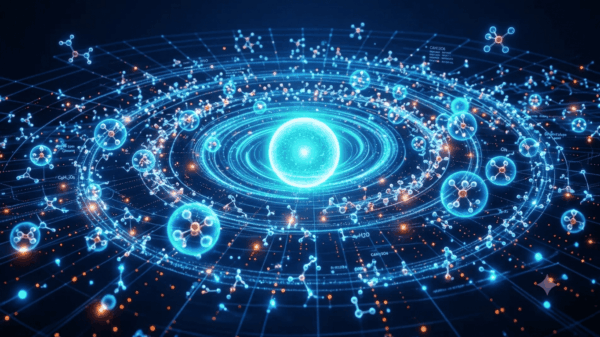
PhysicsX’s Large Physics Models learned from millions of historical simulation results — the accumulated output of decades of CFD and FEA runs that had been sitting unused on engineering servers. Once trained, they predict aerodynamics, heat transfer, and structural stress at 10x to 100x the speed of the original tools. That’s the difference between a twin that updates every second and a twin that updates every Tuesday.
The engineers were careful about how they shipped it, which is worth noting. The models don’t run alone in mission-critical settings. The platform orchestrates a hybrid — AI inference when speed matters, classical solvers when precision demands the full physics, with uncertainty quantification telling the operator when the model is beyond its training envelope. It’s the difference between a racing driver and a passenger: the AI drives, but it’s honest about the road it’s never seen.
That honesty is what makes live twins deployable in the places that matter. Nobody’s putting a machine that can’t say “I’m guessing” in charge of a power plant.
Where Live Twins Start to Earn
Predictive maintenance is the obvious first market, and it’s where the payoff is most immediate. A jet engine emits a vibration signature; the twin matches it against thousands of simulated failure modes and predicts the part that will fail, and roughly when, before it does. Airlines schedule the replacement instead of the grounding. That single workflow — predicting failure instead of reacting to it — pays for the technology by itself.
The factory floor is the bigger prize. A live twin of a production line can run thousands of “what if” scenarios while the line is running, adjusting parameters in simulation first and applying only the winners to the real machine. Yield improves, scrap falls, and the plant never stops. That’s not a design tool anymore — that’s operations software wearing a physics engine underneath. The same logic is pulling physical AI into robotics, where a model that can simulate a manipulation task in milliseconds is what separates a robot that adapts from one that repeats a script.
Then there are the quiet, high-stakes applications. Medical device companies are using these models to design and monitor artificial hearts — where the physical test can’t be rerun, so the simulation has to be right. Wind farms use live twins to adjust blade angles to turbulence the turbines haven’t hit yet. In each case, the pattern is identical: the twin earns its keep by being present, answering in real time, not by being accurate on Tuesday.
Underneath all of it is a compute reality worth remembering. A live twin running continuously is a permanent inference workload — thousands of model calls per minute, forever, per asset. That’s exactly the kind of always-on demand driving the buildout of AI-specific hardware and the infrastructure that powers it. The digital twin boom is, quietly, another cog in the machinery pushing megawatt demand higher.
The Candid Part
Before you buy the whole vision, sit with the parts that don’t fit.
Live twins are only as good as their sensor feed. A factory without instrumented machines gets a twin that’s simulating in a vacuum — polished physics pretending to be telemetry. The gap between “we have a live twin” and “our twin sees what we see” is a retrofit project measured in years and millions. Data quality is the quiet tax on all of this, and it’s paid in plant floors, not code.
The trust problem hasn’t been solved, either — it’s been managed. Regulators still want audit trails for anything that touches safety. The uncertainty estimates that make PhysicsX’s models deployable also mean the twin will occasionally say “I don’t know” at exactly the moment operations wants a number. That’s the price of honesty, and it’s worth paying. The companies that actually get production AI right tend to be the ones that treat the “I don’t know” as a feature, not a bug.
And there’s the IP bargain again, sharper than ever in the live-twin world. The twin is trained on your data, runs on your machines, and knows your operation better than your own engineers do — but it’s served by a third party’s platform. The more valuable the twin, the more leverage that arrangement hands the vendor. It’s a trade, and the terms are still being written.
The New Default
Digital twins don’t have to be perfect to win. They have to be now. And for the first time, they are.
The version of this technology that survives won’t be the one that produces a beautiful, accurate model of your factory once a quarter. It’ll be the one that sits beside the machine, watching in real time, answering in seconds, and being honest about what it doesn’t know. Live physics made the twin a tool instead of a slideshow.
That’s the real product of the AI simulation wave. Not faster engineering. Present engineering.
Source: PhysicsX — $300M Series C announcement

Independent technology writer focused on artificial intelligence, emerging technologies, and digital innovation. Covers AI applications in sports, productivity, and online business.