





















The case has been called. Before a jury of Android users, two claims face each other. One side says the app — that familiar grid of icons, the fifty-button home screen, the ritual of opening one tool per task — is a dying format. The other says it’s as permanent as the phone itself. The question isn’t academic: it decides what developers build, what users install, and what the home screen of 2027 looks like.
Let’s examine the evidence, hear both sides, and reach a verdict. Predictions ahead are clearly labeled as such — the facts come first.
The evidence: what actually happened
Start with what shipped, because the two sides argue from the same facts.
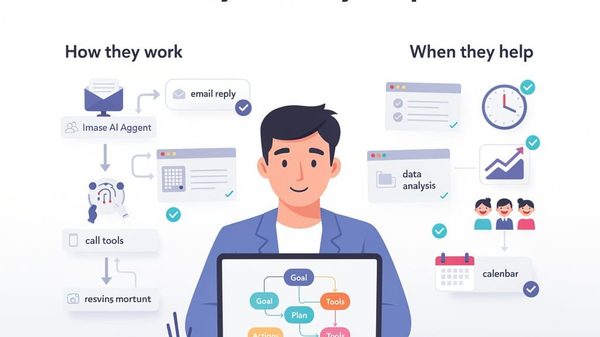
In February 2026, Google announced AppFunctions, a new Android capability that lets apps describe their own features so AI agents can call them directly. Google’s own framing was blunt: success is no longer measured by how many users open your app, but by how well your app fulfills a task — even when the user never touches your interface. The company called the shift, without irony, the “intelligent OS.”
The rest of the year filled in the direction. Gemini completed its takeover as the default system assistant on most devices. OpenClaw, the open-source assistant, released its official Android app in June, letting users control their own device-and-service gateways in plain language. Standalone AI apps — ChatGPT, Claude, Copilot, Perplexity — settled into a role that quietly subsumes entire app categories: translation, calculators, note-taking, research, writing, image editing.
These are the facts. Now the arguments.
The prosecution: “The app is dying”
The case for replacement starts with an observation about behavior: people don’t want apps. They want outcomes. Nobody opens a “ticket app” for the joy of it — they want to book the flight. When the assistant can book it, the app becomes a detour.
The first argument is interface obsolescence. Every layer of software that acquired a better interface lost its primacy to it. The browser turned desktop programs into web pages. Search turned browsing into asking. Now the assistant turns apps into services. AppFunctions is the mechanism: your app stops being a screen you navigate and becomes a function another program calls. The icon becomes optional.
The second argument is subsumption. The generalist agents are already swallowing the specialist tools. A single AI app now replaces a dozen single-purpose apps — and it improves weekly, while the single-purpose apps stand still. When the generalist is good enough, the specialist app has no reason to exist.
The third argument is economics. If an agent can build and operate a capability for you, why would you install anything? The barrier to “making an app do something” is collapsing on both sides — for users, who delegate; and for builders, who generate apps from a description. The app store, in this telling, becomes a relic of the install-and-own era.
And the fourth: momentum. Google is not hedging. Every platform decision in 2026 — AppFunctions, the assistant-first home screen, on-device agent infrastructure — assumes a future where the agent is the front door. The party with the most at stake has already picked a side. The prosecution rests.
The defense: “The app is not going anywhere”
The case for preservation is less dramatic and more grounded in physics.
The first argument: an agent is only as capable as the apps it calls. AppFunctions doesn’t replace apps — it requires them. An agent that books a flight, edits a photo, or moves money needs the app to exist behind it, exposing the function, holding the credentials, managing the security. The agent is a layer on top of the app economy, not an alternative to it. Strip away the apps and the agent is an empty voice.
The second argument: capability. Specialist tools are not interchangeable with generalists. The camera, the professional editor, the game, the banking app — these demand precision, offline reliability, and access to hardware that a conversational assistant handles poorly. The generalist is getting better; it is not getting better at everything. The high-stakes apps will stay app-first because trust and security demand it.
The third argument: the economics cut both ways. Apps are how developers get paid. The store, the subscriptions, the in-app purchases — the entire revenue structure of mobile runs through the app. A platform that destroyed its own app economy would be dismantling its own store. And users, in practice, still install apps. Habits are stickier than interfaces.
The fourth: agents are still early and still wrong. Hallucinations, misunderstood instructions, and irreversible actions made in confidence are the honest reality of 2026 agents. Nobody delegates their banking to a system that occasionally confabulates — yet. Until that trust problem is solved, the app remains the reliable fallback, and “reliable fallback” is a powerful thing to be. The defense rests.
The verdict: it’s not replacement — it’s demotion
Both sides are right, and both are wrong, because “replaced” is the wrong word.
The app is not dying. The app’s interface is being demoted. The home screen loses its role as the front door; the agent takes over that position. But behind the front door, the apps remain — as the capability layer, the plumbing, the things the agent reaches into when you ask. The pattern is not new. Search didn’t kill websites; it became their front door, and the sites remained the destination. The agent will do the same to apps: it becomes the doorway, the app stays the building.
The meaningful prediction — flagged as such — is that the two coexist in a reshaped hierarchy:
- The agent becomes the discovery and command layer. You ask, it does, and it calls apps you never open.
- Apps become the execution layer. The winners are the ones that make themselves agent-accessible: exposing clean functions, secure APIs, and reliable behavior behind the scenes.
- A split appears in the app economy. High-stakes apps (banking, health, hardware control) stay icon-first, because trust beats convenience. Commodity apps (converters, translators, note takers) quietly vanish — absorbed into the assistant, not replaced by a rival app.
The first mover signs of this split are already visible in how Google’s agent strategy is redefining “let me control it” vs. “do it for me”, and in how AI agents are already reshaping entire industries from the inside.
What happens next
Short term — the present — is hybrid. You open apps for real work; you delegate low-stakes tasks to the assistant, and it calls apps for you. Nobody feels replaced; everyone feels slightly more efficient.
Medium term is where the shape becomes visible. More apps expose agent interfaces, store listings add “agent-ready” signals, and the most useful apps are the ones that make themselves easy to summon rather than easy to browse. Building an app — or simply generating one from a description, without writing code — gets cheaper, which accelerates the churn of commodity apps.
Long term is where the honest uncertainty lives. It is genuinely unclear how far the delegation model goes — whether users ever trust agents with money and health decisions, or whether the icon-first app survives as a permanent mode alongside the agent-first one. What is clear is that the question is no longer “if” the interface changes. It’s how fast trust catches up with capability.
Your move
For users, the practical answer is unglamorous: keep the essential, high-stakes apps installed; experiment with delegation for everything low-stakes; and treat “the assistant did it” the way you’d treat any junior colleague — verify the important parts. The must-have Android apps list is still worth keeping, because the app era hasn’t ended — it’s just learning to speak.
For developers, the direction is clearer than it feels: build apps that agents can call as easily as users can open. The ones who master the backend — reliability, security, clean interfaces for machines — inherit the future regardless of whether the icon survives.
Closing statement
The app was never the product. The capability was. For fifteen years, the icon was the only door, so we confused the door with the room. The agent era is simply a second door, and eventually a better one. The apps that matter will not be replaced — they will be reached differently. And the ones that don’t matter were always going to disappear, agent or no agent.
So: are traditional apps being replaced? No. Their monopoly on your attention is.

Independent technology writer focused on artificial intelligence, emerging technologies, and digital innovation. Covers AI applications in sports, productivity, and online business.