

















The Email I Spent Two Hours Avoiding
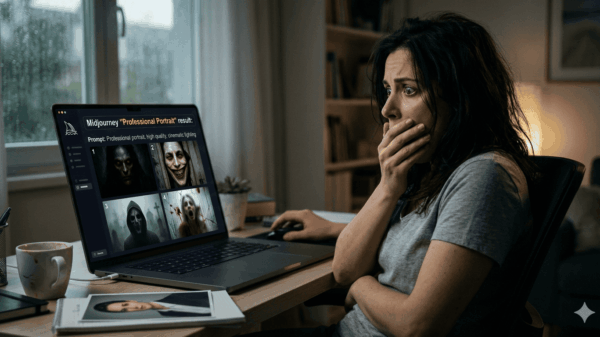
There was a message I needed to send for almost a week. Not complicated—just a no. A client wanted to extend a contract I was already mentally checked out of. Every morning I’d open my drafts folder, write three versions, delete them, and tell myself I’d do it tomorrow.
The problem wasn’t the words. It was the calibration. Too cold and I’d seem dismissive. Too warm and I’d invite negotiation I didn’t want. The perfect email, I thought, required perfect tone, and I couldn’t find it.
So I didn’t send it. For six days.
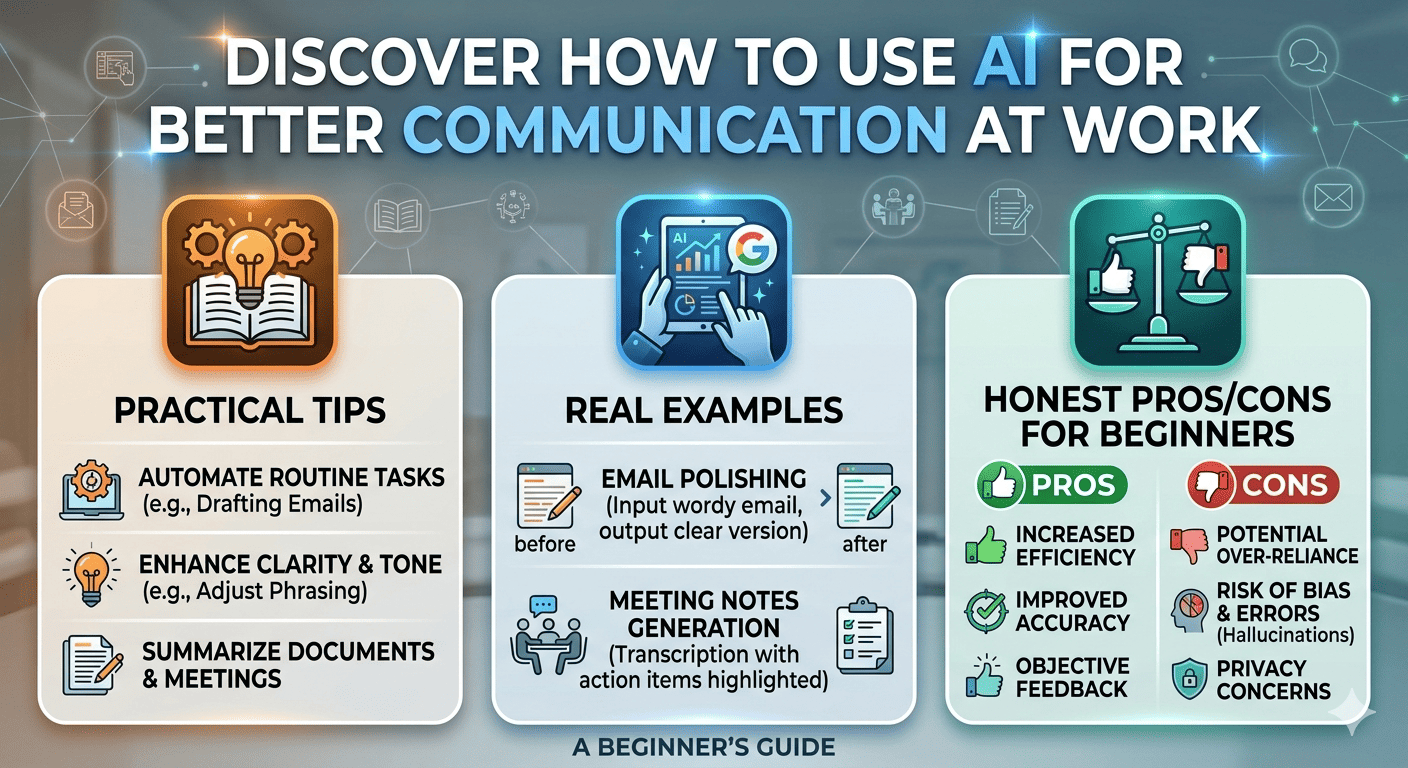
Eventually, I used an AI tool to draft the email—not because I couldn’t write it myself, but because I couldn’t get out of my own head long enough to try. I described the situation, the relationship, what I wanted to preserve and what I wanted to end. The tool gave me something that said exactly what I meant in about thirty seconds.
I sent it. It worked. The client was fine. The work ended cleanly. I spent six days anxious about something that took thirty seconds.
I tell this story because I think it captures something true about how AI is changing communication—something more subtle than “now you can write faster.” What I was doing wasn’t writing. It was avoiding. And AI doesn’t just make writing easier. It sometimes makes the hard parts of communication less hard.
That’s worth thinking about.
The Boring Revolution Nobody Announced
Every article about AI and communication says the same thing: it’s changing everything, it’s scary, it’s exciting, it will never be the same.
I’m not going to say any of that. I want to say something specific.
What AI has actually done, in my experience and in the lives of people I know, is lower the activation energy for difficult communication. That’s it. That’s the change.
The emails people used to avoid sending. The difficult feedback they used to put off. The drafts that never got written because the first version was never good enough to iterate from. The messages in languages they weren’t confident writing. The professional emails to people they didn’t know how to approach.
This is happening quietly. Not through some transformative new interface, but through a small button that says “help me write this” that increasingly appears in the apps we already use. Most people I know have used it without thinking much about it. They’ve also started depending on it without admitting it.
Language Is No Longer a Wall (For Better and Worse)
I used to watch colleagues struggle with English in meetings—brilliant engineers, sharp thinkers, reduced in group discussions to one careful sentence while faster native speakers dominated. They knew what they wanted to say. They couldn’t say it at the speed they thought in.
Now I watch those same people use translation and writing tools in real-time, in calls, in documents. The conversation changes. Suddenly they’re not translating—they’re participating. The gap closes.
This is real and it matters. But here’s what nobody discusses: the walls were also protecting something. The effort of learning a language forces a kind of deep engagement that fluency shortcuts. When you have to work for every conversation, you absorb more. You notice patterns. You develop ear for nuance that AI translation, however good, doesn’t always capture.
I’ve worked with people who speak English as a second language and I’ve noticed: the ones who learned it by immersion, by struggle, write differently than the ones who now rely on AI to bridge the gap. Neither is better. But they’re not the same.
The Voice That Disappeared
My daughter sends me voice notes now. Thirty seconds, a minute, sometimes longer. I notice I respond to them differently than I respond to texts. The voice carries tone, humor, frustration—the things that get lost in typing. The conversation feels more like conversation.
AI is starting to blur this. Real-time transcription and synthesis means meetings that used not to be documented now are. Calls that used to fade into memory now live in searchable text. The conversations we used to have to be present for, we can now review, summarize, act on after the fact.
On one hand, this is productivity. On the other hand, there’s something being lost. Presence used to matter because memory was unreliable. Now memory is outsourced. You can be in a meeting without being present because the transcript captures what matters.
I’ve caught myself doing this. Being physically in the room, mentally somewhere else, thinking “I’ll review the AI notes later.” The meeting happened. The conversation happened. I just wasn’t quite in it.
What This Is Actually Doing to Us
Here’s what I think, and I don’t think this is controversial but nobody says it plainly:
We are getting worse at certain kinds of communication because we don’t have to practice them the same way.
The calibration I described in that email—the careful weighing of tone, the emotional intelligence required to deliver unwelcome news without burning bridges—that’s a skill. Like any skill, it atrophies when you outsource it. The first time I used AI to draft a difficult message, it was a relief. The twentieth time, I noticed I hadn’t actually written a hard email without help in months.
I’m not sure if this is bad. I’m just sure it’s different. And different requires a decision. Do you want to maintain the skill? Then maintain the practice of doing hard things the hard way, at least sometimes. Do you want to accept that some cognitive load can be offloaded? Then accept that some capability goes with it.
Most people I’ve talked to about this want to have it both ways. Keep the skill and offload the work. That only works until you need the skill and don’t have it.
The Simple Part
Communication is just communication. It’s how we tell people things. How we learn what they mean. How we negotiate, persuade, connect, end things, begin things.
AI is making some of this easier, some of this lazier, some of this more accessible, some of this less human.
None of these changes are monolithic or irreversible. They’re happening gradually, tool by tool, decision by decision, draft by draft.
I still use AI to help with difficult emails. I’ve started doing something different: I write the first draft myself, then check what AI would have said. Not to use its version—to notice what I missed. The gap between my instinct and its output is usually revealing.
Sometimes it’s better. Sometimes it’s worse. Usually it’s different in ways that tell me something about what I was actually trying to say.
That’s the part worth keeping. Not the tool. The noticing.

Independent technology writer focused on artificial intelligence, emerging technologies, and digital innovation. Covers AI applications in sports, productivity, and online business.