





































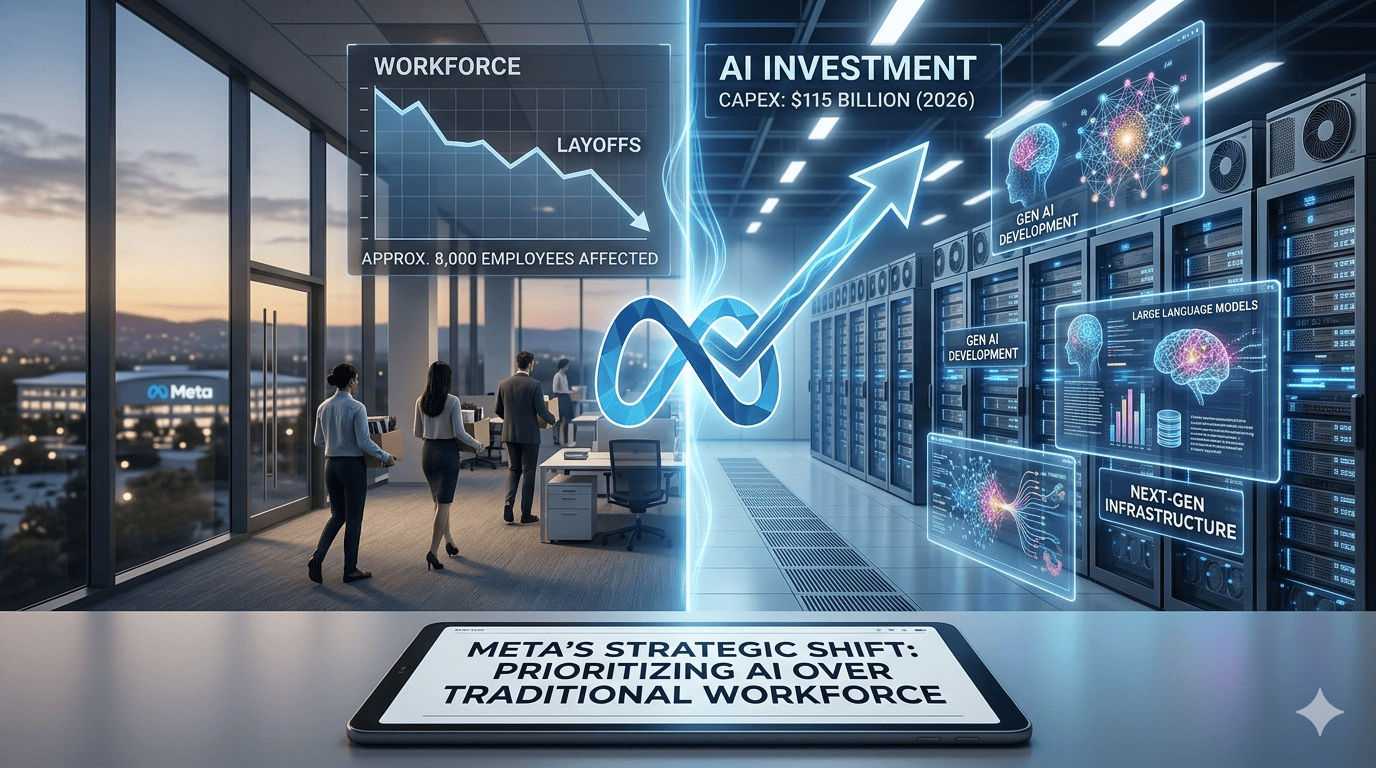

Meta announced it will eliminate approximately 6,000 jobs, according to a memo published by Bloomberg and confirmed by Meta.
The layoffs will take effect on May 20 of this year.
Meta, along with other tech giants, is a leading investor in artificial intelligence. The company spent $72.2 billion on capital expenditures in 2025, covering costs related to data centers and other AI infrastructure. This figure is expected to rise to at least $115 billion in 2026, according to Meta’s January earnings report.
The company has also invested heavily in attracting talent to its superintelligence lab and has acquired promising AI startups such as Multbook and Manos, as part of its ongoing efforts to compete with OpenA, Google, and Caplot. Shares of Meta Inc. (META) fell more than 2% on Thursday afternoon.
Meta (META) shares were down more than 2% on Thursday afternoon.
Many companies have cut their workforce over the past year, citing the potential of artificial intelligence to improve efficiency. Amazon announced in January that it would lay off 16,000 workers, its second major layoff in three months, emphasizing the need to increase efficiency. Financial technology company Block announced in February that it would lay off 40% of its workforce, more than 4,000 people, with a stark warning that other companies would follow suit.
Meta CEO Mark Zuckerberg hinted at the start of this year that the company, which has invested heavily in AI, could see workforce changes because of the technology. On Meta’s January earnings call, he called 2026 “the year that AI starts to dramatically change the way that we work.”
Meta said it will offer affected US employees 16 weeks of base pay along with two weeks for every year of employment, adding that international packages will be similar.
Like many big tech companies, Meta eliminated tens of thousands of jobs in 2022 and 2023, reductions that were largely attributed to right-sizing after Covid-era spikes in usage and hiring. Last year, the company said it would cut about 5% of what it called its “lowest performers,” although it planned to backfill many of those roles.
What this means for the Tech Industry
The latest round of layoffs at Meta highlights a deeper structural shift across the global technology sector. As artificial intelligence becomes more integrated into core business operations, companies are increasingly prioritizing automation, efficiency, and high-impact talent over large traditional workforces. This transition suggests that future tech employment may become more specialized, with fewer but more highly skilled roles driving product and infrastructure development.
At the same time, the growing investment in AI infrastructure signals a long-term competition among major tech firms to dominate the next generation of computing. Reports from Bloomberg and details from Meta’s internal memo indicate that cost-cutting is not a retreat from growth, but rather a strategic reallocation of resources toward artificial intelligence and advanced computing systems.
Overall, this trend suggests that the tech industry is entering a new phase where workforce size is no longer the primary indicator of company strength—AI capability, infrastructure scale, and engineering efficiency are becoming the key competitive factors.

Independent technology writer focused on artificial intelligence, emerging technologies, and digital innovation. Covers AI applications in sports, productivity, and online business.