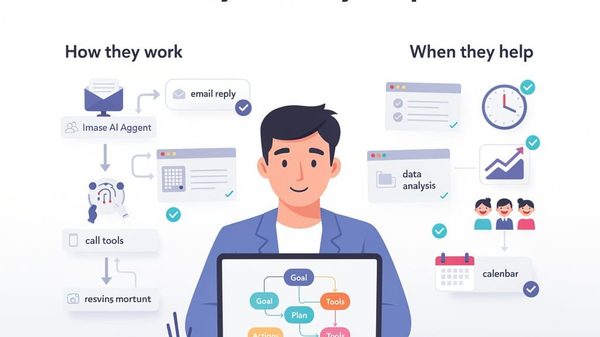


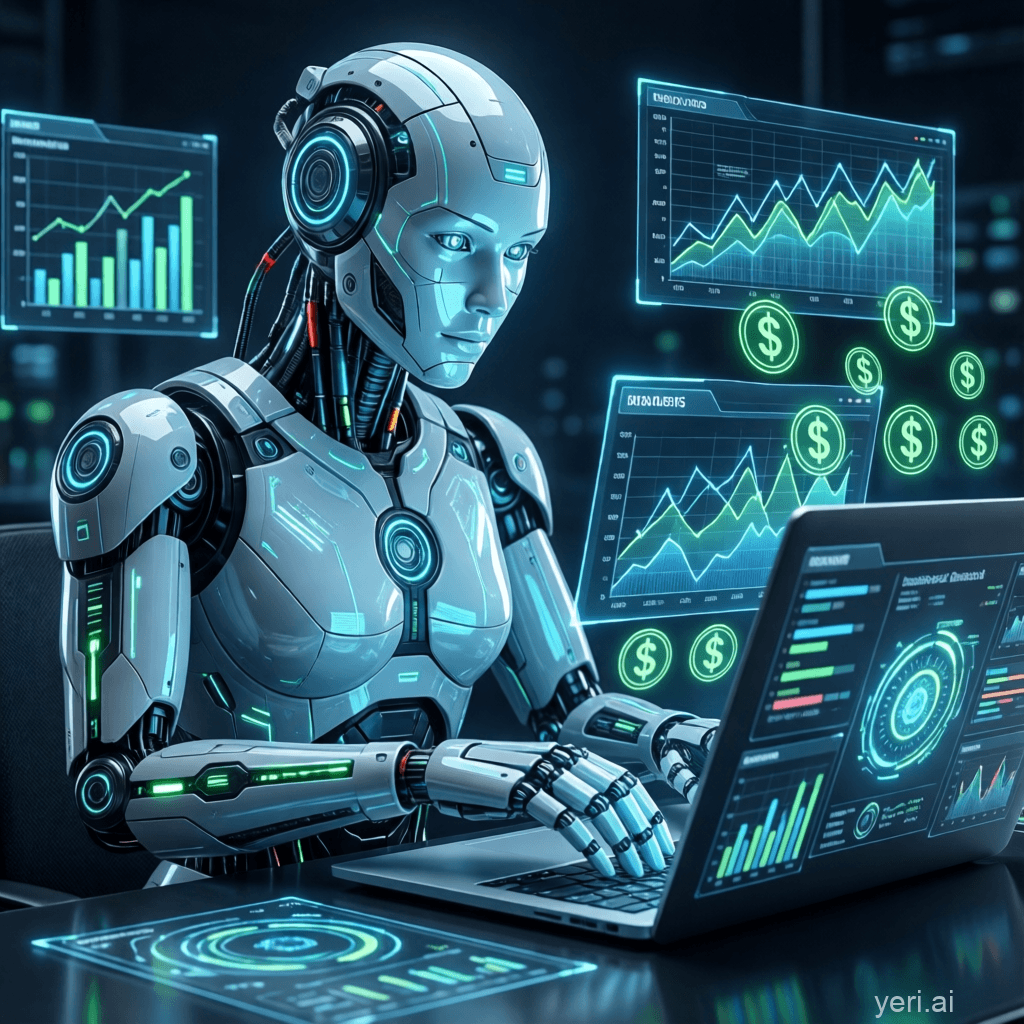

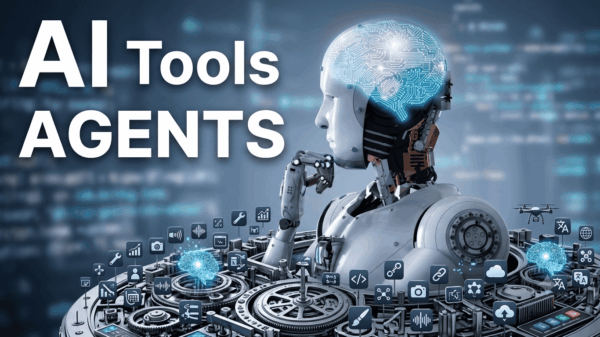

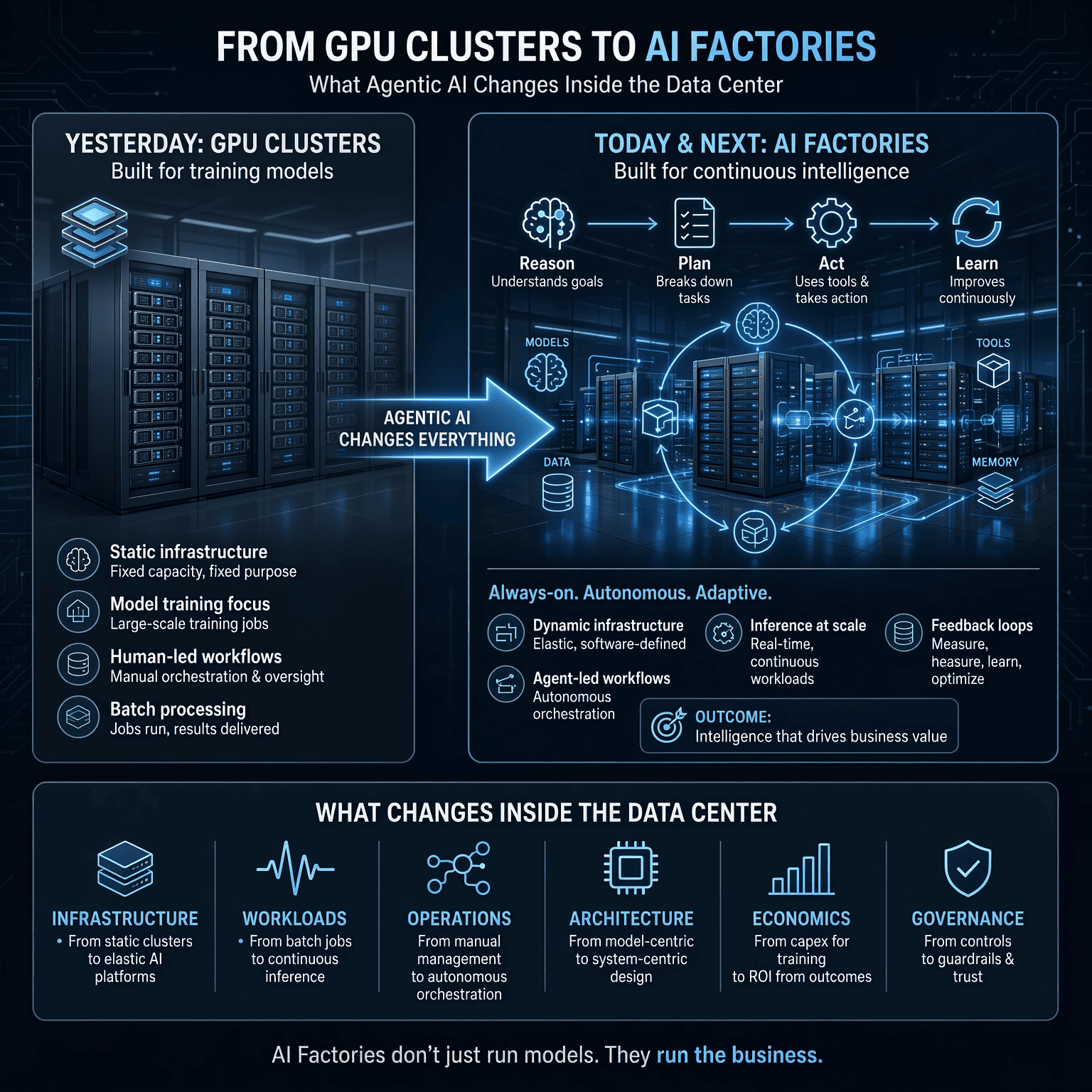

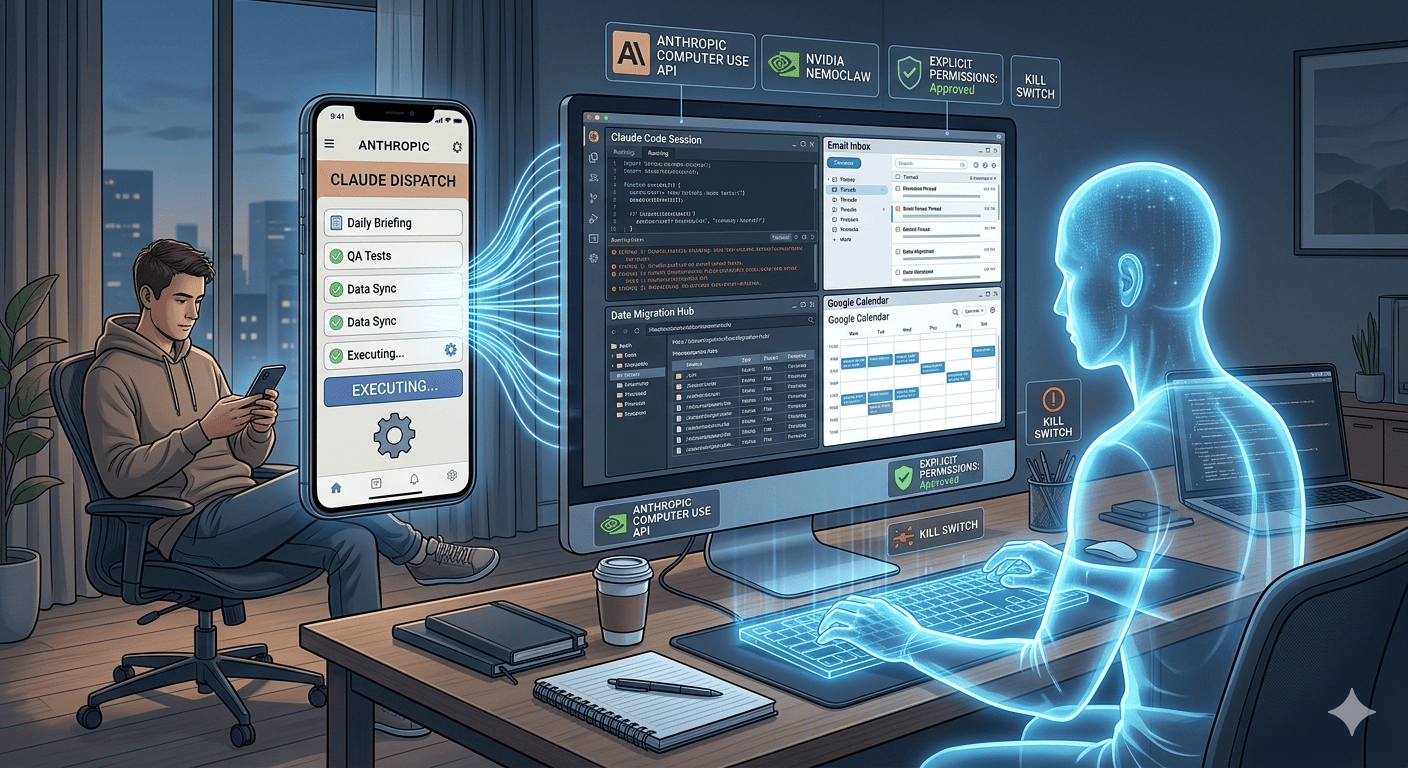
For the past three years, the enterprise relationship with artificial intelligence has been fundamentally conversational. Users prompt, and models respond. This synchronous, turn-based dynamic created a bottleneck: the AI remained trapped within its chat interface, entirely dependent on human clicks to bridge the gap between output and execution. This paradigm is officially shifting. With the introduction of Anthropic’s “Computer Use” API and research preview, alongside the task-delegation ecosystem “Dispatch,” the industry is entering the era of truly asynchronous, agentic workflows.
This development marks a transition from a reactive chatbot to an autonomous virtual employee—a system capable of manipulating traditional user interfaces, navigating software applications, and executing multi-step pipelines natively on Windows and macOS while the human operator is completely offline.
The Mechanics of Non-API Automation: How ‘Computer Use’ Takes the Wheel
Traditional software automation relies on structured APIs (Application Programming Interfaces). While robust, API automation is brittle and requires intentional backend integration for every specific application interaction. According to official documentation released by Anthropic, Claude’s Computer Use feature bypasses this entire infrastructure by interacting with software exactly like a human professional: through visual perception and standard input peripherals.
Instead of relying solely on customized backend integrations, the model evaluates the on-screen user interface visually by taking screenshots, calculating pixel coordinates, and processing the layout. It identifies input fields, interactive buttons, and navigation elements, manually moving the cursor, clicking, and typing via virtual keyboard and mouse drivers. Because it can independently open web browsers, engage with developer environments, and parse local files, it treats the entire operating system as an open canvas for problem-solving.
Concrete Real-World Implementations
To understand the practical impact of this shift, consider how early adopters and enterprises are leveraging this synergy to automate complex, multi-application pipelines:
- Asynchronous Software Quality Assurance (QA): In developer workflows, an engineer can use a mobile prompt via Dispatch to trigger a Claude Code session on their office workstation. Claude automatically opens the local development environment, boots up the local server, navigates through the web application’s user interface to run edge-case tests, captures console errors, and compiles a comprehensive bug report before the engineer even arrives at their desk.
- Cross-Platform Data Migration: For digital marketers and analysts, Claude can be tasked with entering a local directory, opening a spreadsheet, extracting complex datasets, launching a web browser to navigate to a legacy CRM system, and manually filling out forms and clicking submit buttons—completely automating a data-entry pipeline that lacks a native API connector.
- Automated Market Research & Intelligence Audits: Financial analysts can instruct the agent to open a browser, navigate to financial news terminals, execute specific queries, scroll through daily market filings, take relevant screenshots, and compile a structured Markdown summary saved directly to a shared corporate drive.
Architectural Constraints: Navigating the Technical Limitations
Despite its paradigm-shifting potential, the current iteration of Agentic AI operates under strict technical boundaries. As highlighted in Nvidia’s safety research stack (NemoClaw), letting an AI control a mouse and keyboard introduces complex environmental friction.
1. The Screen Refresh and Latency Bottleneck
Claude does not “see” a continuous video feed of your screen; instead, it operates by taking rapid, sequential screenshots. Because it must capture a frame, process it, determine the next action, and execute the click, it cannot handle rapid, real-time interface changes. Tasks that require instantaneous feedback, such as high-speed video editing, fluid drag-and-drop actions, or interacting with highly dynamic web animations, frequently cause the model to miscalculate coordinate points.
2. Lack of Fine-Grained Human Intuition
The model struggles with micro-gestures. It cannot easily perform nuanced human actions like dragging a specific slider to a precise sub-pixel percentage or handling complex CAPTCHAs. Furthermore, if a UI layout scales unexpectedly or a pop-up ad abruptly shifts the layout geometry, the model can become disoriented, clicking the wrong coordinate or getting trapped in an execution loop.
3. Deliberate Software Restrictions
To protect user integrity, Anthropic has implemented strict hardcoded guardrails. Claude is disabled by default from accessing applications that handle highly sensitive personal identification, financial transactions, or critical system settings. Additionally, it cannot bypass multi-factor authentication (MFA) protocols without explicit human intervention, ensuring that the human remains the ultimate security gatekeeper.
The Safety Frontier: Security and the Threat of Injection
From an architectural standpoint, granting an independent agent unrestricted access to an operating system presents severe security vectors. Experts warn that Prompt Injection Attacks represent a critical threat to agentic workflows. For example, if Claude is task-browsing an external website or reading an untrusted email file, malicious text hidden on that page could silently hijack the model’s instructions, ordering it to download malicious files or delete local data.
To mitigate these vulnerabilities, the infrastructure enforces a strict explicit permission model: Claude is structurally barred from executing major system-level jumps without an upfront confirmation from the user. Furthermore, users retain a live feed of the automation and can hit a “kill switch” to terminate an active process instantly at any point during execution.
Conclusion: The Dawn of the Asynchronous Operator
The immediate future of digital work does not belong to those who know how to type commands into a prompt box faster; it belongs to those who understand how to orchestrate autonomous agents. By pairing computer vision-driven UI navigation with mobile task dispatching, the paradigm has successfully pivoted. The AI is no longer just a calculator awaiting a formula; it is the ghost in the machine, running tests, optimizing schedules, and clearing administrative backlogs in the background, allowing human engineers and creators to focus entirely on high-level architecture and strategic decision-making.
SOURCE:

Independent technology writer focused on artificial intelligence, emerging technologies, and digital innovation. Covers AI applications in sports, productivity, and online business.